June 2025 Paper 1 Q15
15.
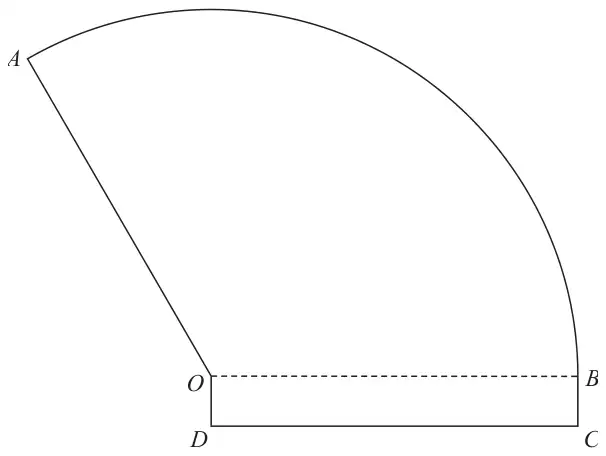
Figure 4 shows the plan view for the design of a stage.
The shape of this design consists of a sector of a circle \(AOB\) joined to a rectangle \(OBCD\).
Given that
- the radius of the sector is \(r\) metres and angle \(AOB\) is \(\theta\) radians
- the length and width of the rectangle are \(r\) metres and \(\dfrac{1}{10}r\) metres respectively
- the total area of the stage is 240 m\(^2\)
Using algebraic differentiation,
| Scheme | Marks | AO |
|---|---|---|
| \(\dfrac{1}{2}r^2\theta + \dfrac{1}{10}r^2 = 240 \Rightarrow r\theta = \dfrac{240 - \frac{1}{10}r^2}{\frac{1}{2}r}\) or \(\theta = \dfrac{240 - \frac{1}{10}r^2}{\frac{1}{2}r^2}\) | M1 A1 | 3.4 1.1b |
| Substitutes into the expression for \(P\) \(r\theta = \dfrac{240 - \frac{1}{10}r^2}{\frac{1}{2}r}\) into \((P =)\ r\theta + 2r + \dfrac{1}{5}r\) | dM1 | 3.4 |
| \(P = \dfrac{240 - \frac{1}{10}r^2}{\frac{1}{2}r} + 2r + \dfrac{1}{5}r = \dfrac{480}{r} - \dfrac{1}{5}r + 2r + \dfrac{1}{5}r = 2r + \dfrac{480}{r}\) * | A1* | 2.1 |
| (4) |
Notes
Note that just finding a correct equation for the area and/or a correct equation for the perimeter (before any substitution) is insufficient to score any marks.
M1: Uses area formulae to form an equation of the form \(\alpha r^2\theta + \beta r^2 = 240\) o.e. (\(\alpha, \beta \neq 0\)) and rearranges to make \(r\theta\), \(\theta\) or \(r\theta + \dfrac{1}{5}r\) the subject. Look for:
\(r\theta = \dfrac{M \pm Nr^2}{r}\left(= \dfrac{M}{r} \pm Nr\right)\) o.e. or \(\theta = \dfrac{M \pm Nr^2}{r^2}\left(= \dfrac{M}{r^2} \pm N\right)\) o.e. where \(M, N \neq 0\)
or \(r\theta + \dfrac{1}{5}r = \dfrac{L}{r}\ \ L \neq 0\) o.e. May work in degrees.
A1: A correct rearrangement for \(\theta\) or \(r\theta\) or \(r\theta + \dfrac{1}{5}r\) which may be unsimplified (may be in degrees)
\(r\theta = \dfrac{240 - \frac{1}{10}r^2}{\frac{1}{2}r}\) o.e. e.g. \(r\theta = \dfrac{2400 - r^2}{5r}\) or \(r\theta = \dfrac{480 - 0.2r^2}{r}\)
or \(r\theta + \dfrac{1}{5}r = \dfrac{480}{r}\) o.e.
or \(\theta = \dfrac{240 - \frac{1}{10}r^2}{\frac{1}{2}r^2}\) o.e. e.g. \(\theta = \dfrac{2400 - r^2}{5r^2}\) or \(\theta = \dfrac{480}{r^2} - \dfrac{1}{5}\) or \(\theta = 480r^{-2} - 0.2\)
dM1: Substitutes their \(r\theta = \dfrac{M \pm Nr^2}{r}\) o.e. or \(\theta = \dfrac{M \pm Nr^2}{r^2}\) o.e. or \(r\theta + \dfrac{1}{5}r = \dfrac{L}{r}\) into an expression of the form \((P =)\ r\theta + Qr,\ Q \neq 0\) (typically \(P = r\theta + \dfrac{11}{5}r\)) which may be unsimplified or in degrees. It is dependent on the previous method mark. It is acceptable for their valid expression for \(\theta\), \(r\theta\) or \(r\theta + \dfrac{1}{5}r\) to be substituted into the perimeter expression directly (without first seeing them in the perimeter expression).
A1*: \(P = 2r + \dfrac{480}{r}\) following a correct method (condone slips to be recovered) and all previous marks scored. Condone invisible brackets to be recovered.
\(P =\), Perimeter \(=\) must be seen at least once in their solution in the correct place.
| Scheme | Marks | AO |
|---|---|---|
| \(\left(\dfrac{\mathrm{d}P}{\mathrm{d}r} =\right) 2 - \dfrac{480}{r^2}\) | M1 | 1.1b |
| Sets \(\dfrac{\mathrm{d}P}{\mathrm{d}r} = 0 \Rightarrow r^2 = 240\) \(r =\) awrt 15.5 | dM1 A1 | 2.1 1.1b |
| (3) |
Notes
Mark (b) and (c) together. There is no requirement to see the notation \(\dfrac{\mathrm{d}P}{\mathrm{d}r}\) in part (b). It may even be called \(\dfrac{\mathrm{d}y}{\mathrm{d}x}\). Allow use of e.g. \(P^{\prime}\) or e.g. \(y^{\prime}\)
M1: \(\left(\dfrac{\mathrm{d}P}{\mathrm{d}r} =\right) p \pm \dfrac{q}{r^2}\) where \(p\) and \(q\) are non-zero constants
dM1: Sets or implies that their \(\dfrac{\mathrm{d}P}{\mathrm{d}r} = 0\) and proceeds to \(mr^{\pm 2} = n,\ \ m \times n \gt 0\). It is dependent on the previous method mark. Do not be concerned by the mechanics of the rearrangement.
This mark may be implied by a correct answer to their \(p - \dfrac{q}{r^2} = 0\). You may need to check this on your calculator.
A1: \(r =\) awrt 15.5 or \(\sqrt{240}\ \left(= 4\sqrt{15}\right)\) Do not accept \(\pm\) (ignore any units if given)
| Scheme | Marks | AO |
|---|---|---|
| \(\left(\dfrac{\mathrm{d}^2P}{\mathrm{d}r^2} =\right) \dfrac{960}{r^3}\) | M1 | 1.1b |
| \(\left(\dfrac{\mathrm{d}^2P}{\mathrm{d}r^2} =\right)\) awrt \(0.26 \gt 0\) proving a minimum value of \(P\) | A1 | 1.1b |
| (2) | ||
| (9 marks) |
Notes
Mark (b) and (c) together.
Condone other letters used instead of P and r for \(\dfrac{\mathrm{d}^2P}{\mathrm{d}r^2}\) e.g. \(\dfrac{\mathrm{d}^2y}{\mathrm{d}x^2}\) for M1 only.
Just using \(\dfrac{\mathrm{d}P}{\mathrm{d}r}\) and considering a sign change is M0A0
M1: Differentiates and finds \(\left(\dfrac{\mathrm{d}^2P}{\mathrm{d}r^2} =\right) \pm\dfrac{f}{r^3}\) (do not be concerned about the sign)
A1: Note if they score A0 in (b) then this mark cannot be scored.
Requires
- a correct a correct expression for \(\dfrac{\mathrm{d}^2P}{\mathrm{d}r^2}\)
- a correct value for \(\left(\dfrac{\mathrm{d}^2P}{\mathrm{d}r^2} =\right) \dfrac{960}{r^3} =\) awrt 0.26 using awrt 15.5 (but allow 0.23(43..) if using 16)
- a correct comparison with 0 and a conclusion e.g. minimum
The expression for the second derivative does not need to be labelled but if it is then it must be \(\dfrac{\mathrm{d}^2P}{\mathrm{d}r^2}\) o.e. or accept e.g. \(P^{\prime\prime}\) BUT \(\dfrac{\mathrm{d}^2y}{\mathrm{d}x^2}\) used in their conclusion is A0