
June 2024 Paper 1 Q10
10.
In this question you must show all stages of your working.
Solutions relying entirely on calculator technology are not acceptable.
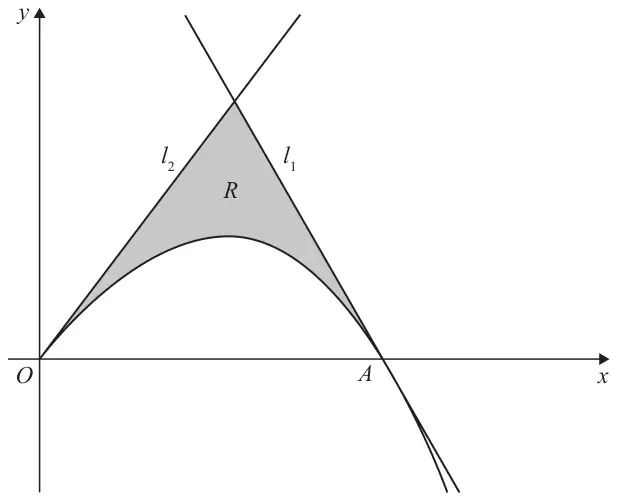
Figure 3 shows a sketch of part of the curve with equation
\[y = 8x - x^{\frac{5}{2}} \qquad x \geqslant 0\]The curve crosses the \(x\)-axis at the point \(A\).
The line \(l_1\) is the tangent to the curve at \(A\).
The line \(l_2\) has equation \(y = 8x\)
The region \(R\), shown shaded in Figure 3, is bounded by the curve, the line \(l_1\) and the line \(l_2\)
| Scheme | Marks | AO |
|---|---|---|
| \(8(4) - 4^{\frac{5}{2}} = 32 - 32 = 0\) | B1 | 1.1b |
| (1) |
Notes
B1: Substitutes \(x = 4\) into the equation of the curve and verifies that \(y = 0\). Accept “\(8(4) - 4^{\frac{5}{2}} = 0\)”
Alternatively, sets \(8x - x^{\frac{5}{2}} = 0\) and solves with correct processing to achieve \(x = 4\).
As a minimum accept e.g. \(8x - x^{\frac{5}{2}} = 0 \Rightarrow x^{\frac{3}{2}} = 8 \Rightarrow \{x=\}\ 4\) which may follow factorisation.
| Scheme | Marks | AO |
|---|---|---|
| \(8 - \dfrac{5}{2}x^{\frac{3}{2}}\) | B1 | 1.1b |
| \(x = 4 \Rightarrow \left\{\dfrac{\mathrm{d}y}{\mathrm{d}x} =\right\} 8 - \dfrac{5}{2} \times 8 = -12\) \(\Rightarrow y\{-0\} = \text{``}-12\text{''}(x - 4)\) | M1 | 1.1b |
| \(12x + y = 48\ *\) | A1* | 1.1b |
| (3) |
Notes
B1: Correct differentiation. The \(\dfrac{\mathrm{d}y}{\mathrm{d}x} =\) need not be present.
M1: Correct method for finding the equation of the tangent at \(A(4, 0)\).
Requires substitution of \(x = 4\) into their \(\dfrac{\mathrm{d}y}{\mathrm{d}x}\) and an attempt at the equation of the line using this gradient. If using \(y - y_1 = m(x - x_1)\) then condone the omission of the \(-\,0\).
If \(y = mx + c\) is used they must proceed as far as \(c = \ldots\)
Accept \(\dfrac{\mathrm{d}y}{\mathrm{d}x} = -12\) or \(m = -12\) without explicit substitution of \(x = 4\) provided \(8 - \dfrac{5}{2}x^{\frac{3}{2}}\) is seen.
A1*: Correct work leading to the given equation having scored B1M1.
Condone \(y + 12x = 48\) and apply isw once seen.
Do not condone \(12x + y - 48 = 0\) (unless a correct equation = 48 is seen).
| Scheme | Marks | AO |
|---|---|---|
| Attempts to find one of the coordinates of the point of intersection \(y = 8x,\ 12x + y = 48 \Rightarrow y = 19.2\) (or \(x = 2.4\)) | M1 | 1.1b |
| Triangle area is \(\dfrac{1}{2} \times 4 \times \text{``}19.2\text{''}\left(= 38.4 \text{ or } \dfrac{192}{5}\right)\) or \(\displaystyle\int_0^{\text{``}2.4\text{''}} 8x\,\mathrm{d}x + \int_{\text{``}2.4\text{''}}^{4} \text{``}(48 - 12x)\text{''}\,\mathrm{d}x\) | dM1 | 3.1a |
| \(\displaystyle\int \left(8x - x^{\frac{5}{2}}\right)\mathrm{d}x = 4x^2 - \dfrac{2}{7}x^{\frac{7}{2}}\) | B1 | 1.1b |
| \(A = 38.4 - \left[\text{``}4x^2 - \dfrac{2}{7}x^{\frac{7}{2}}\text{''}\right]_0^4 = 38.4 - 64 + \dfrac{256}{7}\) | ddM1 | 3.1a |
| \(= \dfrac{384}{35}\) | A1 | 1.1b |
| (5) | ||
| (9 marks) |
Notes
Note: Condone poor notation such as missing d\(x\) or spurious \(\displaystyle\int\) symbols throughout.
M1: Attempts to find either the \(x\) or \(y\) coordinate of the intersection of line \(l_1\) and line \(l_2\)
You may need to check the diagram or limits to their integrals.
dM1: Correct method for the area of the triangle. e.g. Triangle area is \(\dfrac{1}{2} \times 4 \times \text{``}19.2\text{''}\left(= 38.4 \text{ or } \dfrac{192}{5}\right)\)
If integration is attempted then condone slips in their rearrangement of \(12x + y = 48\) to \(y = 48 - 12x\) and note that their integrals do need not to be evaluated, so for example look for \(\displaystyle\int_0^{\text{``}2.4\text{''}} 8x\,\mathrm{d}x + \int_{\text{``}2.4\text{''}}^{4} \text{``}(48 - 12x)\text{''}\,\mathrm{d}x\quad \left\{= \dfrac{576}{25} + \dfrac{384}{25} = 23.04 + 15.36\right\}\)
B1: Correct integration of curve ignoring limits, i.e. \(4x^2 - \dfrac{2}{7}x^{\frac{7}{2}}\) but condone e.g. \(\dfrac{8x^{1+1}}{2} - \dfrac{x^{\frac{5}{2}+1}}{\frac{7}{2}}\)
ddM1: Fully correct strategy including substitution which would lead to an exact area.
Does not need to reach a value. Dependent on both previous M marks.
Implied by \(38.4 - \dfrac{192}{7}\) or a correct final answer \(\dfrac{384}{35}\)
Note that the decimal approximation that might be seen is 10.97142857 and implies ddM0 unless there is evidence of substitution (which need not be evaluated).
A1: Correct exact value. Either \(\dfrac{384}{35}\) or \(10\dfrac{34}{35}\)
Alternative using lines – curve:
M1: Attempts to find either the \(x\) or \(y\) coordinate of the intersection of line \(l_1\) and line \(l_2\)
You may need to check the diagram or limits to their integrals.
dM1: Correct method for at least one part (0 to “2.4” or “2.4” to 4) of the area of \(R\) including limits.
Condone slips in their rearrangement of \(12x + y = 48\) to \(y = 48 - 12x\) and note that their integrals do need not to be evaluated, so for example look for \(\displaystyle\int_0^{\text{``}2.4\text{''}} 8x - \left(8x - x^{\frac{5}{2}}\right)\mathrm{d}x\) or \(\displaystyle\int_{\text{``}2.4\text{''}}^{4} \text{``}(48 - 12x)\text{''} - \left(8x - x^{\frac{5}{2}}\right)\mathrm{d}x\) (or a sum of both)
B1: Correct integration of both regions ignoring limits. May be completed as a sum or separately.
Condone e.g. \(\dfrac{x^{\frac{5}{2}+1}}{\frac{7}{2}}\) in place of \(\dfrac{2}{7}x^{\frac{7}{2}}\) Note that each integral may have been simplified.
ddM1: Fully correct strategy including substitution which would lead to an exact area.
Does not need to reach a value. Dependent on both previous M marks.
This approach requires:
- substitution of 0, their 2.4 and 4 in the correct places
- the \(\dfrac{2}{7}(2.4)^{\frac{7}{2}} - \dfrac{2}{7}(2.4)^{\frac{7}{2}}\) to be cancelled (may be implied by a correct final answer \(\dfrac{384}{35}\))
Note that the decimal approximation that might be seen is 10.97142857 and implies ddM0 unless there is evidence that the \(\dfrac{2}{7}(2.4)^{\frac{7}{2}} - \dfrac{2}{7}(2.4)^{\frac{7}{2}}\) has been cancelled e.g. \(\cancel{6.118\ldots} - \cancel{6.118\ldots}\)
A1: Correct exact value. Either \(\dfrac{384}{35}\) or \(10\dfrac{34}{35}\)