Junior Mathematical Olympiad 2015

Practise one competitionJunior Mathematical Challenge 424 questions, 2004–2020Junior Kangaroo 125 questions, 2015–2019Junior Mathematical Olympiad 80 questions, 2015–2019

The whole Junior Mathematical Olympiad 2015 paper, one question at a time in order (16 questions). Press Mark as done after each one: your marks add up below.

Whole paper 2019 2018 2017 2016 2015

Questions and solutions © UK Mathematics Trust, shown with permission. Papers and more at ukmt.org.uk.

JMO

JMO 2015 A1

JMOCurrent spec1 markRatio, Rates & Measures

A1. It is 225 minutes until midnight. What time is it on a 24-hour digital clock?

Junior Mathematical Olympiad 2015, Question A1. © UK Mathematics Trust. Original paper on ukmt.org.uk

JMO 2015 A2

JMOCurrent spec1 markNumber & Arithmetic

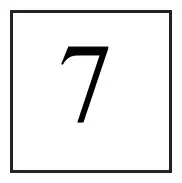
A2. The diagram shows what I see when I look straight down on the top
face of a non-standard cubical die. A positive integer is written on
each face of the die. The numbers on every pair of opposite faces add
up to 10. What is the sum of the numbers on the faces I cannot see?

Square top face of a die showing the number 7

Junior Mathematical Olympiad 2015, Question A2. © UK Mathematics Trust. Original paper on ukmt.org.uk

JMO 2015 A3

JMOCurrent spec1 markArea, Perimeter & Shape

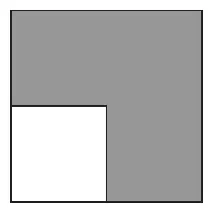
A3. The diagram shows one square inside another. The perimeter of the
shaded region has length 24 cm.

What is the area of the larger square?

A small white square in the bottom left corner of a larger square; the rest of the larger square is shaded

Junior Mathematical Olympiad 2015, Question A3. © UK Mathematics Trust. Original paper on ukmt.org.uk

JMO 2015 A4

JMOCurrent spec1 markAlgebraRatio, Rates & Measures

A4. My fruit basket contains apples and oranges. The ratio of apples to oranges in the basket is 3 : 8. When I remove one apple the ratio changes to 1 : 3.

How many oranges are in the basket?

Junior Mathematical Olympiad 2015, Question A4. © UK Mathematics Trust. Original paper on ukmt.org.uk

JMO 2015 A5

JMOCurrent spec1 markArea, Perimeter & Shape

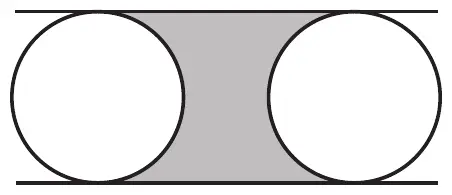
A5. Two circles of radius 1 cm fit exactly between two parallel
lines, as shown in the diagram. The centres of the circles are
3 cm apart.

What is the area of the shaded region bounded by the circles
and the lines?

Two circles between two parallel lines, touching both lines; the region between the circles and the lines is shaded

Junior Mathematical Olympiad 2015, Question A5. © UK Mathematics Trust. Original paper on ukmt.org.uk

JMO 2015 A6

A6. There are 81 players taking part in a knock-out quiz tournament. Each match in the tournament involves 3 players and only the winner of the match remains in the tournament − the other two players are knocked out. How many matches are required until there is an overall winner?

Junior Mathematical Olympiad 2015, Question A6. © UK Mathematics Trust. Original paper on ukmt.org.uk

JMO 2015 A7

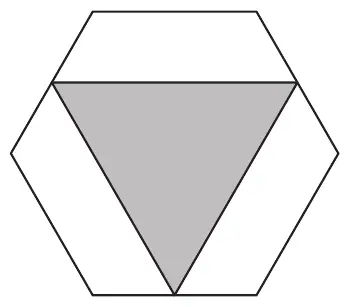
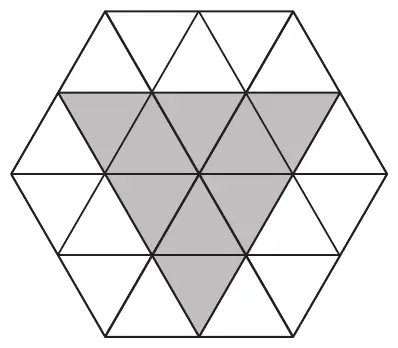
A7. The diagram shows an equilateral triangle inside a regular
hexagon that has sides of length 14 cm. The vertices of the
triangle are midpoints of sides of the hexagon.

What is the length of the perimeter of the triangle?

A regular hexagon with a shaded equilateral triangle whose vertices are midpoints of three of its sides

Junior Mathematical Olympiad 2015, Question A7. © UK Mathematics Trust. Original paper on ukmt.org.uk

JMO 2015 A8

JMOCurrent spec1 markFactors, Primes & Digits

A8. What is the units digit in the answer to the sum \(9^{2015} + 9^{2016}\)?

Junior Mathematical Olympiad 2015, Question A8. © UK Mathematics Trust. Original paper on ukmt.org.uk

JMO 2015 A9

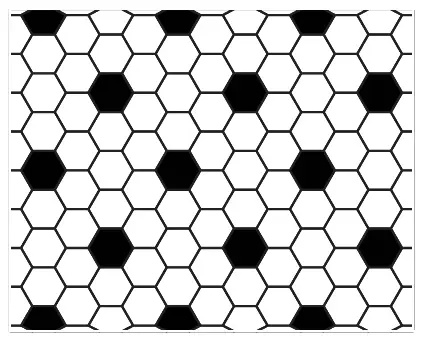
A9. The figure shows part of a tiling, which extends
indefinitely in every direction across the whole plane.
Each tile is a regular hexagon. Some of the tiles are
white, the others are black.

What fraction of the plane is black?

Part of a tiling of regular hexagons, some white and some black

Junior Mathematical Olympiad 2015, Question A9. © UK Mathematics Trust. Original paper on ukmt.org.uk

JMO 2015 A10

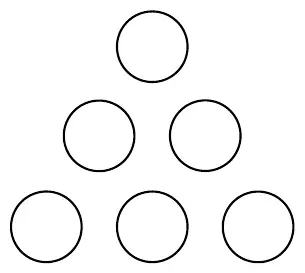
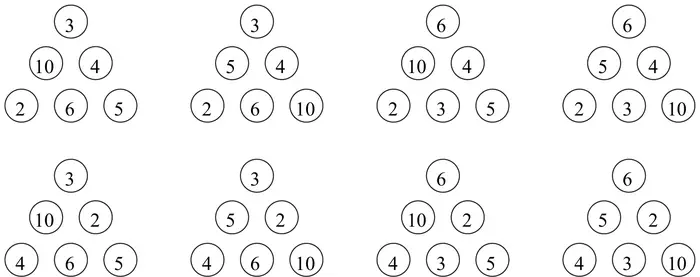
A10. Lucy wants to put the numbers 2, 3, 4, 5, 6 and 10 into the
circles so that the products of the three numbers along
each edge are the same, and as large as possible.

What is this product?

Six circles arranged in a triangle, three along each edge

Junior Mathematical Olympiad 2015, Question A10. © UK Mathematics Trust. Original paper on ukmt.org.uk

JMO 2015 B1

JMOCurrent spec10 marksFactors, Primes & Digits

B1. Let \(N\) be the smallest positive integer whose digits add up to 2015.

What is the sum of the digits of \(N + 1\)?

Junior Mathematical Olympiad 2015, Question B1. © UK Mathematics Trust. Original paper on ukmt.org.uk

JMO 2015 B2

JMOCurrent spec10 marksGeometry & Angles

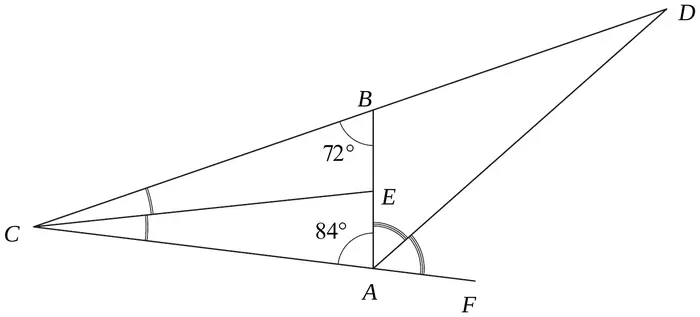
B2. The diagram shows triangle \(ABC\), in which \(\angle ABC = 72°\) and \(\angle CAB = 84°\). The point \(E\) lies on \(AB\) so that \(EC\) bisects \(\angle BCA\). The point \(F\) lies on \(CA\) extended. The point \(D\) lies on \(CB\) extended so that \(DA\) bisects \(\angle BAF\).

Triangle ABC with angle ABC 72 degrees and angle CAB 84 degrees; E on AB with CE bisecting angle BCA; CA extended to F; CB extended to D with DA bisecting angle BAF

Prove that \(AD = CE\).

Junior Mathematical Olympiad 2015, Question B2. © UK Mathematics Trust. Original paper on ukmt.org.uk

JMO 2015 B3

JMOCurrent spec10 marksCounting, Probability & Logic

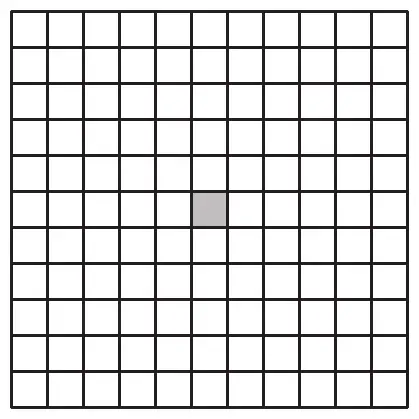
B3. Jack starts in the small square shown shaded on the
grid, and makes a sequence of moves. Each move is to
a neighbouring small square, where two small squares
are neighbouring if they have an edge in common. He
may visit a square more than once.

Jack makes four moves. In how many different small
squares could Jack finish?

A square grid of small squares with one small square near the middle shaded

Junior Mathematical Olympiad 2015, Question B3. © UK Mathematics Trust. Original paper on ukmt.org.uk

JMO 2015 B4

JMOCurrent spec10 marksGeometry & Angles

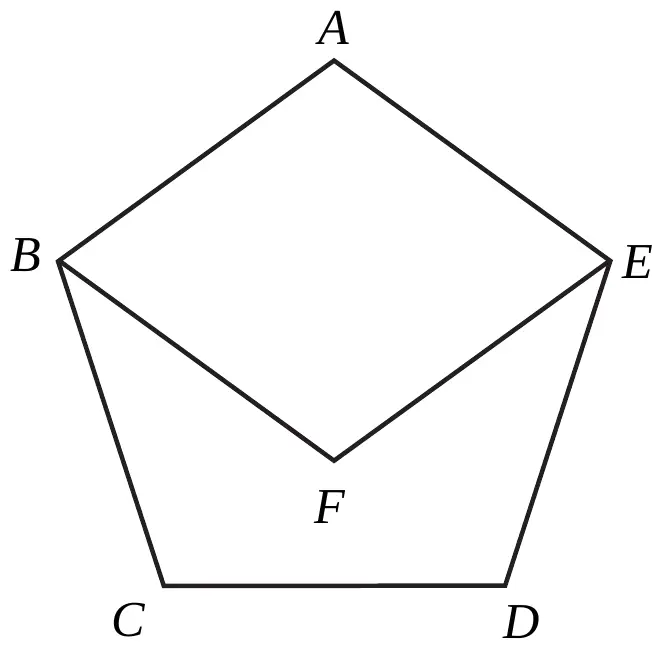
B4. The point \(F\) lies inside the regular pentagon \(ABCDE\) so that \(ABFE\) is a rhombus. Prove that \(EFC\) is a straight line.

Junior Mathematical Olympiad 2015, Question B4. © UK Mathematics Trust. Original paper on ukmt.org.uk

JMO 2015 B5

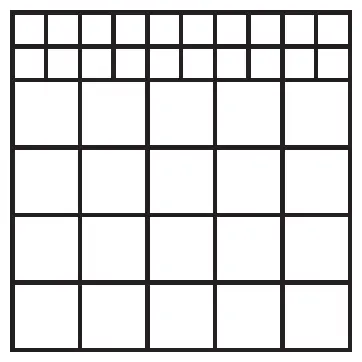
B5. I have two types of square tile. One type has a side length of 1 cm and the other has a side length of 2 cm.

What is the smallest square that can be made with equal numbers of each type of tile?

Junior Mathematical Olympiad 2015, Question B5. © UK Mathematics Trust. Original paper on ukmt.org.uk

JMO 2015 B6

B6. The letters \(a\), \(b\), \(c\), \(d\), \(e\) and \(f\) represent single digits and each letter represents a different digit. They satisfy the following equations:

\(a + b = d,\qquad b + c = e\qquad\) and \(\qquad d + e = f.\)

Find all possible solutions for the values of \(a\), \(b\), \(c\), \(d\), \(e\) and \(f\).

Junior Mathematical Olympiad 2015, Question B6. © UK Mathematics Trust. Original paper on ukmt.org.uk