Junior Mathematical Olympiad 2016

Practise one competitionJunior Mathematical Challenge 424 questions, 2004–2020Junior Kangaroo 125 questions, 2015–2019Junior Mathematical Olympiad 80 questions, 2015–2019

The whole Junior Mathematical Olympiad 2016 paper, one question at a time in order (16 questions). Press Mark as done after each one: your marks add up below.

Whole paper 2019 2018 2017 2016 2015

Questions and solutions © UK Mathematics Trust, shown with permission. Papers and more at ukmt.org.uk.

JMO

JMO 2016 A1

JMOCurrent spec1 markFactors, Primes & Digits

A1. Roger picks two consecutive integers, one of which ends in a 5. He multiplies the integers together and then squares the result.

What are the last two digits of his answer?

Junior Mathematical Olympiad 2016, Question A1. © UK Mathematics Trust. Original paper on ukmt.org.uk

JMO 2016 A2

JMOCurrent spec1 markGeometry & Angles

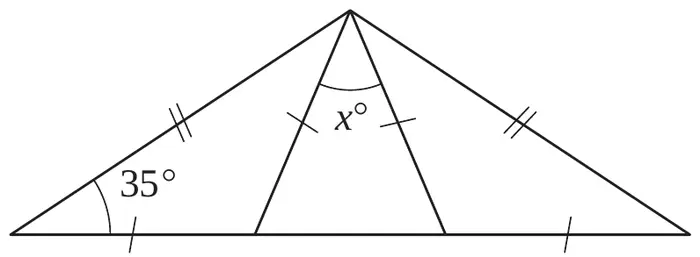
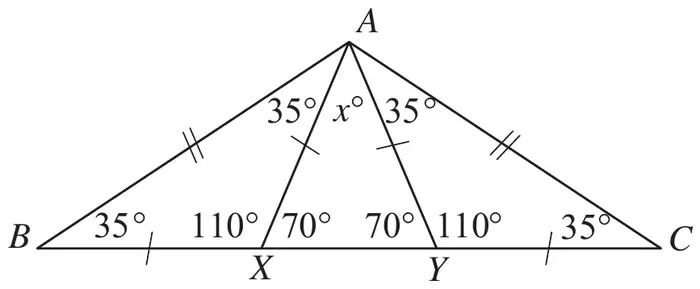
A2. Three isosceles triangles are put together to
create a larger isosceles triangle, as shown.

What is the value of \(x\)?

A large isosceles triangle made from three isosceles triangles; the base angle at the left is 35 degrees and the angle at the top of the middle triangle is x degrees

Junior Mathematical Olympiad 2016, Question A2. © UK Mathematics Trust. Original paper on ukmt.org.uk

JMO 2016 A3

JMOCurrent spec1 markNumber & Arithmetic

A3. The first term of a sequence is 0. Each term of the sequence after the first term is equal to \(10p + 1\), where \(p\) is the previous term.

What is the sum of the first ten terms?

Junior Mathematical Olympiad 2016, Question A3. © UK Mathematics Trust. Original paper on ukmt.org.uk

JMO 2016 A4

JMOCurrent spec1 markArea, Perimeter & Shape

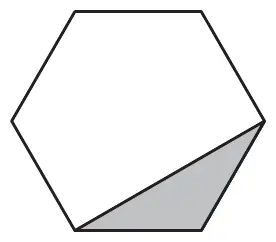
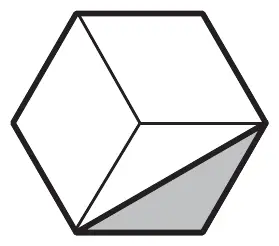
A4. The diagram shows a regular hexagon with area 48 m2.

What is the area of the shaded triangle?

A regular hexagon with a shaded triangle at its lower right

Junior Mathematical Olympiad 2016, Question A4. © UK Mathematics Trust. Original paper on ukmt.org.uk

JMO 2016 A5

JMOCurrent spec1 markArea, Perimeter & Shape

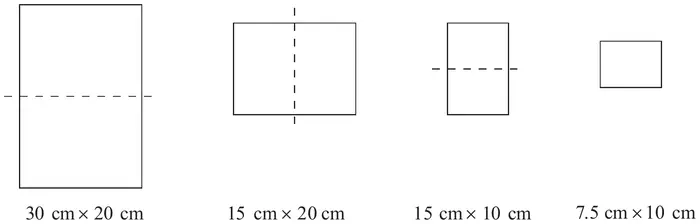
A5. Linda has a very thin sheet of paper measuring 20 cm by 30 cm. She repeatedly folds her paper in half by folding along the shorter line of symmetry. She finishes when she has a rectangle with area 75 cm2.

What is the perimeter of her final rectangle?

Junior Mathematical Olympiad 2016, Question A5. © UK Mathematics Trust. Original paper on ukmt.org.uk

JMO 2016 A6

JMOCurrent spec1 markRatio, Rates & Measures

A6. The points \(A\), \(B\), \(C\), \(D\) and \(E\) lie in that order along a straight line so that \(AB : BC = 1 : 2\), \(BC : CD = 1 : 3\) and \(CD : DE = 1 : 4\). What is \(AB : BE\)?

Junior Mathematical Olympiad 2016, Question A6. © UK Mathematics Trust. Original paper on ukmt.org.uk

JMO 2016 A7

JMOCurrent spec1 markFactors, Primes & Digits

A7. A certain positive integer has exactly eight factors. Two of these factors are 15 and 21.

What is the sum of all eight factors?

Junior Mathematical Olympiad 2016, Question A7. © UK Mathematics Trust. Original paper on ukmt.org.uk

JMO 2016 A8

JMOCurrent spec1 markAlgebra

A8. Julie and her daughters Megan and Zoey have the same birthday. Today, Julie is 32, Megan is 4 and Zoey is 1.

How old will Julie be when her age is the sum of the ages of Megan and Zoey?

Junior Mathematical Olympiad 2016, Question A8. © UK Mathematics Trust. Original paper on ukmt.org.uk

JMO 2016 A9

JMOCurrent spec1 markArea, Perimeter & Shape

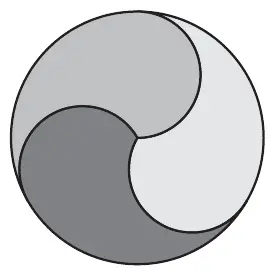
A9. A circle of radius 18 cm is divided into three identical regions by
the three semicircles, as shown.

What is the length of the perimeter of one of these regions?

A circle divided into three identical shaded regions by three semicircles

Junior Mathematical Olympiad 2016, Question A9. © UK Mathematics Trust. Original paper on ukmt.org.uk

JMO 2016 A10

JMOCurrent spec1 markArea, Perimeter & Shape

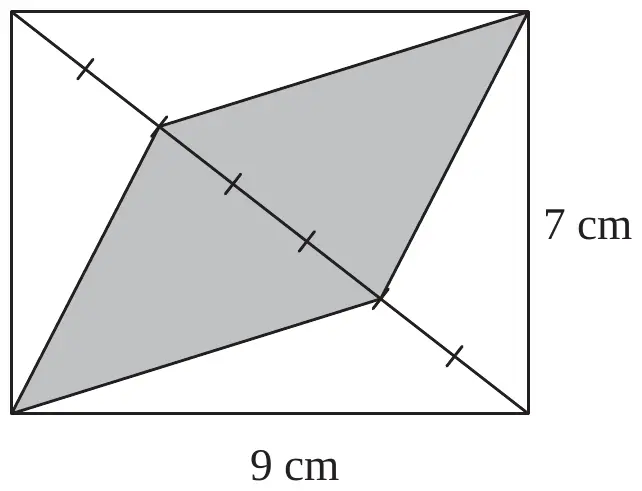
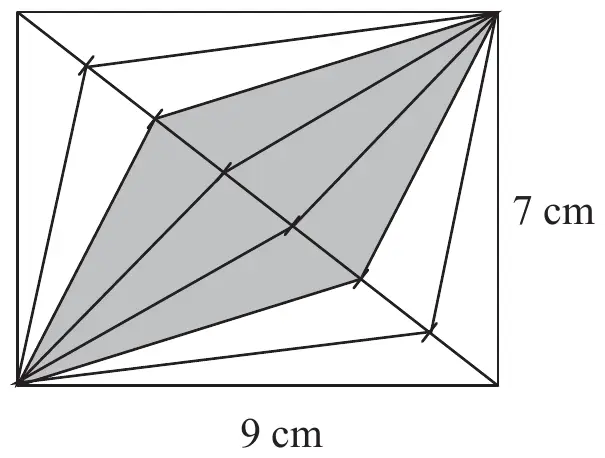
A10. The diagram shows a rectangle with length 9 cm
and width 7 cm. One of the diagonals of the
rectangle has been divided into seven equal parts.

What is the area of the shaded region?

A 9 cm by 7 cm rectangle with one diagonal divided into seven equal parts; a shaded quadrilateral joins two opposite corners to two of the division points

Junior Mathematical Olympiad 2016, Question A10. © UK Mathematics Trust. Original paper on ukmt.org.uk

JMO 2016 B1

JMOCurrent spec10 marksAlgebraGeometry & Angles

B1. In a certain triangle, the size of each of the angles is a whole number of degrees. Also, one angle is 30° larger than the average of the other two angles.

What is the largest possible size of an angle in this triangle?

Junior Mathematical Olympiad 2016, Question B1. © UK Mathematics Trust. Original paper on ukmt.org.uk

JMO 2016 B2

JMOCurrent spec10 marksAlgebraGeometry & Angles

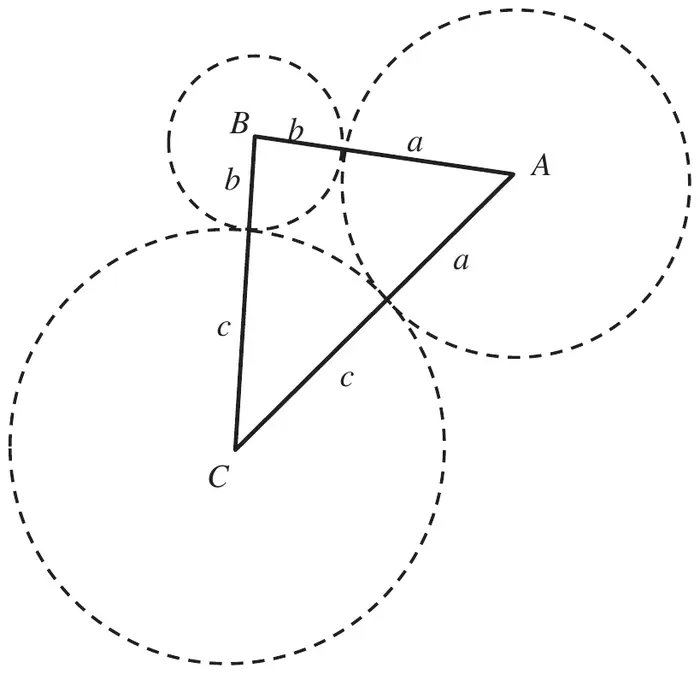
B2. The points \(A\), \(B\) and \(C\) are the centres of three circles. Each circle touches the other two circles, and each centre lies outside the other two circles. The sides of the triangle \(ABC\) have lengths 13 cm, 16 cm and 20 cm.

What are the radii of the three circles?

Junior Mathematical Olympiad 2016, Question B2. © UK Mathematics Trust. Original paper on ukmt.org.uk

JMO 2016 B3

JMOCurrent spec10 marksCounting, Probability & Logic

B3. A large cube consists of a number of identical small cubes. The number of small cubes that touch four other small cubes face-to-face is 168.

How many small cubes make up the large cube?

Junior Mathematical Olympiad 2016, Question B3. © UK Mathematics Trust. Original paper on ukmt.org.uk

JMO 2016 B4

JMOCurrent spec10 marksGeometry & Angles

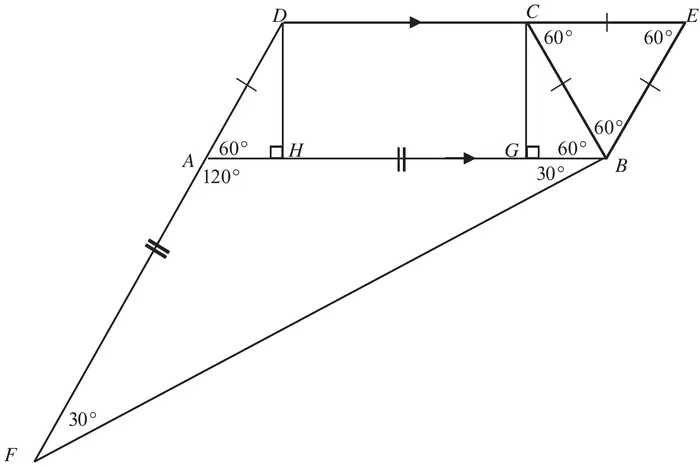
B4. In the trapezium \(ABCD\), the lines \(AB\) and \(CD\) are parallel. Also \(AB = 2DC\) and \(DA = CB\).

The line \(DC\) is extended (beyond \(C\)) to the point \(E\) so that \(EC = CB = BE\). The line \(DA\) is extended (beyond \(A\)) to the point \(F\) so that \(AF = BA\).

Prove that \(\angle FBC = 90°\).

Junior Mathematical Olympiad 2016, Question B4. © UK Mathematics Trust. Original paper on ukmt.org.uk

JMO 2016 B5

JMOCurrent spec10 marksCounting, Probability & Logic

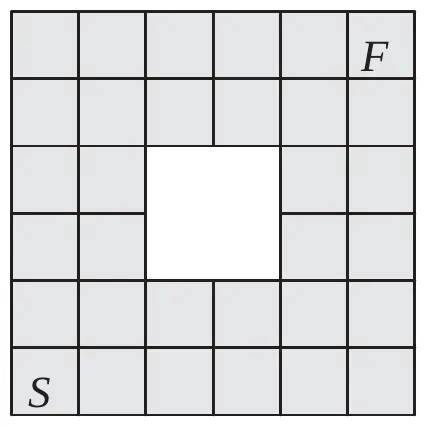
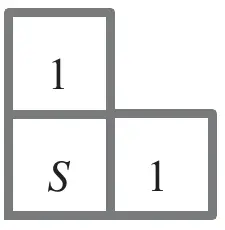
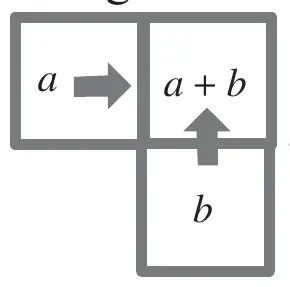
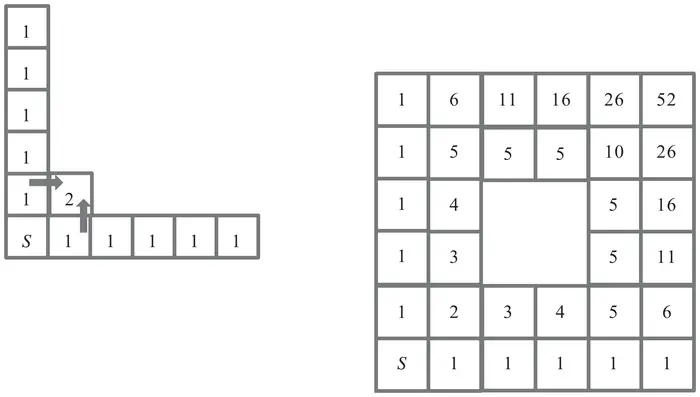
B5. The board shown has 32 cells, one of which is labelled \(S\) and another
\(F\). The shortest path starting at \(S\) and finishing at \(F\) involves exactly
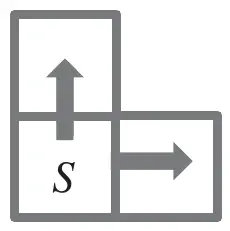
nine other cells and ten moves, where each move goes from cell to
cell ‘horizontally’ or ‘vertically’ across an edge.

How many paths of this length are there from \(S\) to \(F\)?

A board of 32 cells in a 6 by 6 square with a 2 by 2 hole in the middle; S is in the bottom left cell and F in the top right cell

Junior Mathematical Olympiad 2016, Question B5. © UK Mathematics Trust. Original paper on ukmt.org.uk

JMO 2016 B6

JMOCurrent spec10 marksAlgebraNumber & Arithmetic

B6. For which values of the positive integer \(n\) is it possible to divide the first \(3n\) positive integers into three groups each of which has the same sum?

Junior Mathematical Olympiad 2016, Question B6. © UK Mathematics Trust. Original paper on ukmt.org.uk