\(n = 1\): it is impossible to place the integers 1, 2 and 3 into three groups with the same sum.
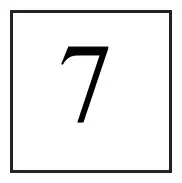
\(n = 2\): \(1 + 2 + 3 + 4 + 5 + 6 = 21\) and so we want to place these integers into three groups, each of which add to 7. The groups are (1, 6), (2, 5) and (3, 4).
\(n = 3\): \(1 + 2 + 3 + 4 + 5 + 6 + 7 + 8 + 9 = 45\) and so we want to place these integers into three groups, each of which adds to 15. Such a grouping is (1, 2, 3, 4, 5), (6, 9) and (7, 8).
It would not be sensible to continue to look at each value of \(n\), so we look at what happens when we move from \(3n\) to \(3\,(n + 2)\).
Let us assume that we can place \(3n\) integers into three groups with the same sum. For the first \(3\,(n + 2)\) integers we must include an extra six integers \(3n + 1\), \(3n + 2\), \(3n + 3\), \(3n + 4\), \(3n + 5\) and \(3n + 6\) to deal with \(3\,(n + 2) = 3n + 6\).
When we add the six new integers together, we obtain \(18n + 21\) meaning we increase the sum by a third of this, \(6n + 7\), to each group to make new groups with the same sum.
So we add pairs to our original three groups: \(3n + 1\) with \(3n + 6\) to one group; \(3n + 2\) with \(3n + 5\) to another group and \(3n + 3\) with \(3n + 4\) to the third group.
However, we know we can obtain three groups with the same sum for \(n = 2\) and \(n = 3\) and now we can also obtain three groups for each of \(n = 4, 6, 8, \ldots\) and so every even integer, in the same way from \(n = 3\) we have \(n = 5, 7, 9, \ldots\) and so every odd integer greater than 1.
Thus the values of \(n\) for which the first \(3n\) positive integers can be placed in three groups with the same sum are all values of \(n > 1\).