Differentiation & Maclaurin

Edexcel

AQA

OCR A

OCR MEI

A2 June 2025 Paper 2 Q9

EdexcelCurrent spec7 marksDifferentiation & Maclaurin

9. Given that

\[y = \arcsin 3x \qquad -\frac{1}{3} \leqslant x \leqslant \frac{1}{3}\]
(a) determine \(\dfrac{\mathrm{d}y}{\mathrm{d}x}\) in terms of \(x\) (2)

The curve \(C\) has equation

\[y = \cos(\arcsin 3x) \qquad -\frac{1}{3} \leqslant x \leqslant \frac{1}{3}\]
(b) Determine \(\dfrac{\mathrm{d}y}{\mathrm{d}x}\) giving your answer in simplest form. (2)
(c) Hence determine the \(x\) coordinate of the point on \(C\) at which the gradient is 4 (3)

A2 June 2025 Paper 2 Q8

8. Given that

\[y = \cos x\sinh x \qquad x \in \mathbb{R}\]
(a) show that\[\frac{\mathrm{d}^4y}{\mathrm{d}x^4} = ky\]where \(k\) is a constant to be determined. (5)
(b) Hence determine the first three non-zero terms of the Maclaurin series for \(y\), giving each coefficient in simplest form. (3)

A2 June 2024 Paper 2 Q2

2.

\[\mathrm{f}(x) = \tanh^{-1}\left(\frac{3 - x}{6 + x}\right) \qquad |x| \lt \frac{3}{2}\]
(a) Show that\[\mathrm{f}^{\prime}(x) = -\frac{1}{2x + 3}\] (4)
(b) Hence determine \(\mathrm{f}^{\prime\prime}(x)\) (1)
(c) Hence show that the Maclaurin series for \(\mathrm{f}(x)\), up to and including the term in \(x^2\), is\[\ln p + qx + rx^2\]where \(p\), \(q\) and \(r\) are constants to be determined. (3)

A2 June 2023 Paper 2 Q2

EdexcelCurrent spec6 marksDifferentiation & Maclaurin

2.

(a) Write down the Maclaurin series of \(\mathrm{e}^x\), in ascending power of \(x\), up to and including the term in \(x^3\) (1)
(b) Hence, without differentiating, determine the Maclaurin series of\[\mathrm{e}^{\left(\mathrm{e}^x - 1\right)}\]in ascending powers of \(x\), up to and including the term in \(x^3\), giving each coefficient in simplest form. (5)

A2 June 2022 Paper 2 Q9

9.

\[y = \cosh^n x \qquad n \geqslant 5\]
(a)
(i) Show that\[\frac{\mathrm{d}^2y}{\mathrm{d}x^2} = n^2\cosh^n x - n(n - 1)\cosh^{n-2} x\] (4)
(ii) Determine an expression for \(\dfrac{\mathrm{d}^4y}{\mathrm{d}x^4}\) (2)
(b) Hence determine the first three non-zero terms of the Maclaurin series for \(y\), giving each coefficient in simplest form. (2)

A2 June 2022 Paper 2 Q5

EdexcelCurrent spec6 marksDifferentiation & Maclaurin

5.

(a) Given that\[y = \arcsin x \qquad\qquad {-1} \leqslant x \leqslant 1\]show that\[\frac{\mathrm{d}y}{\mathrm{d}x} = \frac{1}{\sqrt{1 - x^2}}\] (3)
(b) \[\mathrm{f}(x) = \arcsin\left(\mathrm{e}^x\right) \qquad\qquad x \leqslant 0\]Prove that \(\mathrm{f}(x)\) has no stationary points. (3)

A2 October 2021 Paper 2 Q5

EdexcelCurrent spec8 marksDifferentiation & Maclaurin

5. The curve \(C\) has equation

\[y = \arccos\left(\frac{1}{2}x\right) \qquad -2 \leqslant x \leqslant 2\]
(a) Show that \(C\) has no stationary points. (3)

The normal to \(C\), at the point where \(x = 1\), crosses the \(x\)-axis at the point \(A\) and crosses the \(y\)-axis at the point \(B\).

Given that \(O\) is the origin,

(b) show that the area of the triangle \(OAB\) is\[\frac{1}{54}\left(p\sqrt{3} + q\pi + r\sqrt{3}\pi^2\right)\]where \(p\), \(q\) and \(r\) are integers to be determined. (5)

A2 October 2021 Paper 2 Q3

EdexcelCurrent spec6 marksDifferentiation & Maclaurin

3.

\[\mathrm{f}(x) = \arcsin x \qquad -1 \leqslant x \leqslant 1\]
(a) Determine the first two non-zero terms, in ascending powers of \(x\), of the Maclaurin series for \(\mathrm{f}(x)\), giving each coefficient in its simplest form. (4)
(b) Substitute \(x = \dfrac{1}{2}\) into the answer to part (a) and hence find an approximate value for \(\pi\)
Give your answer in the form \(\dfrac{p}{q}\) where \(p\) and \(q\) are integers to be determined. (2)

A2 October 2021 Paper 1 Q2

EdexcelCurrent spec7 marksDifferentiation & MaclaurinIntegration

2.

(a) Use the Maclaurin series expansion for \(\cos x\) to determine the series expansion of \(\cos^2\left(\dfrac{x}{3}\right)\) in ascending powers of \(x\), up to and including the term in \(x^4\)
Give each term in simplest form. (2)
(b) Use the answer to part (a) and calculus to find an approximation, to 5 decimal places, for\[\int_{\frac{\pi}{6}}^{\frac{\pi}{2}}\left(\frac{1}{x}\cos^2\left(\frac{x}{3}\right)\right)\mathrm{d}x\] (3)
(c) Use the integration function on your calculator to evaluate\[\int_{\frac{\pi}{6}}^{\frac{\pi}{2}}\left(\frac{1}{x}\cos^2\left(\frac{x}{3}\right)\right)\mathrm{d}x\]Give your answer to 5 decimal places. (1)
(d) Assuming that the calculator answer in part (c) is accurate to 5 decimal places, comment on the accuracy of the approximation found in part (b). (1)

A2 October 2020 Paper 2 Q5

EdexcelCurrent spec10 marksDifferentiation & MaclaurinIntegration

5.

(a) \[y = \tan^{-1}x\]Assuming the derivative of \(\tan x\), prove that\[\frac{\mathrm{d}y}{\mathrm{d}x} = \frac{1}{1 + x^2}\] (3)
\[\mathrm{f}(x) = x\tan^{-1}4x\]
(b) Show that\[\int \mathrm{f}(x)\,\mathrm{d}x = Ax^2\tan^{-1}4x + Bx + C\tan^{-1}4x + k\]where \(k\) is an arbitrary constant and \(A\), \(B\) and \(C\) are constants to be determined. (5)
(c) Hence find, in exact form, the mean value of \(\mathrm{f}(x)\) over the interval \(\left[0, \dfrac{\sqrt{3}}{4}\right]\) (2)

A2 June 2025 Paper 1 Q11

AQACurrent spec7 marksDifferentiation & Maclaurin

11 The function \(\mathrm{f}\) is defined by

\[\mathrm{f}(x) = \frac{1}{1 + \mathrm{e}^x} \qquad (x \in \mathbb{R})\]
(a) Show that\[\mathrm{f}^{\prime\prime}(x) = \frac{-\mathrm{e}^x + \mathrm{e}^{2x}}{(1 + \mathrm{e}^x)^3}\] [3 marks]
(b) Hence, find the Maclaurin expansion of \(\mathrm{f}(x)\) up to and including the term in \(x^3\) [4 marks]

A2 June 2025 Paper 1 Q3

AQACurrent spec1 markDifferentiation & Maclaurin

3 Which one of the following expressions cannot be evaluated by l’Hôpital’s rule?

Circle your answer. [1 mark]

  • \(\displaystyle\lim_{x \to 0}\left(\frac{\sqrt{x}}{\cos x}\right)\)
  • \(\displaystyle\lim_{x \to 0}\left(\frac{x^2}{\sin x}\right)\)
  • \(\displaystyle\lim_{x \to 0}\left(\frac{\tanh x}{2x}\right)\)
  • \(\displaystyle\lim_{x \to 0}\left(\frac{\mathrm{e}^x - 1}{\ln(1 + x)}\right)\)

A2 June 2025 Paper 2 Q3

AQACurrent spec1 markDifferentiation & Maclaurin

3 Find \(\dfrac{\mathrm{d}}{\mathrm{d}x}\left(\sin^{-1} x - 2\cos^{-1} x\right)\)

Circle your answer. [1 mark]

  • \(\dfrac{-3}{\sqrt{1 - x^2}}\)
  • \(\dfrac{-1}{\sqrt{1 - x^2}}\)
  • \(\dfrac{1}{\sqrt{1 - x^2}}\)
  • \(\dfrac{3}{\sqrt{1 - x^2}}\)

A2 June 2024 Paper 2 Q18

AQACurrent spec4 marksDifferentiation & Maclaurin

18 In this question you may use results from the formulae booklet without proof.

Use the binomial series for \((1 + x)^n\) and the Maclaurin’s series for \(\sin x\) to find the series expansion for \(\dfrac{1}{(1 + \sin\theta)^4}\) up to and including the term in \(\theta^3\) [4 marks]

AS June 2024 Paper 1 Q15

AQACurrent spec7 marksDifferentiation & Maclaurin

15

(a) Use Maclaurin’s series expansion for \(\ln(1 + x)\) to show that the first three terms of the Maclaurin’s series expansion of \(\ln(1 + 3x)\) are\[3x - \frac{9}{2}x^2 + 9x^3\] [1 mark]
(b) Julia attempts to use the series expansion found in part (a) to find an approximation for \(\ln 4\)

Julia’s incorrect working is shown below.

\[\begin{aligned} \text{Let} \quad 1 + 3x &= 4 \\ 3x &= 3 \\ x &= 1 \end{aligned}\]\[\begin{aligned} \text{So} \quad \ln 4 &\approx 3 \times 1 - \frac{9}{2} \times 1^2 + 9 \times 1^3 \\ &\approx 3 - 4.5 + 9 \\ &\approx 7.5 \end{aligned}\]

Explain the error in Julia’s working. [2 marks]

(c) Use \(x = -\dfrac{1}{6}\) in the series expansion found in part (a) to find an approximation for \(\ln 4\)

Fully justify your answer. [4 marks]

A2 June 2024 Paper 1 Q11

11

(a) Find \(\dfrac{\mathrm{d}}{\mathrm{d}x}\left(x^2\tan^{-1}x\right)\) [1 mark]
(b) Hence find \(\displaystyle\int 2x\tan^{-1}x\,\mathrm{d}x\) [4 marks]

A2 June 2024 Paper 1 Q4

AQACurrent spec1 markDifferentiation & Maclaurin

4 Which one of the following statements is correct?

Tick (✓) one box. [1 mark]

  • \(\displaystyle\lim_{x \to 0}(x^2 \ln x) = 0\)
  • \(\displaystyle\lim_{x \to 0}(x^2 \ln x) = 1\)
  • \(\displaystyle\lim_{x \to 0}(x^2 \ln x) = 2\)
  • \(\displaystyle\lim_{x \to 0}(x^2 \ln x)\) is not defined.

A2 June 2023 Paper 1 Q13

AQACurrent spec5 marksDifferentiation & Maclaurin

13 Use l’Hôpital’s rule to prove that

\[\lim_{x \to \pi}\left(\frac{x\sin 2x}{\cos\left(\frac{x}{2}\right)}\right) = -4\pi\]

[5 marks]

A2 June 2023 Paper 1 Q8

8 The function \(\mathrm{g}\) is defined by

\[\mathrm{g}(x) = \mathrm{e}^{\sin x} \qquad (0 \leqslant x \leqslant 2\pi)\]

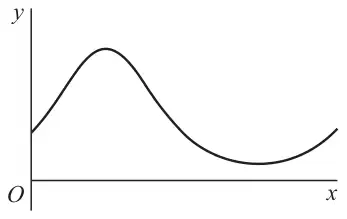
The diagram below shows the graph of \(y = \mathrm{g}(x)\)

Graph of y = g(x) above the x-axis, rising from the y-axis to a maximum, then falling to a minimum and rising again
(a) Find the \(x\)-coordinate of each of the stationary points of the graph of \(y = \mathrm{g}(x)\), giving your answers in exact form. [1 mark]
(b) Use Simpson’s rule with 3 ordinates to estimate\[\int_0^{\pi} \mathrm{g}(x)\,\mathrm{d}x\]

giving your answer to two decimal places. [3 marks]

(c) Explain how Simpson’s rule could be used to find a more accurate estimate of the integral in part (b). [1 mark]

AS June 2023 Paper 1 Q6

6

(a) Find and simplify the first five terms in the Maclaurin series for \(\mathrm{e}^{2x}\) [2 marks]
(b) Hence, or otherwise, write down the first five terms in the Maclaurin series for \(\mathrm{e}^{-2x}\) [1 mark]
(c) Hence, or otherwise, show that the Maclaurin series for \(\cosh(2x)\) is\[a + bx^2 + cx^4 + \ldots\]

where \(a\), \(b\) and \(c\) are rational numbers to be determined. [3 marks]

A2 June 2023 Paper 2 Q2

AQACurrent spec1 markDifferentiation & Maclaurin

2 Which one of the expressions below is not equal to zero?

Circle your answer. [1 mark]

  • \(\displaystyle\lim_{x \to \infty}\left(x^2\mathrm{e}^{-x}\right)\)
  • \(\displaystyle\lim_{x \to 0}\left(x^5 \ln x\right)\)
  • \(\displaystyle\lim_{x \to \infty}\left(\frac{\mathrm{e}^x}{x^5}\right)\)
  • \(\displaystyle\lim_{x \to 0}\left(x^3\mathrm{e}^x\right)\)

A2 June 2022 Paper 2 Q8

AQACurrent spec10 marksDifferentiation & Maclaurin

8

(a) The function \(\mathrm{f}\) is defined as \(\mathrm{f}(x) = \sec x\)
(i) Show that \(\mathrm{f}^{(4)}(0) = 5\) [4 marks]
(ii) Hence find the first three non-zero terms of the Maclaurin series for \(\mathrm{f}(x) = \sec x\) [2 marks]
(b) Prove that\[\lim_{x \to 0}\left(\frac{\sec x - \cosh x}{x^4}\right) = \frac{1}{6}\] [4 marks]

A2 June 2021 Paper 1 Q9

AQACurrent spec4 marksDifferentiation & Maclaurin

9 Use l’Hôpital’s rule to show that

\[\lim_{x \to \infty}\left(x\mathrm{e}^{-x}\right) = 0\]

Fully justify your answer. [4 marks]

AS June 2021 Paper 1 Q7

AQACurrent spec3 marksDifferentiation & Maclaurin

7 Show that the Maclaurin series for \(\ln(\mathrm{e} + 2\mathrm{e}x)\) is

\[1 + 2x - 2x^2 + ax^3 - \ldots\]

where \(a\) is to be determined. [3 marks]

A2 June 2020 Paper 2 Q11

AQACurrent spec8 marksDifferentiation & Maclaurin

11

(a) Starting from the series given in the formulae booklet, show that the general term of the Maclaurin series for\[\frac{\sin x}{x} - \cos x\]

is

\[(-1)^{r+1}\frac{2r}{(2r + 1)!}x^{2r}\]

[4 marks]

(b) Show that\[\lim_{x \to 0}\left[\frac{\dfrac{\sin x}{x} - \cos x}{1 - \cos x}\right] = \frac{2}{3}\]

[4 marks]

A2 June 2020 Paper 2 Q3

AQACurrent spec1 markDifferentiation & Maclaurin

3 Find the gradient of the tangent to the curve

\[y = \sin^{-1} x\]

at the point where \(x = \dfrac{1}{5}\)

Circle your answer. [1 mark]

  • \[\frac{5\sqrt{6}}{12}\]
  • \[\frac{2\sqrt{6}}{5}\]
  • \[\frac{4\sqrt{3}}{25}\]
  • \[\frac{25}{24}\]

AS June 2019 Paper 1 Q10

10

(a) Using the definition of \(\cosh x\) and the Maclaurin series expansion of \(\mathrm{e}^x\), find the first three non-zero terms in the Maclaurin series expansion of \(\cosh x\). [3 marks]
(b) Hence find a trigonometric function for which the first three terms of its Maclaurin series are the same as the first three terms of the Maclaurin series for \(\cosh(\mathrm{i}x)\). [3 marks]

A2 June 2019 Paper 1 Q2

AQACurrent spec1 markDifferentiation & Maclaurin

2 The first two non-zero terms of the Maclaurin series expansion of \(\mathrm{f}(x)\) are \(x\) and \(-\dfrac{1}{2}x^3\)

Which one of the following could be \(\mathrm{f}(x)\)?

Circle your answer. [1 mark]

  • \(x\mathrm{e}^{\frac{1}{2}x^2}\)
  • \(\dfrac{1}{2}\sin 2x\)
  • \(x\cos x\)
  • \((1 + x^3)^{-\frac{1}{2}}\)

A2 June 2025 Paper 2 Q8

OCR ACurrent spec12 marksDifferentiation & MaclaurinInduction

8 A function \(\mathrm{f}(x)\) is defined by \(\mathrm{f}(x) = x\sinh 2x\).

(a) Prove by induction that \(\dfrac{\mathrm{d}^{2n}\mathrm{f}}{\mathrm{d}x^{2n}} = 4^n(x\sinh 2x + n\cosh 2x)\) for \(n \geqslant 0\) where \(\dfrac{\mathrm{d}^0\mathrm{f}}{\mathrm{d}x^0}\) is defined as being equal to \(\mathrm{f}(x)\). [6]
(b) Using the formula given in part (a), determine the exact value of the coefficient of \(x^8\) in the Maclaurin series for \(x\sinh 2x\). [3]
(c) Use the Maclaurin series for \(\mathrm{e}^x\) to verify your answer to part (b). [3]

A2 June 2024 Paper 1 Q9

OCR ACurrent spec6 marksDifferentiation & Maclaurin

9

(a) Find the Maclaurin series of \(\left(\ln(1 + x)\right)^2\) up to and including the term in \(x^4\). [3]

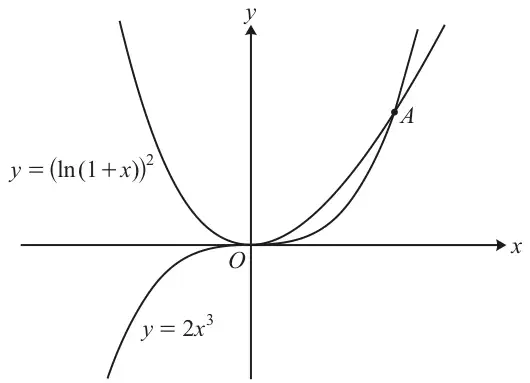
The diagram below shows parts of the graphs of the curves with equations \(y = \left(\ln(1 + x)\right)^2\) and \(y = 2x^3\).

The curves intersect at the origin, \(O\), and at the point \(A\).

Graphs of y = (ln(1 + x)) squared, a U-shaped curve touching the x-axis at O, and y = 2x cubed, which has a point of inflection at O; the curves meet again at the point A in the first quadrant
(b) In this question you must show detailed reasoning.
Use your answer to part (a) to determine an approximation for the value of the \(x\)-coordinate of \(A\). Give your answer to 2 decimal places. [3]

A2 June 2024 Paper 1 Q1

OCR ACurrent spec3 marksDifferentiation & Maclaurin

1 Given that \(y = \sin^{-1}(x^2)\), find \(\dfrac{\mathrm{d}y}{\mathrm{d}x}\). [3]

A2 June 2023 Paper 2 Q9

OCR ACurrent spec9 marksDifferentiation & MaclaurinInduction

9 A function is defined by \(y = \mathrm{f}(t)\) where \(\mathrm{f}(t) = \ln(1 + at)\) and \(a\) is a constant.

(a) By considering \(\dfrac{\mathrm{d}y}{\mathrm{d}t}\), \(\dfrac{\mathrm{d}^{2}y}{\mathrm{d}t^{2}}\), \(\dfrac{\mathrm{d}^{3}y}{\mathrm{d}t^{3}}\) and \(\dfrac{\mathrm{d}^{4}y}{\mathrm{d}t^{4}}\), make a conjecture for a general formula for \(\dfrac{\mathrm{d}^{n}y}{\mathrm{d}t^{n}}\) in terms of \(n\) and \(a\) for any integer \(n \geqslant 1\). [3]
(b) Use induction to prove the formula conjectured in part (a). [4]
(c) In the case where \(\mathrm{f}(t) = \ln(1 + 2t)\), find the rate at which the 6th derivative of \(\mathrm{f}(t)\) is varying when \(t = \dfrac{3}{2}\). [2]

A2 June 2023 Paper 1 Q7

7 An engineer is modelling the motion of a particle \(P\) of mass 0.5 kg in a wind tunnel.

\(P\) is modelled as travelling in a straight line. The point \(O\) is a fixed point within the wind tunnel. The displacement of \(P\) from \(O\) at time \(t\) seconds is \(x\) metres, for \(t \geqslant 0\).

You are given that \(x \geqslant 0\) for all \(t \geqslant 0\) and that \(P\) does not reach the end of the wind tunnel.

If \(t \geqslant 0\), then \(P\) is subject to three forces which are modelled in the following way.

  • The first force has a magnitude of \(5(t + 1)\cosh t\) N and acts in the positive \(x\)-direction.
  • The second force has a magnitude of \(0.5x\) N and acts towards \(O\).
  • The third force has a magnitude of \(\left|\dfrac{\mathrm{d}x}{\mathrm{d}t}\right|\) N and acts in the direction of motion of the particle.
(a) The engineer applies the equation “\(F = ma\)” to the model of the motion of \(P\) and derives the following differential equation.\[5(t + 1)\cosh t - 0.5x + \dfrac{\mathrm{d}x}{\mathrm{d}t} = 0.5\dfrac{\mathrm{d}^2x}{\mathrm{d}t^2}\]
(i) Explain the sign of the \(\dfrac{\mathrm{d}x}{\mathrm{d}t}\) term in the engineer’s differential equation. [1]

When \(t = 0\) the displacement of \(P\) is 6 m, and it is travelling towards \(O\) with a speed of \(5\,\mathrm{m\,s^{-1}}\).

(ii) Without attempting to solve the differential equation, find the acceleration of \(P\) when \(t = 0\). [2]

Let the particular solution to the differential equation in part (a) be a function f such that \(x = \mathrm{f}(t)\) for \(t \geqslant 0\).

The particular solution to the differential equation can be expressed as a Maclaurin series.

(b)
(i) Show that the Maclaurin series for \(\mathrm{f}(t)\) up to and including the term in \(t\) is \(6 - 5t\). [1]
(ii) Use your answer to part (a)(ii) to show that the term in \(t^2\) in the Maclaurin series for \(\mathrm{f}(t)\) is \(-3t^2\). [1]
(iii) By differentiating the differential equation in part (a) with respect to \(t\), show that the term in \(t^3\) in the Maclaurin series for \(\mathrm{f}(t)\) is \(0.5t^3\). [4]

You are given that the complete Maclaurin series for the function f is valid for all values of \(t \geqslant 0\).

After 0.25 seconds \(P\) has travelled 1.43 m towards the origin.

(c)
(i) By using the Maclaurin series for \(\mathrm{f}(t)\) up to and including the term in \(t^3\), evaluate the suitability of the model for determining the displacement of \(P\) from \(O\) when \(t = 0.25\). [1]
(ii) Explain why it might not be sensible to use the Maclaurin series for \(\mathrm{f}(t)\) up to and including the term in \(t^3\) to evaluate the suitability of the model for determining the displacement of \(P\) from \(O\) when \(t = 10\). [1]

A2 June 2023 Paper 2 Q3

3

(a) Show that \(\dfrac{\mathrm{d}}{\mathrm{d}u}\left(\sinh^{-1}u\right) = \dfrac{1}{\sqrt{u^2 + 1}}\). [2]
(b) Find the equation of the normal to the graph of \(y = \sinh^{-1}2x\) at the point where \(x = \sqrt{6}\). Give your answer in the form \(y = mx + c\) where \(m\) and \(c\) are given in exact, non-hyperbolic form. [4]

A2 October 2021 Paper 2 Q10

10 In this question you must show detailed reasoning.

(a) By using an appropriate Maclaurin series prove that if \(x \gt 0\) then \(\mathrm{e}^x \gt 1 + x\). [2]
(b) Hence, by using a suitable substitution, deduce that \(\mathrm{e}^t \gt \mathrm{e}t\) for \(t \gt 1\). [1]
(c) Using the inequality in part (b), and by making a suitable choice for \(t\), determine which is greater, \(\mathrm{e}^\pi\) or \(\pi^\mathrm{e}\). [3]

A2 October 2021 Paper 1 Q2

OCR ACurrent spec8 marksDifferentiation & Maclaurin

2 You are given that \(\mathrm{f}(x) = \tan^{-1}(1 + x)\).

(a)
(i) Find the value of \(\mathrm{f}(0)\). [1]
(ii) Determine the value of \(\mathrm{f}'(0)\). [2]
(iii) Show that \(\mathrm{f}''(0) = -\dfrac{1}{2}\). [3]
(b) Hence find the Maclaurin series for \(\mathrm{f}(x)\) up to and including the term in \(x^2\). [2]

A2 October 2020 Paper 2 Q10

10 Let \(\mathrm{f}(x) = \sin^{-1}(x)\).

(a)
(i) Determine \(\mathrm{f}''(x)\). [2]
(ii) Determine the first two non-zero terms of the Maclaurin expansion for \(\mathrm{f}(x)\). [3]
(iii) By considering the first two non-zero terms of the Maclaurin expansion for \(\mathrm{f}(x)\), find an approximation to \(\displaystyle\int_0^{\frac{1}{2}} \mathrm{f}(x)\,\mathrm{d}x\). Give your answer correct to 6 decimal places. [2]
(b) By writing \(\mathrm{f}(x)\) as \(\sin^{-1}(x) \times 1\), determine the value of \(\displaystyle\int_0^{\frac{1}{2}} \mathrm{f}(x)\,\mathrm{d}x\). Give your answer in exact form. [3]

A2 June 2019 Paper 2 Q10

OCR ACurrent spec7 marksDifferentiation & Maclaurin

10

(a) Use differentiation to find the first two non-zero terms of the Maclaurin expansion of \(\ln\left(\dfrac{1}{2} + \cos x\right)\). [4]
(b) By considering the root of the equation \(\ln\left(\dfrac{1}{2} + \cos x\right) = 0\) deduce that \(\pi \approx 3\sqrt{3\ln\left(\dfrac{3}{2}\right)}\). [3]

A2 June 2019 Paper 2 Q9

9 In this question you must show detailed reasoning.

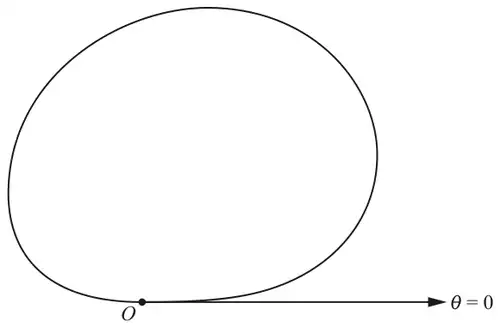
The diagram below shows the curve \(r = \sqrt{\sin\theta}\,\mathrm{e}^{\frac{1}{3}\cos\theta}\) for \(0 \leqslant \theta \leqslant \pi\).

Polar curve: a single closed loop above the initial line, starting and ending at the pole O and tangential to the initial line at O; initial line labelled theta = 0
(a) Find the exact area enclosed by the curve. [4]
(b) Show that the greatest value of \(r\) on the curve is \(\sqrt{\dfrac{\sqrt{3}}{2}}\,\mathrm{e}^{\frac{1}{6}}\). [7]

A2 June 2019 Paper 1 Q6

6 You are given that \(y = \tan^{-1}\sqrt{2x}\).

(a) Find \(\dfrac{\mathrm{d}y}{\mathrm{d}x}\). [2]
(b) Show that \(\displaystyle\int_{\frac{1}{6}}^{\frac{1}{2}} \frac{\sqrt{x}}{(x + 2x^2)}\,\mathrm{d}x = k\pi\) where \(k\) is a number to be determined in exact form. [4]

A2 June 2025 Paper 1 Q8

OCR MEICurrent spec7 marksDifferentiation & MaclaurinInduction

8 The function \(\mathrm{f}(x)\) is defined as \(\mathrm{f}(x) = \ln(1 + x)\), for \(x \gt -1\).

(a) Prove by mathematical induction that the \(n\)th derivative of \(\mathrm{f}(x)\), \(\mathrm{f}^{(n)}(x)\), for all \(n \geqslant 1\), is given by \(\mathrm{f}^{(n)}(x) = \dfrac{(-1)^{n+1}(n - 1)!}{(1 + x)^n}\). [4]
(b) Hence prove that \(\ln(1 + x) = x - \dfrac{x^2}{2} + \dfrac{x^3}{3} - \ldots + \dfrac{(-1)^{n+1}x^n}{n} + \ldots\) for \(-1 \lt x \leqslant 1\).
[You are not required to show this series for \(\ln(1 + x)\) converges for \(-1 \lt x \leqslant 1\).] [3]

A2 June 2024 Paper 1 Q10

OCR MEICurrent spec6 marksDifferentiation & Maclaurin

10

(a) Write down the first three terms of the Maclaurin series for \(\ln(1 + x^3)\). [1]
(b) Use these three terms to show that \(\ln(1.125) \approx \dfrac{n}{1536}\), where \(n\) is an integer to be determined. [3]
(c) Charlie uses the same first three terms of the series to approximate \(\ln 9\) and gets an answer of 147, correct to 3 significant figures. However, \(\ln 9 = 2.20\) correct to 3 significant figures.
Explain Charlie’s error. [2]

A2 June 2023 Paper 1 Q4

OCR MEICurrent spec6 marksDifferentiation & Maclaurin

4

(a)
(i) Given that \(\mathrm{f}(x) = \sqrt{1 + 2x}\), find \(\mathrm{f}^{\prime}(x)\) and \(\mathrm{f}^{\prime\prime}(x)\). [2]
(ii) Hence, find the first three terms of the Maclaurin series for \(\sqrt{1 + 2x}\). [2]
(b) Hence, using a suitable value for \(x\), show that \(\sqrt{5} \approx \dfrac{143}{64}\). [2]

A2 June 2022 Paper 1 Q9

9 The function \(\mathrm{f}(x)\) is defined by \(\mathrm{f}(x) = \ln(1 + \sinh x)\).

(a) Given that \(k\) lies in the domain of this function, explain why \(k\) must be greater than \(\ln\left(\sqrt{2} - 1\right)\). [2]
(b)
(i) Find \(\mathrm{f}'(x)\). [2]
(ii) Show that \(\mathrm{f}''(x) = \dfrac{a\sinh x + b}{(1 + \sinh x)^2}\), where \(a\) and \(b\) are integers to be determined. [3]
(c) Hence find a quadratic approximation to \(\mathrm{f}(x)\) for small values of \(x\). [3]
(d) Find the percentage error in this approximation when \(x = 0.1\). [2]

A2 October 2021 Paper 1 Q5

OCR MEICurrent spec6 marksDifferentiation & Maclaurin

5

(a) Use a Maclaurin series to find a quadratic approximation for \(\ln(1 + 2x)\). [1]
(b) Find the percentage error in using the approximation in part (a) to calculate \(\ln(1.2)\). [3]
(c) Jane uses the Maclaurin series in part (a) to try to calculate an approximation for \(\ln 3\).
Explain whether her method is valid. [2]

A2 October 2021 Paper 1 Q2

OCR MEICurrent spec4 marksDifferentiation & Maclaurin

2 In this question you must show detailed reasoning.

Find the gradient of the curve \(y = 6\arcsin(2x)\) at the point with \(x\)-coordinate \(\frac{1}{4}\). Express the result in the form \(m\sqrt{n}\), where \(m\) and \(n\) are integers. [4]

A2 October 2020 Paper 1 Q13

13

(a) Using exponentials, prove that \(\sinh 2x = 2\cosh x\sinh x\). [2]
(b) Hence show that if \(\mathrm{f}(x) = \sinh^2 x\), then \(\mathrm{f}''(x) = 2\cosh 2x\). [2]
(c) Explain why the coefficients of odd powers in the Maclaurin series for \(\sinh^2 x\) are all zero. [2]
(d) Find the coefficient of \(x^n\) in this series when \(n\) is a positive even number. [3]

A2 June 2019 Paper 1 Q5

OCR MEICurrent spec5 marksDifferentiation & Maclaurin

5 Using the Maclaurin series for \(\cos 2x\), show that, for small values of \(x\),

\[\sin^2 x \approx ax^2 + bx^4 + cx^6,\]

where the values of \(a\), \(b\) and \(c\) are to be given in exact form. [5]