
C1 June 2014 (R) Q6
6.
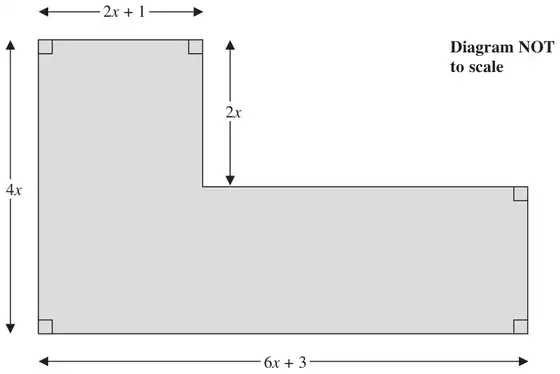
Figure 1 shows the plan of a garden. The marked angles are right angles.
The six edges are straight lines.
The lengths shown in the diagram are given in metres.
Given that the perimeter of the garden is greater than 40 m,
Given that the area of the garden is less than 120 m2,
| Scheme | Marks |
|---|---|
| \(P = 20x + 6\) o.e | B1 |
| \(20x + 6 > 40 \Rightarrow x >\) | M1 |
| \(x > 1.7\) | A1* |
| (3) |
Notes
B1: Correct expression for perimeter but may not be simplified so accept
\(2x + 1 + 2x + 4x + 2 + 2x + 6x + 3 + 4x\) or \(2(10x + 3)\) or any equivalent
M1: Set \(P > 40\) with their linear expression for \(P\) (this may not be correct but should be a sum of sides) and manipulate to get \(x > \ldots\)
A1*: cao \(x > 1.7\). This is a given answer, there must not be any errors, but accept \(1.7 < x\)
| Scheme | Marks |
|---|---|
| Mark parts (b) and (c) together \(A = 2x(2x + 1) + 2x(6x + 3) = 16x^2 + 8x\) | B1 |
| \(16x^2 + 8x - 120 < 0\) | M1 |
| Try to solve their \(2x^2 + x - 15 = 0\) e.g. \((2x - 5)(x + 3) = 0\) so \(x =\) | M1 |
| Choose inside region | M1 |
| \(-3 < x < \dfrac{5}{2}\) or \(0 < x < \dfrac{5}{2}\) (as \(x\) is a length) | A1 |
| (5) |
Notes
Marks parts (b) and (c) together
B1: Writes a correct statement in \(x\) for the area. It need not be simplified. You may isw
Amongst numerous possibilities are.
\(2x(2x + 1) + 2x(6x + 3),\ 16x^2 + 8x,\ \ 4x(6x + 3) - 2x(4x + 2),\ 4x(2x + 1) + 2x(4x + 2)\)
M1: Sets their quadratic expression < 120 and collects on one side of the inequality
M1: For an attempt to solve a 3 Term quadratic equation producing two solutions by factorising, formula or completion of the square with the usual rules (see notes)
M1: For choosing the ‘inside’ region. Can follow through from their critical values – must be stated – not just a table or a graph. Can also be implied by \(0 < x <\) upper value
A1: \(-3 < x < \dfrac{5}{2}\). Accept \(x > -3\) and \(x < 2.5\) or \((-3, 2.5)\)
As \(x\) is a width, accept \(0 < x < \dfrac{5}{2}\) Also accept \(\dfrac{10}{4}\) or 2.5 instead of \(\dfrac{5}{2}\). \(\leqslant\) would be M1A0
Allow this final answer to part (b) to appear as answer to part (c) This would score final M1A1 in (b) then B0 in (c)
| Scheme | Marks |
|---|---|
| \(1.7 < x < \dfrac{5}{2}\) | B1cao |
| (1) | |
| (9 marks) |
Notes
B1cao: \(1.7 < x < \dfrac{5}{2}\). Must be correct. [ This does not imply final M1 in (b)]