
June 2022 Paper 2 Q16
16.
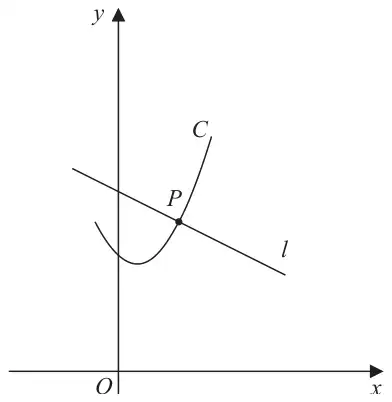
Figure 6 shows a sketch of the curve \(C\) with parametric equations
\[x = 2\tan t + 1 \qquad y = 2\sec^2 t + 3 \qquad -\dfrac{\pi}{4} \leqslant t \leqslant \dfrac{\pi}{3}\]The line \(l\) is the normal to \(C\) at the point \(P\) where \(t = \dfrac{\pi}{4}\)
The straight line with equation
\[y = -\dfrac{1}{2}x + k \qquad \text{where } k \text{ is a constant}\]intersects \(C\) at two distinct points.
| Scheme | Marks | AO |
|---|---|---|
| Attempts \(\dfrac{\mathrm{d}y}{\mathrm{d}x} = \dfrac{\;\dfrac{\mathrm{d}y}{\mathrm{d}t}\;}{\;\dfrac{\mathrm{d}x}{\mathrm{d}t}\;} = \dfrac{4\sec^2 t\tan t}{2\sec^2 t}\ (= 2\tan t)\) | M1 A1 | 1.1b 1.1b |
| At \(t = \dfrac{\pi}{4},\ \dfrac{\mathrm{d}y}{\mathrm{d}x} = 2,\ x = 3,\ y = 7\) | M1 | 2.1 |
| Attempts equation of normal \(y - 7 = -\dfrac{1}{2}(x - 3)\) | M1 | 1.1b |
| \(y = -\dfrac{1}{2}x + \dfrac{17}{2}\quad *\) | A1* | 2.1 |
| (5) |
Notes
(a) Must use parametric differentiation to score any marks in this part and not e.g. Cartesian form
M1: For the key step of attempting \(\dfrac{\mathrm{d}y}{\mathrm{d}x} = \dfrac{\;\dfrac{\mathrm{d}y}{\mathrm{d}t}\;}{\;\dfrac{\mathrm{d}x}{\mathrm{d}t}\;}\). There must be some attempt to differentiate both parameters however poor and divide the right way round so using \(\dfrac{\mathrm{d}y}{\mathrm{d}x} = \dfrac{y}{x}\) scores M0.
This may be implied by e.g. \(\dfrac{\mathrm{d}x}{\mathrm{d}t} = 2\sec^2 t,\ \dfrac{\mathrm{d}y}{\mathrm{d}t} = 4\sec^2 t\tan t,\ t = \dfrac{\pi}{4} \Rightarrow \dfrac{\mathrm{d}x}{\mathrm{d}t} = 4,\ \dfrac{\mathrm{d}y}{\mathrm{d}t} = 8 \Rightarrow \dfrac{\mathrm{d}y}{\mathrm{d}x} = 2\)
A1: \(\dfrac{\mathrm{d}y}{\mathrm{d}x} = \dfrac{4\sec^2 t\tan t}{2\sec^2 t}\). Correct expression in any form. May be implied as above.
Condone the confusion with variables as long as the intention is clear e.g. \(\dfrac{\mathrm{d}y}{\mathrm{d}x} = \dfrac{\;\dfrac{\mathrm{d}y}{\mathrm{d}t}\;}{\;\dfrac{\mathrm{d}x}{\mathrm{d}t}\;} = \dfrac{4\sec^2 x\tan x}{2\sec^2 x}\ (= 2\tan x)\) and allow subsequent marks if this is interpreted correctly
M1: For attempting to find the values of \(x\), \(y\) and the gradient at \(t = \dfrac{\pi}{4}\) AND getting at least two correct.
Follow through on their \(\dfrac{\mathrm{d}y}{\mathrm{d}x}\) so allow for any two of \(x = 3,\ y = 7,\ \dfrac{\mathrm{d}y}{\mathrm{d}x} = 2\ \left(\text{or their } \dfrac{\mathrm{d}y}{\mathrm{d}x} \text{ at } t = \dfrac{\pi}{4}\right)\)
Note that the \(x = 3,\ y = 7\) may be seen as e.g. (3, 7) on the diagram. There must be a non-trivial \(\dfrac{\mathrm{d}y}{\mathrm{d}x}\) for this mark e.g. they must have a \(\dfrac{\mathrm{d}y}{\mathrm{d}x}\) to substitute into.
M1: For a correct attempt at the normal equation using their \(x\) and \(y\) at \(t = \dfrac{\pi}{4}\) with the negative reciprocal of their \(\dfrac{\mathrm{d}y}{\mathrm{d}x}\) at \(t = \dfrac{\pi}{4}\) having made some attempt at \(\dfrac{\mathrm{d}y}{\mathrm{d}x}\) and all correctly placed.
For attempts using \(y = mx + c\) they must reach as far as a value for \(c\) using their \(x\) and \(y\) at \(t = \dfrac{\pi}{4}\) with the negative reciprocal of their \(\dfrac{\mathrm{d}y}{\mathrm{d}x}\) at \(t = \dfrac{\pi}{4}\) all correctly placed.
A1*: Proceeds with a clear argument to the given answer with no errors.
| Scheme | Marks | AO |
|---|---|---|
| Attempts to use \(\sec^2 t = 1 + \tan^2 t \Rightarrow \dfrac{y - 3}{2} = 1 + \left(\dfrac{x - 1}{2}\right)^2\) | M1 | 3.1a |
| \(\Rightarrow y - 3 = 2 + \dfrac{(x - 1)^2}{2} \Rightarrow y = \dfrac{1}{2}(x - 1)^2 + 5\quad *\) | A1* | 2.1 |
| (2) |
(b) Alternative 1:
| Scheme | Marks | AO |
|---|---|---|
| \(\begin{aligned}y &= \dfrac{1}{2}(x - 1)^2 + 5 = \dfrac{1}{2}(2\tan t + 1 - 1)^2 + 5\\[4pt] &= \dfrac{1}{2}4\tan^2 t + 5 = 2(\sec^2 t - 1) + 5\end{aligned}\) | M1 | 3.1a |
| \(= 2\sec^2 t + 3 = y\,*\) | A1 | 2.1 |
(b) Alternative 2:
| Scheme | Marks | AO |
|---|---|---|
| \(\begin{aligned}&x = 2\tan t + 1 \Rightarrow t = \tan^{-1}\left(\dfrac{x - 1}{2}\right) \Rightarrow y = 2\sec^2\left(\tan^{-1}\left(\dfrac{x - 1}{2}\right)\right) + 3\\[4pt] &\Rightarrow y = 2\left(1 + \tan^2\left(\tan^{-1}\left(\dfrac{x - 1}{2}\right)\right)\right) + 3\end{aligned}\) | M1 | 3.1a |
| \(\Rightarrow y = 2\left(1 + \left(\dfrac{x - 1}{2}\right)^2\right) + 3 = \dfrac{1}{2}(x - 1)^2 + 5\,*\) | A1 | 2.1 |
(b) Alternative 3:
| Scheme | Marks | AO |
|---|---|---|
| \(\begin{aligned}&\dfrac{\mathrm{d}y}{\mathrm{d}x} = 2\tan t = x - 1 \Rightarrow y = \int (x - 1)\,\mathrm{d}x = \dfrac{x^2}{2} - x + c\\[4pt] &(3, 7) \to 7 = \dfrac{3^2}{2} - 3 + c \Rightarrow c = \dfrac{11}{2}\end{aligned}\) | M1 | 3.1a |
| \(\dfrac{x^2}{2} - x + \dfrac{11}{2} = \dfrac{1}{2}(x^2 - 2x) + \dfrac{11}{2} = \dfrac{1}{2}(x - 1)^2 - \dfrac{1}{2} + \dfrac{11}{2} = \dfrac{1}{2}(x - 1)^2 + 5\,*\) | A1 | 2.1 |
Notes
M1: Attempts to use \(\sec^2 t = 1 + \tan^2 t\) oe to obtain an equation involving \(y\) and \((x - 1)^2\)
E.g. as above or e.g. \(y = 2\sec^2 t + 3 = 2(1 + \tan^2 t) + 3 = 2\left(1 + \left(\dfrac{x - 1}{2}\right)^2\right) + 3\) for M1 and then \(y = \dfrac{1}{2}(x - 1)^2 + 5\,*\) for A1
A1*: Proceeds with a clear argument to the given answer with no errors
Alternative 1:
M1: Uses the given result, substitutes for \(x\) and attempts to use \(\sec^2 t = 1 + \tan^2 t\) oe
A1: Proceeds with a clear argument to the \(y\) parameter and makes a (minimal) conclusion e.g. “ = \(y\)” QED, hence proven etc.
Alternative 2:
M1: Uses the \(x\) parameter to obtain \(t\) in terms of arctan, substitutes into \(y\) and attempts to use \(\sec^2 t = 1 + \tan^2 t\) oe
A1: Proceeds with a clear argument to the given answer with no errors
Alternative 3:
M1: Uses \(\dfrac{\mathrm{d}y}{\mathrm{d}x}\) from part (a) to express \(\dfrac{\mathrm{d}y}{\mathrm{d}x}\) in terms of \(x\), integrates and uses (3, 7) to find “\(c\)” to reach a Cartesian equation.
A1: Proceeds with a clear argument to the given answer with no errors
Allow the marks for (b) to score anywhere in their solution e.g. if they find the Cartesian equation in part (a)
| Scheme | Marks | AO |
|---|---|---|
| Attempts the lower limit for \(k\): \(\dfrac{1}{2}(x - 1)^2 + 5 = -\dfrac{1}{2}x + k \Rightarrow x^2 - x + (11 - 2k) = 0\) \(b^2 - 4ac = 1 - 4(11 - 2k) = 0 \Rightarrow k = \ldots\) | M1 | 2.1 |
| \((k =)\ \dfrac{43}{8}\) | A1 | 1.1b |
| Attempts the upper limit for \(k\): \((x, y)_{t = -\frac{\pi}{4}}:\ t = -\dfrac{\pi}{4} \Rightarrow x = 2\tan\left(-\dfrac{\pi}{4}\right) + 1 = -1,\ y = 2\sec^2\left(-\dfrac{\pi}{4}\right) + 3 = 7\) \((-1,\ 7),\ y = -\dfrac{1}{2}x + k \Rightarrow 7 = \dfrac{1}{2} + k \Rightarrow k = \ldots\) | M1 | 2.1 |
| \((k =)\ \dfrac{13}{2}\) | A1 | 1.1b |
| \(\dfrac{43}{8} \lt k \leqslant \dfrac{13}{2}\) | A1 | 2.2a |
| (5) | ||
| (12 marks) |
Notes
M1: A full attempt to find the lower limit for \(k\).
\(\dfrac{1}{2}(x - 1)^2 + 5 = -\dfrac{1}{2}x + k \Rightarrow x^2 - x + (11 - 2k) = 0 \Rightarrow b^2 - 4ac = 1 - 4(11 - 2k) = 0 \Rightarrow k = \ldots\)
Score M1 for setting \(\dfrac{1}{2}(x - 1)^2 + 5 = -\dfrac{1}{2}x + k\), rearranging to 3TQ form and attempts \(b^2 - 4ac \ldots 0\) e.g. \(b^2 - 4ac \gt 0\) or e.g. \(b^2 - 4ac \lt 0\) correctly to find a value for \(k\).
A1: \(k = \dfrac{43}{8}\) oe. Look for this value e.g. may appear in an inequality e.g. \(k \gt \dfrac{43}{8},\ k \lt \dfrac{43}{8}\)
An alternative method using calculus for lower limit:
\[\begin{gathered}y = \dfrac{1}{2}(x - 1)^2 + 5 \Rightarrow \dfrac{\mathrm{d}y}{\mathrm{d}x} = x - 1,\ x - 1 = -\dfrac{1}{2} \Rightarrow x = \dfrac{1}{2}\\[4pt]x = \dfrac{1}{2} \Rightarrow y = \dfrac{1}{2}\left(\dfrac{1}{2} - 1\right)^2 + 5 = \dfrac{41}{8}\\[4pt]y = -\dfrac{1}{2}x + k \Rightarrow \dfrac{41}{8} = -\dfrac{1}{4} + k \Rightarrow k = \ldots\end{gathered}\]Score M1 for \(\dfrac{\mathrm{d}y}{\mathrm{d}x} =\) “a linear expression in \(x\)”, sets \(= -\dfrac{1}{2}\), solves a linear equation to find \(x\) and then substitutes into the given result in (b) to find \(y\) and then uses \(y = -\dfrac{1}{2}x + k\) to find a value for \(k\). A1: \(k = \dfrac{43}{8}\) oe. Look for this value e.g. may appear in an inequality e.g. \(k \gt \dfrac{43}{8},\ k \lt \dfrac{43}{8}\)
An alternative method using parameters for lower limit:
\[\begin{gathered}y = -\dfrac{1}{2}x + k \Rightarrow 2\sec^2 t + 3 = -\dfrac{1}{2}(2\tan t + 1) + k\\[4pt]\Rightarrow 2(1 + \tan^2 t) + 3 = -\dfrac{1}{2}(2\tan t + 1) + k \Rightarrow 2\tan^2 t + \tan t + 5.5 - k = 0\\[4pt]b^2 - 4ac = 0 \Rightarrow 1 - 4 \times 2(5.5 - k) = 0 \Rightarrow k = \dfrac{43}{8}\end{gathered}\]Score M1 for substituting parametric form of \(x\) and \(y\) into \(y = -\dfrac{1}{2}x + k\), uses \(\sec^2 t = 1 + \tan^2 t\) rearranges to 3TQ form and attempts \(b^2 - 4ac \ldots 0\) or e.g. \(b^2 - 4ac \gt 0\) or \(b^2 - 4ac \lt 0\) correctly to find a value for \(k\).
A1: \(k = \dfrac{43}{8}\) oe. Look for this value e.g. may appear in an inequality e.g. \(k \gt \dfrac{43}{8},\ k \lt \dfrac{43}{8}\)
M1: A full attempt to find the upper limit for \(k\). This requires an attempt to find the value of \(x\) and the value of \(y\) using \(t = -\dfrac{\pi}{4}\), the substitution of these values into \(y = -\dfrac{1}{2}x + k\) and solves for \(k\).
A1: \(k = \dfrac{13}{2}\). Look for this value e.g. may appear in an inequality.
A1: Deduces the correct range for \(k\): \(\dfrac{43}{8} \lt k \leqslant \dfrac{13}{2}\)
Allow equivalent notation e.g. \(\left(k \leqslant \dfrac{13}{2} \text{ and } k \gt \dfrac{43}{8}\right)\), \(\left(k \leqslant \dfrac{13}{2} \cap k \gt \dfrac{43}{8}\right)\), \(\left(\dfrac{43}{8},\ \dfrac{13}{2}\right]\)
But not e.g. \(\left(k \leqslant \dfrac{13}{2},\ k \gt \dfrac{43}{8}\right)\), \(\left(k \leqslant \dfrac{13}{2} \cup k \gt \dfrac{43}{8}\right)\), \(\left(k \leqslant \dfrac{13}{2} \text{ or } k \gt \dfrac{43}{8}\right)\) and do not allow if in terms of \(x\).
Allow equivalent exact values for \(\dfrac{43}{8},\ \dfrac{13}{2}\)
There may be other methods for finding the upper limit which are valid. If you are in any doubt if a method deserves credit then use Review.