
June 2019 Paper 2 Q6
6.
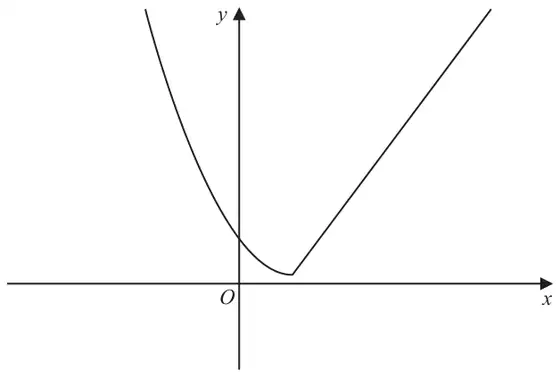
Figure 4 shows a sketch of the graph of \(y = \mathrm{g}(x)\), where
\[\mathrm{g}(x) = \begin{cases} (x-2)^2 + 1 & x \leqslant 2 \\ 4x - 7 & x \gt 2 \end{cases}\]The function h is defined by
\[\mathrm{h}(x) = (x-2)^2 + 1 \qquad x \leqslant 2\]| Scheme | Marks | AO |
|---|---|---|
| \(\mathrm{gg}(0) = \mathrm{g}((0-2)^2 + 1) = \mathrm{g}(5) = 4(5) - 7 = 13\) | M1 A1 | 2.1 1.1b |
| (2) |
Notes
M1: Uses a complete method to find \(\mathrm{gg}(0)\). E.g.
- Substituting \(x = 0\) into \((0-2)^2 + 1\) and the result of this into the relevant part of \(\mathrm{g}(x)\)
- Attempts to substitute \(x = 0\) into \(4((x-2)^2 + 1) - 7\) or \(4(x-2)^2 - 3\)
A1: \(\mathrm{gg}(0) = 13\)
| Scheme | Marks | AO |
|---|---|---|
| Solves either \((x-2)^2 + 1 = 28 \Rightarrow x = \ldots\) or \(4x - 7 = 28 \Rightarrow x = \ldots\) | M1 | 1.1b |
| At least one critical value \(x = 2 - 3\sqrt{3}\) or \(x = \dfrac{35}{4}\) is correct | A1 | 1.1b |
| Solves both \((x-2)^2 + 1 = 28 \Rightarrow x = \ldots\) and \(4x - 7 = 28 \Rightarrow x = \ldots\) | M1 | 1.1b |
| Correct final answer of ‘\(x \lt 2 - 3\sqrt{3},\ x \gt \dfrac{35}{4}\)’ | A1 | 2.1 |
| Note: Writing awrt \(-3.20\) or a truncated \(-3.19\) or a truncated \(-3.2\) in place of \(2 - 3\sqrt{3}\) is accepted for any of the A marks | ||
| (4) |
Notes
M1: See scheme
A1: See scheme
M1: See scheme
A1: Brings all the strands of the problem together to give a correct solution.
Note: You can ignore inequality symbols for any of the M marks
Note: If a 3TQ is formed (e.g. \(x^2 - 4x - 23 = 0\)) then a correct method for solving a 3TQ is required for the relevant method mark to be given.
Note: Writing \((x-2)^2 + 1 = 28 \Rightarrow (x-2) + 1 = \sqrt{28} \Rightarrow x = -1 + \sqrt{28}\) (i.e. taking the square-root of each term to solve \((x-2)^2 + 1 = 28\) is not considered to be an acceptable method)
Note: Allow set notation. E.g. \(\{x \in \mathbb{R} : x \lt 2 - 3\sqrt{3} \cup x \gt 8.75\}\) is fine for the final A mark
Note: Give final A0 for \(\{x \in \mathbb{R} : x \lt 2 - 3\sqrt{3} \cap x \gt 8.75\}\)
Note: Give final A0 for \(2 - 3\sqrt{3} \gt x \gt 8.75\)
Note: Allow final A1 for their writing a final answer of “\(x \lt 2 - 3\sqrt{3}\) and \(x \gt \dfrac{35}{4}\)”
Note: Allow final A1 for a final answer of \(x \lt 2 - 3\sqrt{3},\ x \gt \dfrac{35}{4}\)
Note: Writing \(2 - \sqrt{27}\) in place of \(2 - 3\sqrt{3}\) is accepted for any of the A marks
Note: Allow final A1 for a final answer of \(x \lt -3.20,\ x \gt 8.75\)
Note: Using 29 instead of 28 is M0 A0 M0 A0
| Scheme | Marks | AO |
|---|---|---|
| h is a one-one {function (or mapping) so has an inverse} g is a many-one {function (or mapping) so does not have an inverse} | B1 | 2.4 |
| (1) |
Notes
B1: A correct explanation that conveys the underlined points
Note: A minimal acceptable reason is “h is a one-one and g is a many-one”
Note: Give B1 for “\(\mathrm{h}^{-1}\) is one-one and \(\mathrm{g}^{-1}\) is one-many”
Note: Give B1 for “h is a one-one and g is not”
Note: Allow B1 for “g is a many-one and h is not”
| Scheme | Marks | AO |
|---|---|---|
| Way 1 \(\left\{\mathrm{h}^{-1}(x) = -\dfrac{1}{2} \Rightarrow\right\}\ x = \mathrm{h}\left(-\dfrac{1}{2}\right)\) | M1 B1 on epen | 1.1b |
| \(x = \left(-\dfrac{1}{2} - 2\right)^2 + 1\) Note: Condone \(x = \left(\dfrac{1}{2} - 2\right)^2 + 1\) | M1 | 1.1b |
| \(\Rightarrow x = 7.25\) only cso | A1 | 2.2a |
| (3) | ||
| (10 marks) |
Notes
(d) Way 2
| Scheme | Marks | AO |
|---|---|---|
| \(\{\text{their } \mathrm{h}^{-1}(x)\} = \pm 2 \pm \sqrt{x \pm 1}\) | M1 | 1.1b |
| Attempts to solve \(\pm 2 \pm \sqrt{x \pm 1} = -\dfrac{1}{2} \Rightarrow \pm\sqrt{x \pm 1} = \ldots\) | M1 | 1.1b |
| \(\Rightarrow x = 7.25\) only cso | A1 | 2.2a |
| (3) |
Way 1
M1: Writes \(x = \mathrm{h}\left(-\dfrac{1}{2}\right)\)
M1: See scheme
A1: Uses \(x = \mathrm{h}\left(-\dfrac{1}{2}\right)\) to deduce that \(x = 7.25\) only, cso
Way 2
M1: See scheme
M1: See scheme
A1: Use a correct \(\mathrm{h}^{-1}(x) = 2 - \sqrt{x - 1}\) to deduce that \(x = 7.25\) only, cso
Note: Give final A0 cso for \(2 + \sqrt{x-1} = -\dfrac{1}{2} \Rightarrow \sqrt{x-1} = -\dfrac{5}{2} \Rightarrow x - 1 = \dfrac{25}{4} \Rightarrow x = 7.25\)
Note: Give final A0 cso for \(2 \pm \sqrt{x-1} = -\dfrac{1}{2} \Rightarrow \sqrt{x-1} = -\dfrac{5}{2} \Rightarrow x - 1 = \dfrac{25}{4} \Rightarrow x = 7.25\)
Note: Give final A1 cso for \(2 \pm \sqrt{x-1} = -\dfrac{1}{2} \Rightarrow -\sqrt{x-1} = -\dfrac{5}{2} \Rightarrow x - 1 = \dfrac{25}{4} \Rightarrow x = 7.25\)
Note: Allow final A1 for \(2 \pm \sqrt{x-1} = -\dfrac{1}{2} \Rightarrow \pm\sqrt{x-1} = -\dfrac{5}{2} \Rightarrow x - 1 = \dfrac{25}{4} \Rightarrow x = 7.25\)