
C2 June 2016 Q9
9.
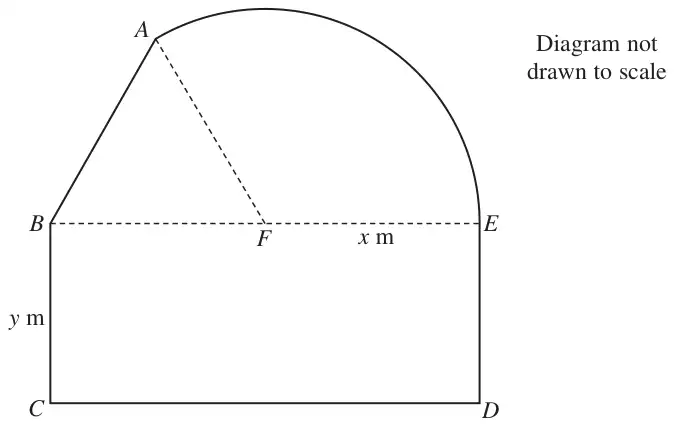
Figure 4 shows a plan view of a sheep enclosure.
The enclosure \(ABCDEA\), as shown in Figure 4, consists of a rectangle \(BCDE\) joined to an equilateral triangle \(BFA\) and a sector \(FEA\) of a circle with radius \(x\) metres and centre \(F\).
The points \(B\), \(F\) and \(E\) lie on a straight line with \(FE = x\) metres and \(10 \leqslant x \leqslant 25\)
Given that \(BC = y\) metres, where \(y \gt 0\), and the area of the enclosure is 1000 m2,
| Scheme | Marks |
|---|---|
| Area\((FEA) = \dfrac{1}{2}x^2\left(\dfrac{2\pi}{3}\right);\ = \dfrac{\pi x^2}{3}\) \(\dfrac{1}{2}x^2 \times \left(\dfrac{2\pi}{3}\right)\) or \(\dfrac{120}{360} \times \pi x^2\) simplified or un-simplified \(\dfrac{\pi x^2}{3}\) | M1 A1 |
| (2) |
Notes
M1 Attempts to use Area\((FEA) = \dfrac{1}{2}x^2 \times \dfrac{2\pi}{3}\) (using radian angle) or \(\dfrac{120}{360} \times \pi x^2\) (using angle in degrees)
A1 \(\dfrac{\pi x^2}{3}\) cao (Must be simplified and be their answer in part (a)) Answer only implies M1A1.
N.B. Area\((FEA) = \dfrac{1}{2}x^2 \times 120\) is awarded M0A0
| Scheme | Marks |
|---|---|
| Parts (b) and (c) may be marked together | |
| \(\{A =\}\ \dfrac{1}{2}x^2\sin 60^\circ + \dfrac{1}{3}\pi x^2 + 2xy\) Attempt to sum 3 areas (at least one correct) Correct expression for at least two terms of \(A\) | M1 A1 |
| \(1000 = \dfrac{\sqrt{3}x^2}{4} + \dfrac{\pi x^2}{3} + 2xy \Rightarrow y = \dfrac{500}{x} - \dfrac{\sqrt{3}x}{8} - \dfrac{\pi x}{6}\) \(\Rightarrow \underline{y = \dfrac{500}{x} - \dfrac{x}{24}\left(4\pi + 3\sqrt{3}\right)}\) * Correct proof. | A1 * |
| (3) |
Notes
M1 An attempt to sum 3 “ areas” consisting of rectangle, triangle and sector (allow slips even in dimensions) but one area should be correct
1st A1 Correct expression for two of the three areas listed above.
Accept any correct equivalents e.g. two correct from \(\dfrac{1}{2}x^2\sin\left(\dfrac{\pi}{3}\right)\) or \(\dfrac{1}{4}x^2\sqrt{3}\), \(\dfrac{1}{2} \times \dfrac{2}{3}\pi x^2\), \(2xy\)
2nd A1* This is a given answer which should be stated and should be achieved without error so all three areas must have been correct and their sum put equal to 1000 and an intermediate step of rearrangement should be present.
| Scheme | Marks |
|---|---|
| \(\{P =\}\ x + x\theta + y + 2x + y\ \left\{= 3x + \dfrac{2\pi x}{3} + 2y\right\}\) Correct expression in \(x\) and \(y\) for their \(\theta\) measured in rads | B1ft |
| \(\ldots 2y = \ + 2\left(\dfrac{500}{x} - \dfrac{x}{24}\left(4\pi + 3\sqrt{3}\right)\right)\) Substitutes expression from (b) into \(y\) term. | M1 |
| \(P = 3x + \dfrac{2\pi x}{3} + \dfrac{1000}{x} - \dfrac{\pi x}{3} - \dfrac{\sqrt{3}}{4}x \Rightarrow P = \dfrac{1000}{x} + 3x + \dfrac{\pi x}{3} - \dfrac{\sqrt{3}}{4}x\) | |
| \(\Rightarrow \underline{P = \dfrac{1000}{x} + \dfrac{x}{12}\left(4\pi + 36 - 3\sqrt{3}\right)}\) * Correct proof. | A1 * |
| (3) |
Notes
B1ft Correct expression for \(P\) from arc length, length \(AB\) and three sides of rectangle in terms of both \(x\) and \(y\) with \(2y\) (or \(y + y\)), \(3x\) (or \(x + 2x\)) (or \(x + x + x\)), and \(x\theta\) clearly listed . Allow addition after substitution of \(y\).
NB \(\theta = \dfrac{2\pi}{3}\) but allow use of their consistent \(\theta\) in radians (usually \(\theta = \dfrac{\pi}{3}\) ) from parts (a) and (b) for this mark. \(120x\) or \(60x\) do not get this mark.
M1 Substitutes \(y = \dfrac{500}{x} - \dfrac{x}{24}\left(4\pi + 3\sqrt{3}\right)\) or their unsimplified attempt at \(y\) from earlier (allow slips e.g. sign slips) into \(2y\) term.
A1* This is a given answer which should be stated and should be achieved without error
| Scheme | Marks |
|---|---|
| Parts (d) and (e) should be marked together | |
| \(\dfrac{\mathrm{d}P}{\mathrm{d}x} = -1000x^{-2} + \dfrac{4\pi + 36 - 3\sqrt{3}}{12};\ = 0\) \(\dfrac{1000}{x} \to \dfrac{\pm\lambda}{x^2}\) Correct differentiation (need not be simplified). Their \(P\prime = 0\) | M1 A1; M1 |
| \(\Rightarrow x = \sqrt{\dfrac{1000(12)}{4\pi + 36 - 3\sqrt{3}}}\) \((= 16.63392808\ldots)\) \(\sqrt{\dfrac{1000(12)}{4\pi + 36 - 3\sqrt{3}}}\) or awrt 17 (may be implied) | A1 |
| \(\left\{P = \dfrac{1000}{(16.63\ldots)} + \dfrac{(16.63\ldots)}{12}\left(4\pi + 36 - 3\sqrt{3}\right)\right\} \Rightarrow P = 120.236..\) (m) awrt 120 | A1 |
| (5) |
Notes
1st M1 Need to see at least \(\dfrac{1000}{x} \to \dfrac{\pm\lambda}{x^2}\)
1st A1 Correct differentiation of both terms (need not be simplified) Not follow through. Allow any correct equivalent.
e.g. \(\dfrac{\mathrm{d}P}{\mathrm{d}x} = -1000x^{-2} + \dfrac{\pi}{3} + 3 - \dfrac{\sqrt{3}}{4}\) Also allow \(\dfrac{\mathrm{d}P}{\mathrm{d}x} = -1000x^{-2} + \textit{awrt}\ 3.61\)
Check carefully as there are many correct equivalents and some have two terms in \(x\pi\) to differentiate obtaining for example \(\dfrac{2\pi}{3} - \dfrac{8\pi}{24}\) instead of \(\dfrac{\pi}{3}\)
2nd M1 Setting their \(\dfrac{\mathrm{d}P}{\mathrm{d}x} = 0\). Do not need to find \(x\), but if inequalities are used this mark cannot be gained until candidate states or uses a value of \(x\) without inequalities. May not be explicit but may be implied by correct working and value or expression for \(x\) . May result in \(x^2 \lt 0\) so M1A0
2nd A1 There is no requirement to write down a value for \(x\), so this mark may be implied by a correct value for \(P\). It may be given for a correct expression or value for \(x\) of 16.6, 16.7 or 17
3rd A1 Allow answers wrt 120 but not 121
Special case (d) Some candidates multiply \(P\) by 12 to “simplify” If they write \(\dfrac{\mathrm{d}P}{\mathrm{d}x} = -12000x^{-2} + 4\pi + 36 - 3\sqrt{3};\ = 0\) then solve they will get the correct \(x\) and \(P\) They should be awarded M1A0M1A1A1 in part (d). If they then do part (e) writing \(\dfrac{\mathrm{d}^2P}{\mathrm{d}x^2} = \dfrac{24000}{x^3} \gt 0 \Rightarrow\) Minimum They should be awarded M1A0 (so lose 2 marks in all)
If they wrote \(\dfrac{\mathrm{d}(12P)}{\mathrm{d}x} = -12000x^{-2} + 4\pi + 36 - 3\sqrt{3};\ = 0\) etc they could get full marks.
| Scheme | Marks |
|---|---|
| \(\dfrac{\mathrm{d}^2P}{\mathrm{d}x^2} = \dfrac{2000}{x^3} \gt 0 \Rightarrow\) Minimum Finds \(P\prime\prime\) and considers sign. \(\dfrac{2000}{x^3}\) (need not be simplified) and \(\gt 0\) and conclusion. Only follow through on a correct \(P\prime\prime\) and \(x\) in range \(10 \lt x \lt 25\). | M1 A1ft |
| (2) | |
| 15 |
Notes
M1 Finds \(P\prime\prime\) and considers sign. Follow through correct differentiation of their \(P\prime\) (not just reduction of power)
A1ft Need \(\dfrac{2000}{x^3}\) and \(\gt 0\) (or positive value) and conclusion. Only follow through on a correct \(P\prime\prime\) and a value for \(x\) in the range \(10 \lt x \lt 25\) (need not see \(x\) substituted but an \(x\) should have been found)
If \(P\) is substituted then this is awarded M1 A0