
October 2020 Paper 2 Q7
7.
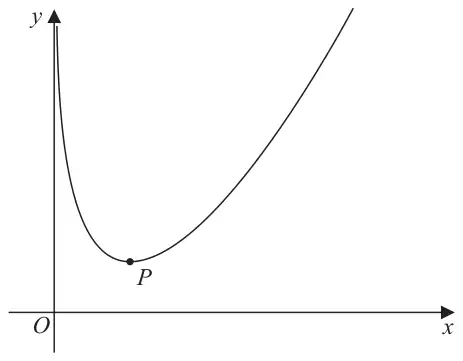
Figure 1 shows a sketch of the curve \(C\) with equation\[y = \frac{4x^2 + x}{2\sqrt{x}} - 4\ln x \qquad x \gt 0\]
The point \(P\), shown in Figure 1, is the minimum turning point on \(C\).
| Scheme | Marks | AO |
|---|---|---|
| \(\ln x \to \dfrac{1}{x}\) | B1 | 1.1a |
| Method to differentiate \(\dfrac{4x^2 + x}{2\sqrt{x}}\) − see notes | M1 | 1.1b |
| E.g. \(2 \times \dfrac{3}{2}x^{\frac{1}{2}} + \dfrac{1}{2} \times \dfrac{1}{2}x^{-\frac{1}{2}}\) | A1 | 1.1b |
| \(\dfrac{\mathrm{d}y}{\mathrm{d}x} = 3\sqrt{x} + \dfrac{1}{4\sqrt{x}} - \dfrac{4}{x} = \dfrac{12x^2 + x - 16\sqrt{x}}{4x\sqrt{x}}\) * | A1* | 2.1 |
| (4) |
Notes
B1: Differentiates \(\ln x \to \dfrac{1}{x}\) seen or implied
M1: Correct method to differentiate \(\dfrac{4x^2 + x}{2\sqrt{x}}\):
Look for \(\dfrac{4x^2 + x}{2\sqrt{x}} \to \ldots x^{\frac{3}{2}} + \ldots x^{\frac{1}{2}}\) being then differentiated to \(Px^{\frac{1}{2}} + \ldots\) or \(\ldots + Qx^{-\frac{1}{2}}\)
Alternatively uses the quotient rule on \(\dfrac{4x^2 + x}{2\sqrt{x}}\).
Condone slips but if rule is not quoted expect \(\left(\dfrac{\mathrm{d}y}{\mathrm{d}x}\right) = \dfrac{2\sqrt{x}(Ax + B) - (4x^2 + x)Cx^{-\frac{1}{2}}}{(2\sqrt{x})^2}\ (A, B, C \gt 0)\)
But a correct rule may be implied by their \(u, v, u^{\prime}, v^{\prime}\) followed by applying \(\dfrac{vu^{\prime} - uv^{\prime}}{v^2}\) etc.
Alternatively uses the product rule on \((4x^2 + x)(2\sqrt{x})^{-1}\)
Condone slips but expect \(\left(\dfrac{\mathrm{d}y}{\mathrm{d}x}\right) = Ax^{-\frac{1}{2}}(Bx + C) + D(4x^2 + x)x^{-\frac{3}{2}}\ (A, B, C \gt 0)\)
In general condone missing brackets for the M mark. If they quote \(u = 4x^2 + x\) and \(v = 2\sqrt{x}\) and don’t make the differentiation easier, they can be awarded this mark for applying the correct rule. Also allow this mark if they quote the correct quotient rule but only have \(v\) rather than \(v^2\) in the denominator.
A1: Correct differentiation of \(\dfrac{4x^2 + x}{2\sqrt{x}}\) although may not be simplified.
Examples: \(\left(\dfrac{\mathrm{d}y}{\mathrm{d}x}\right) = \dfrac{2\sqrt{x}(8x + 1) - (4x^2 + x)x^{-\frac{1}{2}}}{(2\sqrt{x})^2},\ \dfrac{1}{2}x^{-\frac{1}{2}}(8x + 1) - \dfrac{1}{4}(4x^2 + x)x^{-\frac{3}{2}},\ 2 \times \dfrac{3}{2}x^{\frac{1}{2}} + \dfrac{1}{2} \times \dfrac{1}{2}x^{-\frac{1}{2}}\)
A1*: Obtains \(\dfrac{\mathrm{d}y}{\mathrm{d}x} = \dfrac{12x^2 + x - 16\sqrt{x}}{4x\sqrt{x}}\) via \(3\sqrt{x} + \dfrac{1}{4\sqrt{x}} - \dfrac{4}{x}\) or a correct application of the quotient or product rule and with sufficient working shown to reach the printed answer.
There must be no errors e.g. missing brackets.
| Scheme | Marks | AO |
|---|---|---|
| \(12x^2 + x - 16\sqrt{x} = 0 \Rightarrow 12x^{\frac{3}{2}} + x^{\frac{1}{2}} - 16 = 0\) | M1 | 1.1b |
| E.g. \(12x^{\frac{3}{2}} = 16 - \sqrt{x}\) | dM1 | 1.1b |
| \(x^{\frac{3}{2}} = \dfrac{4}{3} - \dfrac{\sqrt{x}}{12} \Rightarrow x = \left(\dfrac{4}{3} - \dfrac{\sqrt{x}}{12}\right)^{\frac{2}{3}}\) * | A1* | 2.1 |
| (3) |
Notes
M1: Sets \(12x^2 + x - 16\sqrt{x} = 0\) and divides by \(\sqrt{x}\) or equivalent e.g. divides by \(x\) and multiplies by \(\sqrt{x}\)
dM1: Makes the term in \(x^{\frac{3}{2}}\) the subject of the formula
A1*: A correct and rigorous argument leading to the given solution.
Alternative - working backwards:
\(x = \left(\dfrac{4}{3} - \dfrac{\sqrt{x}}{12}\right)^{\frac{2}{3}} \Rightarrow x^{\frac{3}{2}} = \dfrac{4}{3} - \dfrac{\sqrt{x}}{12} \Rightarrow 12x^{\frac{3}{2}} = 16 - \sqrt{x} \Rightarrow 12x^2 = 16\sqrt{x} - x \Rightarrow 12x^2 - 16\sqrt{x} + x = 0\)
M1: For raising to power of 3/2 both sides. dM1: Multiplies through by \(\sqrt{x}\). A1: Achieves printed answer and makes a minimal comment e.g. tick, #, QED, true etc.
| Scheme | Marks | AO |
|---|---|---|
| \(x_2 = \sqrt[3]{\left(\dfrac{4}{3} - \dfrac{\sqrt{2}}{12}\right)^2}\) | M1 | 1.1b |
| \(x_2 =\) awrt 1.13894 | A1 | 1.1b |
| \(x = 1.15650\) | A1 | 2.2a |
| (3) | ||
| (10 marks) |
Notes
M1: Attempts to use the iterative formula with \(x_1 = 2\). This is implied by sight of \(x_2 = \left(\dfrac{4}{3} - \dfrac{\sqrt{2}}{12}\right)^{\frac{2}{3}}\) or awrt 1.14
A1: \(x_2 =\) awrt 1.13894
A1: Deduces that \(x = 1.15650\)