
Numeracy Higher June 2022 Unit 2 Q2
2. Mito is a city in Japan.
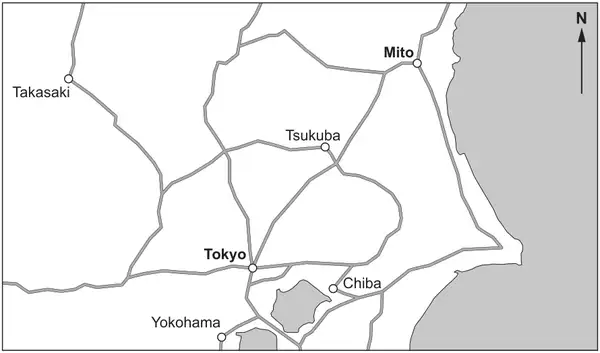
(a) The road distance from Mito to Tokyo is 114 km.
Anzu travelled by car from Mito to Tokyo in 1 hour 27 minutes.
Anzu travelled by car from Mito to Tokyo in 1 hour 27 minutes.
Calculate the average speed of Anzu’s journey.
Give your answer in km/h. [3]
(b) Tilly is travelling to Mito.
She wants to exchange no more than £800 into Japanese yen.
She wants to exchange no more than £800 into Japanese yen.
The exchange rate is £1 = 135.72 Japanese yen.
On the day Tilly exchanges her money, the exchange shop only has 1000 Japanese yen notes and 5000 Japanese yen notes available.
Calculate:- the maximum number of Japanese yen Tilly can buy
- how much, to the nearest penny, this will cost her.
You must show all your working. [5]
(c) Mito has a population of 270 400.
25% of Mito’s population is aged 65 or over.
The ratio of the number of people aged 0 to 14 to the number of people aged 15 to 64 is 9 : 41.
Calculate the number of people aged 0 to 14. [4]
| Scheme | Marks | Comments |
|---|---|---|
| \(\dfrac{114}{1.45}\) or 114 ÷ (87/60) or \(114 \times \dfrac{60}{87}\) or equivalent | M2 | M1 for one of the following:
|
| 78.6(2…) (km/h) | A1 | Accept 79 (km/h) provided not from incorrect working Do not FT from M1 |
| Scheme | Marks | Comments |
|---|---|---|
| (Conversion to Japanese yen) 800 × 135.72 108 576 (Japanese yen) | M1 A1 | |
| (Can buy) 108 000 (Japanese yen) | B1 | Allow for an equivalent amount given using the notes available, e.g. 21 × 5000 (yen) and 3 × 1000 (yen), or equivalent using only 5000 and 1000 yen notes FT ‘their derived 108 576’ provided evidence of rounding down to nearest 1000 |
| (Cost in pounds is) 108 000 ÷ 135.72 or (800 –) 576 ÷ 135.72 | M1 | FT ‘their derived 108 576’ and ‘their derived 108 000’ provided ‘their 108 000’ in whole number of 1000s (including from rounding 108 576 up) |
| (£) 795.76 | A1 | ISW. Allow (£)795.75 Allow on FT rounded or truncated to a penny |
Corrected by Westie's Workshop
- The board's mark scheme printed “21 5000 (yen) and 3 1000 (yen) (with a blank gap)”. Changed to “21 × 5000 (yen) and 3 × 1000 (yen)” because the multiplication signs are missing from the printed scheme (there is just a blank gap); 21 notes of 5000 yen and 3 notes of 1000 yen is what is meant.
Original: see the board's mark scheme PDF (link above).
| Scheme | Marks | Comments |
|---|---|---|
| (Number of 0-to-64-year olds) 0.75 × 270400 or 270400 – 0.25 × 270400 | M1 | |
| 202800 | A1 | May be implied in further working |
| (Number of 0-to-14-year olds) 9 × 202800 ÷ (9+41) or 9 × 4056 | M1 | FT ‘their derived 202800’, not 270400 |
| 36504 | A1 |
Alternative
2(c) Alternative method 1
| Scheme | Marks | Comments |
|---|---|---|
| (Proportion) 9 × 270400 ÷ (9+41) | M1 | |
| 48672 | A1 | May be implied in further working |
| (Number of 0-to 14-year olds) 0.75 × 48672 or 48672 – 0.25 × 48672 or 48672 – 12168 | M1 | FT ‘their derived 48672’, not 270400 |
| 36504 | A1 |
Alternative
2(c) Alternative method 2
| Scheme | Marks | Comments |
|---|---|---|
| (Overall ratio) (9 : 41 :) \(\dfrac{9 + 41}{3}\) | M1 | |
| ( 9 : 41 :) 16.66666.... | A1 | Allow 16.6(...) or 16.7 May be implied in further working |
| (Number of 0-to 14-year olds) 9 × 270400 ÷ (9+41 + ⅓(9 + 41)) | M1 | FT ‘their ⅓(9 + 41)’ |
| 36504 | A1 | Do not FT from rounding or truncation of 50/3 |