
June 2025 Paper 3 Q5
5
\(\displaystyle\int \frac{1 + \cos x}{\sin x}\,\mathrm{d}x = \ln(1 - \cos x) + c\). [4]
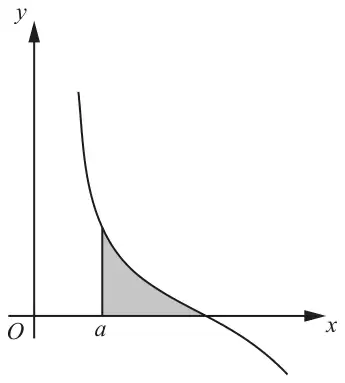
Fig. 1 shows part of the curve \(y = \dfrac{1 + \cos x}{\sin x}\).
The shaded region is bounded by the curve, the \(x\)-axis, and the line \(x = a\).
You are given that the area of the shaded region is \(a\) square units.
\(a_{n+1} = \cos^{-1}\left(1 - 2\mathrm{e}^{-a_n}\right)\),
with starting value \(a_1 = 1.2\), to find the value of \(a\) correct to 2 decimal places. Show the result of each step of the iterative process. [2]
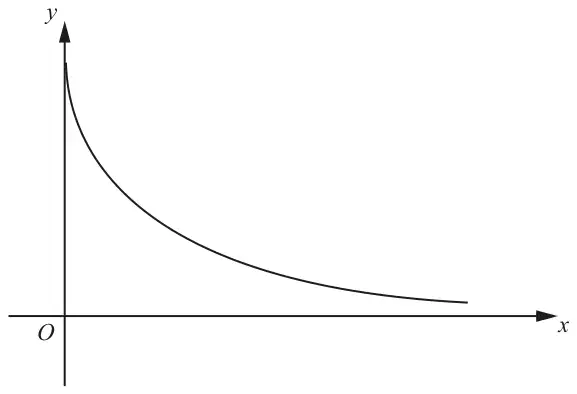
Fig. 2 shows the curve \(y = \cos^{-1}\left(1 - 2\mathrm{e}^{-x}\right)\).
| Scheme | Marks | AO |
|---|---|---|
| \(u = \cos x \Rightarrow \mathrm{d}u = -\sin x\,\mathrm{d}x\) | B1 | 2.1 |
| \(\displaystyle\int \frac{1 + \cos x}{\sin x}\,\mathrm{d}x = -\int \frac{1 + u}{1 - u^2}\,\mathrm{d}u\) | M1* | 1.1 |
| \(\displaystyle-\int \frac{1 + u}{(1 - u)(1 + u)}\,\mathrm{d}u = -\int \frac{1}{1 - u}\,\mathrm{d}u\) | M1dep* | 3.1a |
| \(= -(-\ln(1 - u))\ \ (+c) = \ln(1 - \cos x) + c\) | A1 | 2.1 |
| [4] |
Notes
B1: B1 for \(\dfrac{\mathrm{d}u}{\mathrm{d}x} = -\sin x\) oe
M1*: Obtain an integral in terms of \(u\) only – must be of the form \(\displaystyle\pm\int \frac{\pm 1 \pm u}{\pm 1 \pm u^2}\,(\mathrm{d}u)\)
Allow \(\mathrm{d}u\) missing throughout but M0 if implying \(\mathrm{d}u = \mathrm{d}x\)
M1dep*: Explicit use of \(1 - u^2 = (1 + u)(1 - u)\) or \(u^2 - 1 = (u + 1)(u - 1)\) and simplify to an integral of the form \(\displaystyle\pm\int \frac{1}{\pm 1 \pm u}\,(\mathrm{d}u)\)
A1: AG www – condone \(\ln|1 - \cos x| + c\)
Allow A1 for \(\displaystyle-\int \frac{1}{1 - u}\,\mathrm{d}u = \ln(1 - u) = \ln(1 - \cos x) + c\) (must see \(\ln(1 - u)\) as AG)
However, \(\displaystyle\int \frac{1}{u - 1}\,\mathrm{d}u = \ln|\cos x - 1| = \ln(1 - \cos x) + c\) is A0 without further correct working or correct explanation/justification
Note that \(\displaystyle\int \frac{1}{u - 1}\,\mathrm{d}u = \ln(\cos x - 1) = \ln(1 - \cos x) + c\) is A0 regardless of any further explanation/justification
\(+c\) must be present in the final given answer
e.g. as a minimum \(\ln|\cos x - 1| = \ln|(-1)(1 - \cos x)| = \ln(1 - \cos x) + c\)
| Scheme | Marks | AO |
|---|---|---|
| Curve intersects the \(x\)-axis at \(\pi\) | B1 | 3.1a |
| \(\left[\ln(1 - \cos x)\right]_a^{\pi} = a \Rightarrow \ln(1 - \cos\pi) - \ln(1 - \cos a) = a\) | M1* | 1.1 |
| \(\ln\left(\dfrac{2}{1 - \cos a}\right) = a \Rightarrow \dfrac{2}{1 - \cos a} = \mathrm{e}^a\) | M1dep* | 1.1 |
| \(1 - \cos a = 2\mathrm{e}^{-a} \Rightarrow \cos a = 1 - 2\mathrm{e}^{-a}\) so \(a = \cos^{-1}\left(1 - 2\mathrm{e}^{-a}\right)\) and therefore \(a - \cos^{-1}\left(1 - 2\mathrm{e}^{-a}\right) = 0\) | A1 | 2.1 |
| [4] |
Notes
B1: Possibly implied by later working – condone (use of) 180 (in degrees) or \(\cos^{-1}(-1)\) (so do not need to see this evaluated to \(\pi\))
e.g. as a limit on an integral
M1*: Correct use of their upper limit and correct lower limit to form an equation in \(a\) only so must be of the form \(\ln k - \ln(1 - \cos a) = a\) following through their value of \(k \gt 0\)
Setting equal to \(a^2\) rather than \(a\) is M0
M1dep*: Correct use of log laws and correctly remove natural log to form an equation in \(\mathrm{e}^a\) from \(\ln k - \ln(1 - \cos a) = a\) following through their \(k \gt 0\) and \(k \neq 1\)
A1: AG – sufficient working must be shown and must be \(= 0\)
allow arccos for \(\cos^{-1}\)
| Scheme | Marks | AO |
|---|---|---|
| Let \(\mathrm{f}(a) = a - \cos^{-1}\left(1 - 2\mathrm{e}^{-a}\right)\) \(\mathrm{f}(1.1) = -0.129\ldots \lt 0\), \(\mathrm{f}(1.2) = 0.038\ldots \gt 0\) | M1 | 1.1 |
| Change of sign indicates that \(a\) lies between 1.1 and 1.2 | A1 | 2.4 |
| [2] |
Notes
M1: Obtain correct value for either f(1.1) or f(1.2) to at least 1 sf rot
A1: Both correct values to at least 1 sf rot, ‘change of sign’ either shown or stated + conclusion (minimum e.g. ‘root’)
Allow, for example,’ \(-0.1 \lt 0 \lt 0.03\) therefore \(1.1 \lt a \lt 1.2\)’ for A1
| Scheme | Marks | AO |
|---|---|---|
| \(a_2 = 1.16(188\ldots), a_3 = 1.18(725\ldots), a_4 = 1.17(02\ldots)\) | B1 | 1.1 |
| \(a = 1.18\) | B1 | 1.1 |
| [2] |
Notes
B1: At least the first three values of \(a_i\) stated correctly to at least 2 decimal places rot e.g. \(a_3 = 1.18\) or \(a_3 = 1.19\)
Ignore values after the first three
B1: cao (must be to exactly 2 decimal places) – final answer must be 1.18 or \(a = 1.18\) and not a term of a sequence e.g. \(a_9 = 1.18\)
Not dependent on the previous B1. A correct answer without the correct first three terms is B0 B1
| Scheme | Marks | AO |
|---|---|---|
| The diagram shows that the gradient of all points on the curve \(y = \cos^{-1}\left(1 - 2\mathrm{e}^{-x}\right)\) are negative and therefore the gradient at \(a\) lies in the interval \((-\infty, 0)\) | B1 | 2.4 |
| As the iterative formula in part (d) converged to the value of \(a\) this implies that \(\left|\dfrac{\mathrm{d}}{\mathrm{d}x}\left(\cos^{-1}\left(1 - 2\mathrm{e}^{-x}\right)\right)\Big|_{x = a}\right| \lt 1\) and so the gradient of the curve at the point \(x = a\) lies in the interval \((-1, 0)\). | B1 | 2.4 |
| [2] |
Notes
B1: Correct explanation that the graph or diagram or curve (in Fig. 2) implies that the gradient (either at \(a\) or implying all points) is negative.
Must mention ‘the graph’ oe for this mark but mention of Fig. 1 is B0
B1: Correct justification that as the iterative formula \(\left(a_{n+1} = \mathrm{F}(a_n)\right)\) converged to \(a \Rightarrow |\mathrm{F}^{\prime}(a)| \lt 1\).
As a minimum must state/mention ‘convergence’ and EITHER that the gradient at \(a\) is between \(-1\) and 1 OR that the gradient at \(a\) is between \(-1\) and 0 but only following a correct explanation that the graph (oe) implies a negative gradient
Not \(\Rightarrow |\mathrm{F}^{\prime}(a_n)| \lt 1\).
For both marks to be awarded the interval of (–1,0) must be mentioned
B2 for ‘graph shows negative gradient, and there is convergence, therefore the gradient at \(a\) lies in the interval (–1,0)’
Implying that \(a\) is between –1 and 1 and not the gradient is B0 for the second B mark