
June 2024 Paper 1 Q6
6.
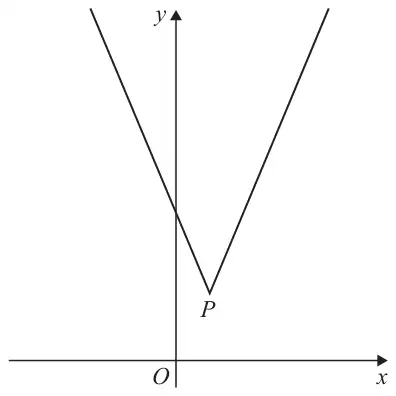
Figure 1 shows a sketch of the graph with equation
\[y = 3\lvert x-2 \rvert + 5\]The vertex of the graph is at the point \(P\), shown in Figure 1.
A line \(l\) has equation \(y = kx + 4\) where \(k\) is a constant.
Given that \(l\) intersects \(y = 3\lvert x-2 \rvert + 5\) at 2 distinct points,
| Scheme | Marks | AO |
|---|---|---|
| \(x = 2\) or \(y = 5\) | B1 | 1.1b |
| \(P(2,\ 5)\) | B1 | 2.2a |
| (2) |
Notes
B1: One correct coordinate. Either \(x = 2\) or \(y = 5\) or (2, …) or (…,5) seen.
B1: Deduces \((2,\ 5)\) Accept written separately e.g. \(x = 2\), \(y = 5\) isw after a correct answer.
Condone 2, 5 without the brackets.
| Scheme | Marks | AO |
|---|---|---|
| \(16 - 4x = 3(x-2) + 5 \Rightarrow x = \ldots\) | M1 | 1.1b |
| \(x = \dfrac{17}{7}\) | A1 | 2.1 |
| (2) |
Notes
M1: Attempts to solve the correct equation without modulus signs \(16 - 4x = 3(x-2) + 5 \Rightarrow x = \ldots\)
Must reach a value for \(x\). Ignore attempts at e.g. \(16 - 4x = 3(2-x) + 5\)
A1: \(x = \dfrac{17}{7}\) o.e. exact answer and no other values. If other values have been found they must be rejected or the \(x = \dfrac{17}{7}\) clearly selected. Answer only implies both marks.
Note: \(x =\) “2.75” coming from \(5 = 16 - 4x\) may be found as part of their working to establish which branch of the modulus graph the line \(y = 16 - 4x\) intersects. If this is the case it need not be “rejected” provided it is not clearly stated as one of their solutions.
Those that achieve \(|x| = \dfrac{17}{7}\) can score BOD M1A0.
Alternative by squaring:
\[\begin{aligned}&16 - 4x = 3\lvert x-2 \rvert + 5 \Rightarrow 11 - 4x = 3\lvert x-2 \rvert\\&\Rightarrow 16x^2 - 88x + 121 = 9\left(x^2 - 4x + 4\right)\\&\Rightarrow 7x^2 - 52x + 85 = 0 \Rightarrow x = 5,\ \frac{17}{7}\end{aligned}\]M1: Isolates the \(\lvert x-2 \rvert\) (or \(3\lvert x-2 \rvert\)), squares both sides and solves the resulting 3TQ using the usual rules and may be by calculator, leading to a value for \(x\).
A1: Selects the \(\dfrac{17}{7}\) or rejects any other values as in main scheme.
| Scheme | Marks | AO |
|---|---|---|
| \(k_{\max} = 3\) or \(k_{\min} = \dfrac{\text{``}5\text{''} - 4}{\text{``}2\text{''}}\) | M1 | 3.1a |
| \(\dfrac{1}{2} \lt k \lt 3\) | A1 | 2.5 |
| (2) | ||
| (6 marks) |
Notes
M1: Correct method to find either critical value (following through on their \(P\)).
Either \(k\) {=} 3 or \(k\) {=} \(\dfrac{\text{``}5\text{''} - 4}{\text{``}2\text{''}}\) scores M1 without evidence of an incorrect method.
Note that \(k = 3\) occasionally appears from use of the discriminant on \(x(k-3) + 5 = 0,\) and scores M0 unless there is an alternative valid reason given.
Allow the use of e.g. \(m =\) in place of \(k =\) here but do not allow \(x =\) or \(y =\)
A1: Correct range in terms of \(k\) in acceptable notation with no incorrect method seen.
Use of e.g. \(x\) is A0. Allow “and” or “\(\cap\)” to join the regions but not “or” or “,” or “\(\cup\)”
Accept e.g. \((0.5, 3)\) ; \(k \in \left(\dfrac{1}{2}, 3\right)\) ; \(k \lt 3\) and \(k \gt \dfrac{1}{2}\) ; \(k \gt \dfrac{1}{2} \cap k \lt 3\)
but not \(\dfrac{1}{2} \lt x \lt 3\) ; \(\dfrac{1}{2} \leqslant k \leqslant 3\) ; \(\left[\dfrac{1}{2}, 3\right]\) ; \(k \gt \dfrac{1}{2} \cup k \lt 3\) ; \(k \gt \dfrac{1}{2}, k \lt 3\) ; \(k \gt \dfrac{1}{2}\) or \(k \lt 3\)
Alt 1 via solving simultaneous equations:
\[\begin{aligned}&\text{e.g. } kx + 4 = 3(x-2) + 5 \Rightarrow kx + 4 = 3x - 1 \Rightarrow x = -\frac{5}{k-3}\\&kx + 4 = 3(2-x) + 5 \Rightarrow kx + 4 = 11 - 3x \Rightarrow (k+3)x = 7\\&\Rightarrow (k+3)\left(\frac{-5}{k-3}\right) = 7 \Rightarrow k = \frac{1}{2}\end{aligned}\]M1: Sets \(kx + 4 = 3(x-2) + 5\) and \(kx + 4 = 3(2-x) + 5\), eliminates \(x\), and solves for \(k\)
A1: As main scheme.
Alt 2 via squaring and the discriminant:
\[\begin{aligned}&kx + 4 = 3\lvert x-2 \rvert + 5 \Rightarrow kx - 1 = 3\lvert x-2 \rvert\\&\Rightarrow k^2x^2 - 2kx + 1 = 9\left(x^2 - 4x + 4\right)\\&\Rightarrow \left(k^2 - 9\right)x^2 + (36 - 2k)x - 35 = 0\\&\Rightarrow (36 - 2k)^2 - 4\left(k^2 - 9\right)(-35) = 0\\&\Rightarrow 144k^2 - 144k + 36 = 0 \Rightarrow k = \frac{1}{2}\end{aligned}\]M1: Sets \(kx + 4 = 3\lvert x-2 \rvert + 5\), isolates \(\lvert x-2 \rvert\) (or \(3\lvert x-2 \rvert\)), squares both sides, uses \(b^2 - 4ac \ldots 0\) where … is any equality or inequality, and solves the resulting 3TQ using the usual rules and may be by calculator, leading to a value for \(k\).
Condone slips in expanding the brackets.
A1: As main scheme.
Alt 3 via Domain for the right hand branch of the modulus graph:
\[\begin{aligned}&kx + 4 = 3x - 1 \Rightarrow x = \frac{-5}{k-3} \gt 2 \quad \left\{\text{or } x = \frac{5}{3-k} \gt 2\right\}\\&\Rightarrow k - 3 \lt 0 \quad \{\text{and } \Rightarrow -5 \lt 2(k-3)\}\\&\Rightarrow k \lt 3 \quad \{\text{and } \Rightarrow 0.5 \lt k\}\end{aligned}\]M1: Sets \(kx + 4 = 3(x-2) + 5\), makes \(x\) the subject, sets > 2 and deduces a critical value.
A1: As main scheme.