
June 2025 Paper 1 Q11
11.
In this question you must show all stages of your working.
Solutions relying entirely on calculator technology are not acceptable.
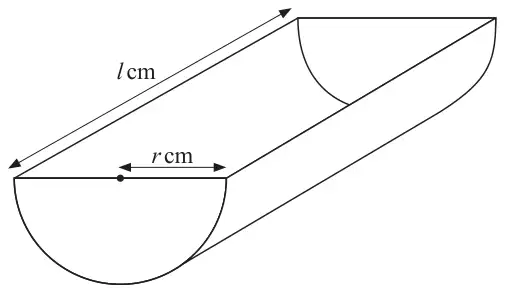
Figure 4 shows a design for a feeding trough.
The trough is modelled as a hollow, semicircular cylinder of radius \(r\) cm and length \(l\) cm.
The trough will be made from sheet metal of negligible thickness.
Given that the capacity of the trough will be \(90\,000\pi\ \text{cm}^3\)
Given that the sheet metal costs £30 per square metre
| Scheme | Marks | AO |
|---|---|---|
| \((V =)\ \dfrac{1}{2}\pi r^2 l = 90\,000\pi\) | B1 | 1.1b |
| \((A =)\ \pi r^2 + \pi r l\) | B1 | 1.1b |
| \(l = \dfrac{180\,000}{r^2} \Rightarrow A = \pi r^2 + \pi r\left(\dfrac{180\,000}{r^2}\right)\) or e.g. \(\pi r l = \dfrac{180\,000\pi}{r} \Rightarrow A = \pi r^2 + \dfrac{180\,000\pi}{r}\) or e.g. \(rl = \dfrac{180\,000}{r} \Rightarrow A = \pi r^2 + \pi\left(\dfrac{180\,000}{r}\right)\) | M1 | 1.1b |
| \((A =)\ \pi r^2 + \dfrac{180\,000\pi}{r}\,*\) | A1* | 1.1b |
| (4) |
Notes
In Q11 there are a lot of parts so mark positively and condone mislabelling if they are clearly doing the right thing for a particular part.
(a) Condone use of e.g. \(h\) for \(l\) or e.g. \(R\) for \(r\) as long as the intention is clear.
B1: Correct equation seen for volume:
\(\dfrac{1}{2}\pi r^2 l = 90\,000\pi\) or \(\pi r^2 l = 180\,000\pi\) or \(\pi r^2 l = 2(90\,000\pi)\)
or
\(\dfrac{1}{2}r^2 l = 90\,000\) or \(r^2 l = 180\,000\) or \(r^2 l = 2(90\,000)\)
May not be implied by subsequent work.
B1: Correct expression for the area stated in terms of the radius (or diameter) and length:
e.g. \((A =)\ \pi r^2 + \pi r l\) but allow equivalent correct expression so that the “ends” are any one of:
| \(\pi r^2\) | \(\dfrac{1}{2}\pi r^2 + \dfrac{1}{2}\pi r^2\) | \(\pi\left(\dfrac{d}{2}\right)^2\) | \(\dfrac{2\pi r^2}{2}\) | \(2 \times 0.5\pi r^2\) |
And the curved surface area is any one of:
| \(\pi r l\) | \(\dfrac{1}{2}(2\pi r l)\) | \(\dfrac{\pi l d}{2}\) |
These may be seen separately before being combined at the end.
Condone a missing “\(A =\)” for this mark. Cannot be implied.
M1: Rearranges their \(\dfrac{1}{2}\pi r^2 l = 90\,000\pi\) to e.g. \(l = \ldots\) or \(\pi r l = \ldots\) or \(rl = \ldots\) and substitutes in for e.g. \(l\) or \(\pi r l\) or \(rl\) in their formula for the area which must have at least 2 terms, all of which must be dimensionally correct, to obtain an expression in terms of \(r\) only. This mark cannot be implied and substitution needs to be shown, not just the printed answer written down. This may be seen combined at the end.
A1*: cso. The “\(A =\)” does not have to be seen. Ignore any units given.
All previous marks must be scored. Isw once a correct answer is reached from correct work.
| Scheme | Marks | AO |
|---|---|---|
| \(A = \pi r^2 + \dfrac{180\,000\pi}{r} \Rightarrow \left(\dfrac{\mathrm{d}A}{\mathrm{d}r} =\right) 2\pi r - 180\,000\pi r^{-2}\) | M1 A1 | 1.1b 1.1b |
| \(\dfrac{\mathrm{d}A}{\mathrm{d}r} = 0 \Rightarrow r^3 = \dfrac{180\,000\pi}{2\pi}\) | dM1 | 1.1b |
| \(\Rightarrow r = \sqrt[3]{90\,000}\) or \(r =\) awrt 44.8 (cm) | A1 | 1.1b |
| (4) |
Notes
In Q11 there are a lot of parts so mark positively and condone mislabelling if they are clearly doing the right thing for a particular part.
M1: Attempts to differentiate \(A = \pi r^2 + \dfrac{180\,000\pi}{r}\) with respect to \(r\).
Award for \(\left(\dfrac{\mathrm{d}A}{\mathrm{d}r} =\right) \ldots r \pm \ldots r^{-2}\)
A1: \(\left\{\dfrac{\mathrm{d}A}{\mathrm{d}r} =\right\} 2\pi r - 180\,000\pi r^{-2}\) Condone \(\dfrac{\mathrm{d}A}{\mathrm{d}r}\) appearing as \(\dfrac{\mathrm{d}y}{\mathrm{d}x}\) or being absent.
dM1: Sets their \(\dfrac{\mathrm{d}A}{\mathrm{d}r} \ldots 0\) where “…” could be an inequality and arrives at a value for \(r\) via \(r^{\pm 3} \ldots k,\ k \gt 0\) where “…” could be an inequality.
May be implied by e.g. \(r = \sqrt[3]{\ldots}\) or \(r = \sqrt[-3]{\ldots}\) where “…” > 0
They cannot just go from e.g. \(2\pi r - 180\,000\pi r^{-2} = 0\) straight to a value for \(r\).
A1: Awrt 44.8 or \(\sqrt[3]{90\,000}\) Condone omission of units or use of incorrect units.
Do not allow e.g. \(\pm\) 44.8 or e.g. \(r \gt 44.8\)
| Scheme | Marks | AO |
|---|---|---|
| Finds \(\dfrac{\mathrm{d}^2A}{\mathrm{d}r^2} = 2\pi + 360\,000\pi r^{-3}\) at \(r = 44.8\) | M1 | 3.1b |
| \(\dfrac{\mathrm{d}^2A}{\mathrm{d}r^2} = (+18.8) \gt 0\) hence minimum (value of \(A\))* | A1 | 2.4 |
| (2) |
Notes
In Q11 there are a lot of parts so mark positively and condone mislabelling if they are clearly doing the right thing for a particular part.
M1: Attempts to find \(\dfrac{\mathrm{d}^2A}{\mathrm{d}r^2}\) following on from their \(\dfrac{\mathrm{d}A}{\mathrm{d}r}\) which includes \(\ldots r \to\) constant and \(\ldots r^{-2} \to \ldots r^{-3}\) and attempts to find its value with their \(r\) (may need to check) or considers its sign with reference to their \(r\). Condone slips in substituting as long as the intention is clear.
Alt may consider the value of \(\dfrac{\mathrm{d}A}{\mathrm{d}r}\) either side e.g. \(\left(\dfrac{\mathrm{d}A}{\mathrm{d}r}\right)_{x=44} = -15.6\ldots,\ \left(\dfrac{\mathrm{d}A}{\mathrm{d}r}\right)_{x=45} = 3.49\ldots\)
or may consider the value of \(A\) either side e.g. \((A)_{x=44.8} = 18927,\ (A)_{x=44} = 18934,\ (A)_{x=45} = 18928\)
A1: Fully correct work and conclusion. This requires
- correct work in (b) with the correct value of \(r\)
- a correct \(\frac{\mathrm{d}^2A}{\mathrm{d}r^2}\)
- obtaining \(\frac{\mathrm{d}^2A}{\mathrm{d}r^2} =\) awrt 19 (or \(6\pi\)) (or truncated as 18) which is > 0 or e.g. \(\frac{\mathrm{d}^2A}{\mathrm{d}r^2} \gt 0\) as \(r \gt 0\)
- a conclusion that it is the minimum
For the alt it would be for
- correct calculations
- e.g. gradient goes from negative to positive so minimum
- e.g. \(A\) is larger either side of 44.8 so minimum
| Scheme | Marks | AO |
|---|---|---|
| Substitutes \(r = 44.8\) into \(A = \pi r^2 + \dfrac{180\,000\pi}{r}\) \(\{=\text{awrt } 18900\}\) Or may be seen embedded in a (possibly incorrect) conversion e.g. substitutes \(r = 44.8\) into \(\dfrac{30}{100^2}\left(\pi r^2 + \dfrac{180\,000\pi}{r}\right)\) \(\{=\text{awrt } 56.8\}\) | M1 | 3.4 |
| Minimum cost = £56.78 | A1 | 1.1b |
| (2) |
Notes
In Q11 there are a lot of parts so mark positively and condone mislabelling if they are clearly doing the right thing for a particular part.
M1: For a correct method of finding \(A\) or \(\dfrac{30A}{100^2}\) or e.g. \(30A\) from their solution to \(\dfrac{\mathrm{d}A}{\mathrm{d}r} = 0\)
May be implied by e.g. 18928
Do not accept attempts using negative values of \(r\).
A1: Minimum cost = £56.78 or £56.79 including units.
| Scheme | Marks | AO |
|---|---|---|
Accept any sensible assumption, e.g.,
| B1 | 3.5a |
| (1) | ||
| (13 marks) |
Notes
In Q11 there are a lot of parts so mark positively and condone mislabelling if they are clearly doing the right thing for a particular part.
B1: See main scheme.
Do not accept reference to additional work required, such as labour costs, or materials required to weld the metal together.