
C3 June 2017 Q3
3.
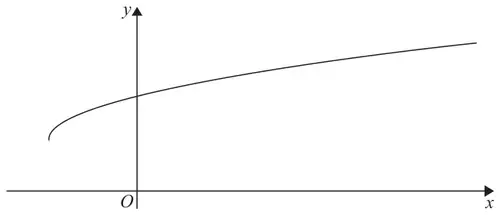
Figure 1 shows a sketch of part of the graph of \(y = \mathrm{g}(x)\), where\[\mathrm{g}(x) = 3 + \sqrt{x + 2}, \qquad x \geqslant -2\]
| Scheme | Marks |
|---|---|
| \(y \geqslant 3\) | B1 |
| (1) |
Notes
B1: States the correct range for g Accept \(\mathrm{g}(x) \geqslant 3\), \(g \geqslant 3\), Range \(\geqslant 3\), \([3, \infty)\) Range is greater than or equal to 3
Condone \(\mathrm{f} \geqslant 3\) Do not accept \(\mathrm{g}(x) > 3, x \geqslant 3, (3, \infty)\)
| Scheme | Marks |
|---|---|
| \(y = 3 + \sqrt{x + 2} \Rightarrow y - 3 = \sqrt{x + 2} \Rightarrow x = (y - 3)^2 - 2\) | M1 A1 |
| \(\Rightarrow \mathrm{g}^{-1}(x) = (x - 3)^2 - 2, \quad \text{with } x \geqslant 3\) | A1 |
| (3) |
Notes
M1: Attempts to make \(x\) or a swapped \(y\) the subject of the formula. The minimum expectation is that the 3 is moved over followed by an attempt to square both sides. Condone for this mark \(\sqrt{x + 2} = y \pm 3 \Rightarrow x + 2 = y^2 \pm 9\)
A1: Achieves \(x = (y - 3)^2 - 2\) or if swapped \(y = (x - 3)^2 - 2\) or equivalent such as \(x = y^2 - 6y + 7\)
A1: Requires a correct function in \(x\) + correct domain or a correct function in \(x\) with a correct follow through on the range in (a) but do not follow through on \(x \in \mathbb{R}\)
Accept for example \(\mathrm{g}^{-1}(x) = (x - 3)^2 - 2, \quad x \geqslant 3\) Condone \(\mathrm{f}^{-1}(x) = (x - 3)^2 - 2, \quad x \geqslant 3\)
or variations such as \(y = (x - 3)^2 - 2, \quad x > 3\) if (a) was \(y > 3\)
Accept expanded versions such as \(\mathrm{g}^{-1}(x) = x^2 - 6x + 7, \quad x \geqslant 3\) but remember to isw after a correct answer
(Condone \(\mathrm{f}^{-1}(x) = x^2 - 6x + 7, \quad x \geqslant 3\))
| Scheme | Marks |
|---|---|
| \(\mathrm{g}(x) = x \Rightarrow 3 + \sqrt{x + 2} = x\) | |
| \(\Rightarrow x + 2 = (x - 3)^2 \Rightarrow x^2 - 7x + 7 = 0\) | M1, A1 |
| \(\Rightarrow x = \dfrac{7 \pm \sqrt{21}}{2} \Rightarrow x = \dfrac{7 + \sqrt{21}}{2}\) only | M1, A1 |
| (4) |
(c) Alt
| Scheme | Marks |
|---|---|
| Solves \(\mathrm{g}^{-1}(x) = x \Rightarrow (x - 3)^2 - 2 = x\) | |
| \(\Rightarrow x^2 - 7x + 7 = 0\) | M1, A1 |
| \(\Rightarrow x = \dfrac{7 \pm \sqrt{21}}{2} \Rightarrow x = \dfrac{7 + \sqrt{21}}{2}\) only | dM1, A1 |
| (4) |
Notes
M1: Sets \(3 + \sqrt{x + 2} = x\), moves the 3 over and then attempts to square both sides.
Can be scored for \(\sqrt{x + 2} = x - 3 \Rightarrow x + 2 = x^2 \pm 9\)
A1: \(x^2 - 7x + 7 = 0\). The = 0 may be implied by subsequent working
M1: Correct method of solving their 3TQ by the formula/ completing the square. The equation must have real roots.
It is dependent upon them having attempted to set \(3 + \sqrt{x + 2} = x\) and proceeding to a quadratic.
You may just see both roots written down which is fine.
Allow for this mark decimal answers Eg 5.79 and 1.21 for \(x^2 - 7x + 7 = 0\) You may need to check with a calc.
A1: \((x) = \dfrac{7 + \sqrt{21}}{2}\) or exact equivalent only.
This answer following the correct quadratic would imply the previous M
Allow \(x = \dfrac{7}{2} + \sqrt{\dfrac{21}{4}}\) but DO NOT allow \(x = \dfrac{7 \pm \sqrt{21}}{2}\)
(c) can of course be attempted by solving \(3 + \sqrt{x + 2} = \text{"}(x - 3)^2 - 2\text{"} \Rightarrow x^4 - 12x^3 + 44x^2 - 49x + 14 = 0\)
\(\vdots \qquad \Rightarrow \left(x^2 - 7x + 7\right)\left(x^2 - 5x + 2\right) = 0\)
The scheme can be applied to this
| Scheme | Marks |
|---|---|
| \(a = \dfrac{7 + \sqrt{21}}{2}\) | B1 ft |
| (1) | |
| (9 marks) |
Notes
B1ft: \((a) = \dfrac{7 + \sqrt{21}}{2}\) oe. You may condone \(\boldsymbol{x} = \dfrac{7 + \sqrt{21}}{2}\). You may allow this following a re - start.
You may allow the correct decimal answer, awrt 5.79, following exact/decimal work in part (c) or a restart.
Follow through on their root, including decimals, coming from the positive root with the positive sign in (c).
Eg In (c) . \(x^2 - 7x + 11 = 0 \Rightarrow x = \dfrac{7 \pm \sqrt{5}}{2}\) So the correct follow through would be \(x = \dfrac{7 + \sqrt{5}}{2}\)
If they only had one root in (c) then follow through on this as long as it is positive.
SC. If they give the correct roots in parts (c) and (d) without considering the correct answer then award B1 in (d) following the A0 in (c). So \((x) = \dfrac{7 \pm \sqrt{21}}{2}\) as their answer in part (c), allow \((x/a) = \dfrac{7 \pm \sqrt{21}}{2}\) for B1 in (d).