
C1 June 2014 (R) Q7
7.
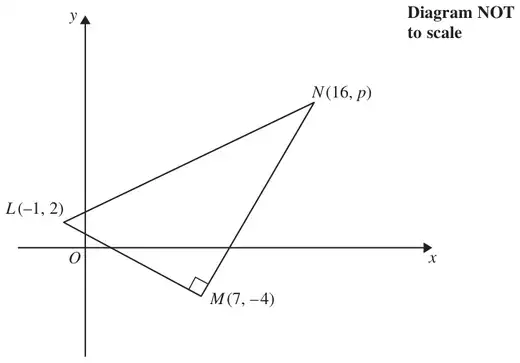
Figure 2 shows a right angled triangle \(LMN\).
The points \(L\) and \(M\) have coordinates \((-1, 2)\) and \((7, -4)\) respectively.
Give your answer in the form \(ax + by + c = 0\), where \(a\), \(b\) and \(c\) are integers. (4)
Given that the coordinates of point \(N\) are \((16, p)\), where \(p\) is a constant, and angle \(LMN = 90^\circ\),
Given that there is a point \(K\) such that the points \(L\), \(M\), \(N\), and \(K\) form a rectangle,
| Scheme | Marks |
|---|---|
| Method 1: \(\textit{gradient} = \dfrac{y_1 - y_2}{x_1 - x_2} = \dfrac{2 - (-4)}{-1 - 7},\ = -\dfrac{3}{4}\) Method 2: \(\dfrac{y - y_1}{y_2 - y_1} = \dfrac{x - x_1}{x_2 - x_1}\), so \(\dfrac{y - y_1}{6} = \dfrac{x - x_1}{-8}\) | M1, A1 |
| \(y - 2 = -\dfrac{3}{4}(x + 1)\) or \(y + 4 = -\dfrac{3}{4}(x - 7)\) or \(y = \textit{their}\) ‘\(-\dfrac{3}{4}\)’\(x + c\) | M1 |
| \(\Rightarrow \pm(4y + 3x - 5) = 0\) | A1 |
| (4) |
Notes
M1: Uses the gradient formula with points \(L\) and \(M\) i.e. quote \(\textit{gradient} = \dfrac{y_1 - y_2}{x_1 - x_2}\) and attempt to substitute correct numbers. Formula may be implied by the correct \(\dfrac{2 - (-4)}{-1 - 7}\) or equivalent.
A1: Any correct single fraction gradient i.e \(\dfrac{6}{-8}\) or equivalent
M1: Uses their gradient with either \((-1, 2)\) or \((7, -4)\) to form a linear equation
Eg \(y - 2 = \textit{their}\) ‘\(-\dfrac{3}{4}\)’\((x + 1)\) or \(y + 4 = \textit{their}\) ‘\(-\dfrac{3}{4}\)’\((x - 7)\) or \(y = \textit{their}\) ‘\(-\dfrac{3}{4}\)’\(x + c\) then find a value for \(c\) by substituting \((-1,2)\) or \((7, -4)\) in the correct way( not interchanging \(x\) and \(y\))
A1: Accept \(\pm k(4y + 3x - 5) = 0\) with \(k\) an integer (This implies previous M1)
Method 3
| Scheme | Marks |
|---|---|
| Substitute \(x = -1\), \(y = 2\) and \(x = 7\), \(y = -4\) into \(ax + by + c = 0\) | M1 |
| \(-a + 2b + c = 0\) and \(7a - 4b + c = 0\) | A1 |
| Solve to obtain \(a = 3\), \(b = 4\) and \(c = -5\) or multiple of these numbers | M1 A1 |
| (4) |
| Scheme | Marks |
|---|---|
| Attempts \(\textit{gradient } LM\times\textit{gradient } MN = -1\) so \(-\dfrac{3}{4}\times\dfrac{p + 4}{16 - 7} = -1\) or \(\dfrac{p + 4}{16 - 7} = \dfrac{4}{3}\) Or \((y + 4) = \dfrac{4}{3}(x - 7)\) equation with \(x = 16\) substituted | M1 |
| \(p + 4 = \dfrac{9\times 4}{3} \Rightarrow p = \ldots,\ p = 8\) Or So \(y =,\quad y = 8\) | M1, A1 |
| (3) |
Notes
M1: Attempts to use \(\textit{gradient } LM\times\textit{gradient } MN = -1\). ie. \(-\dfrac{3}{4}\times\dfrac{p + 4}{16 - 7} = -1\) (allow sign errors)
Or Attempts Pythagoras correct way round (allow sign errors)
M1: An attempt to solve their linear equation in ‘\(p\)’.
A1: cao \(p = 8\)
Alternative for (b)
| Scheme | Marks |
|---|---|
| Attempt Pythagoras: \((p + 4)^2 + 9^2 + \left(6^2 + 8^2\right) = (p - 2)^2 + 17^2\) | M1 |
| So \(p^2 + 8p + 16 + 81 + 36 + 64 = p^2 - 4p + 4 + 289 \Rightarrow p = \ldots\) | M1 |
| \(p = 8\) | A1 |
| (3) |
| Scheme | Marks |
|---|---|
| Either \((y =)\ p + 6\) or \(2 + p + 4\) Or use 2 perpendicular line equations through L and \(N\) and solve for \(y\) | M1 |
| \((y =)\ 14\) | A1 |
| (2) | |
| (9 marks) |
Notes
M1: For using their numerical value of \(p\) and adding 6 . This may be done by any complete method (vectors, drawing, perpendicular straight line equations through \(L\) and \(N\)) or by no method. Assuming \(x = 7\) is M0
A1: Accept 14 for both marks as long as no incorrect working seen (Ignore left hand side – allow \(k\)) . If there is wrong working resulting fortuitously in 14 give M0A0. Allow \((8, 14)\) as the answer.