
A2 June 2024 Paper 1 Q3
3. In this question you must show all stages of your working.
Solutions relying entirely on calculator technology are not acceptable.
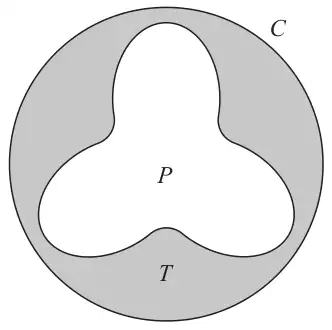
Figure 1 shows the design for a bathing pool.
The pool, \(P\), shown unshaded in Figure 1, is surrounded by a tiled area, \(T\), shown shaded in Figure 1.
The tiled area is bounded by the edge of the pool and by a circle, \(C\), with radius 6 m.
The centre of the pool and the centre of the circle are the same point.
The edge of the pool is modelled by the curve with polar equation
\[r = 4 - a\sin 3\theta \qquad 0 \leqslant \theta \leqslant 2\pi\]where \(a\) is a positive constant.
Given that the shortest distance between the edge of the pool and the circle \(C\) is 0.5 m,
| Scheme | Marks | AO |
|---|---|---|
| Max \(r = 4 + a = 5.5 \Rightarrow a = \ldots\) | M1 | 3.4 |
| \(a = 1.5\) | A1 | 2.2a |
| (2) |
Notes
M1: Uses all the information given for the model and realises the maximum value of \(r\) is \((4 + a)\) and uses the radius of the circle to find a value for \(a\).
A1: Deduces the correct value of \(a\). Note \(a = -1.5\) can potentially gain M1A0.
| Scheme | Marks | AO |
|---|---|---|
| Pool area \(= \dfrac{1}{2}\displaystyle\int_0^{2\pi} \left(4 - \text{``}1.5\text{''}\sin 3\theta\right)^2\mathrm{d}\theta\) | M1 | 3.1a |
| \(\left(4 - \text{``}1.5\text{''}\sin 3\theta\right)^2 = 16 - \text{``}12\text{''}\sin 3\theta + \text{``}2.25\text{''}\sin^2 3\theta\) \(= 16 - \text{``}12\text{''}\sin 3\theta + \text{``}2.25\text{''}\left(\dfrac{1 - \cos 6\theta}{2}\right) \left[= 16 - 8a\sin 3\theta + a^2\left(\dfrac{1 - \cos 6\theta}{2}\right)\right]\) | M1 | 2.1 |
| \(\displaystyle\int \left(4 - \text{``}1.5\text{''}\sin 3\theta\right)^2\mathrm{d}\theta = 16\theta + \text{``}4\text{''}\cos 3\theta + \text{``}\dfrac{9}{8}\text{''}\left(\theta - \dfrac{\sin 6\theta}{6}\right)\) \(\left[= 16\theta + \dfrac{8a}{3}\cos 3\theta + \dfrac{a^2}{2}\left(\theta - \dfrac{\sin 6\theta}{6}\right)\right]\) | A1ft | 1.1b |
| \(\dfrac{1}{2}\left[\text{``}\dfrac{137}{8}\text{''}\theta + \text{``}4\text{''}\cos 3\theta - \text{``}\dfrac{3}{16}\text{''}\sin 6\theta\right]_0^{2\pi} = \ldots\left(\dfrac{137}{8}\pi\right)\) | dM1 | 3.1a |
| Area of \(T = \pi \times 36 - \dfrac{137}{8}\pi\) | DM1 | 1.1b |
| \(= \dfrac{151}{8}\pi\) (m\(^2\)) oe | A1 | 1.1b |
| (6) | ||
| (8 marks) |
Notes
Note accept with their \(a\), a made up \(a\) or even \(a\) itself for the first 5 marks. Note use of \(a = -1.5\) can score full marks.
M1: Adopts a correct strategy for the area of the pool. This requires the correct use of the polar area formula including the \(\frac{1}{2}\).
Note the \(\frac{1}{2}\) may be implied by choice of limits (e.g. any span of \(\pi\) radians without the half implies an attempt at doubling so the \(\frac{1}{2}\) may not appear (even if the symmetry is incorrect).)
M1: Squares the bracket, achieving three terms, and applies \(\sin^2 3\theta = \dfrac{\pm 1 \pm \cos 6\theta}{2}\) in order to reach an integrable form. Condone numerical slips when expanding.
A1ft: Correct integration in any form (\(\frac{1}{2}\) not needed here) (follow through their \(a\)). ie as shown in scheme or if gathered it is \(\left(32 + a^2\right)\dfrac{\theta}{2} + \dfrac{8a}{3}\cos 3\theta - a^2\dfrac{\sin 6\theta}{12}\)
dM1: Depends on previous M. Uses appropriate limits for their integrated function. Allow limits other than 0 and \(2\pi\) by using symmetry provided the correct multiple is used, e.g. \(\dfrac{\pi}{2}\) and \(\dfrac{3\pi}{2}\) followed by doubling (which may be cancelled with the \(\frac{1}{2}\)) or \(-\dfrac{\pi}{6}\) and \(\dfrac{\pi}{2}\) and multiplying by 3
DM1: Depends on first M. Fully correct strategy for obtaining the area of \(T\). Must have a correct attempt at the circle area (maybe be via integration) and area inside the curve. Symmetry may have been used.
A1: Correct area from fully correct work (all previous marks scored). Units not required. The decimal answer \(18.875\pi\) is acceptable, but answer must be exact, not a rounded decimal.
Note: \(\sin^2 3\theta = \dfrac{\pm 1 \pm \cos 2\theta}{2}\) use will score a maximum of M1M0A0dM0DM1A0
Note: if \(\dfrac{1}{2}\displaystyle\int_0^{2\pi} 6^2 - (4 - a\sin 3\theta)^2\,\mathrm{d}\theta\) is used the scheme will follow as above with A1ft for \(10\theta - \dfrac{8a}{6}\cos 3\theta - \dfrac{a^2}{4}\left(\theta - \dfrac{\sin 6\theta}{6}\right)\) and dM1DM1 gained together.
Note: Integrating over 0 to \(2\pi\) means the trig terms will disappear so watch out for incorrect trig terms in the integration, which will lead to the correct answer but will lose both A marks.