
A2 June 2022 Paper 1 Q8
8.
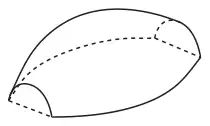
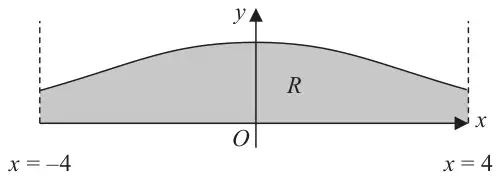
Figure 1 shows a solid paperweight with a flat base.
Figure 2 shows the curve with equation
\[y = H\cos^3\left(\frac{x}{4}\right) \qquad\qquad {-4} \leqslant x \leqslant 4\]where \(H\) is a positive constant and \(x\) is in radians.
The region \(R\), shown shaded in Figure 2, is bounded by the curve, the line with equation \(x = -4\), the line with equation \(x = 4\) and the \(x\)-axis.
The paperweight is modelled by the solid of revolution formed when \(R\) is rotated 180° about the \(x\)-axis.
Given that the maximum height of the paperweight is 2 cm,
[Solutions based entirely on calculator technology are not acceptable.]
(5)| Scheme | Marks | AO |
|---|---|---|
| \(\left(z + \dfrac{1}{z}\right)^6 = 64\cos^6\theta\) | B1 | 2.1 |
| \(\left(z + \dfrac{1}{z}\right)^6 = z^6 + 6\left(z^5\right)\left(\dfrac{1}{z}\right) + 15\left(z^4\right)\left(\dfrac{1}{z^2}\right) + 20\left(z^3\right)\left(\dfrac{1}{z^3}\right) + 15\left(z^2\right)\left(\dfrac{1}{z^4}\right) + 6(z)\left(\dfrac{1}{z^5}\right) + \left(\dfrac{1}{z^6}\right)\) | M1 | 2.1 |
| \(= \left[z^6 + \dfrac{1}{z^6}\right] + 6\left[z^4 + \dfrac{1}{z^4}\right] + 15\left[z^2 + \dfrac{1}{z^2}\right] + 20\) | A1 | 1.1b |
| Uses \(z^n + \dfrac{1}{z^n} = 2\cos n\theta\) \(\{64\cos^6\theta\} = 2\cos 6\theta + 12\cos 4\theta + 30\cos 2\theta + 20\) | M1 | 2.1 |
| \(32\cos^6\theta = \cos 6\theta + 6\cos 4\theta + 15\cos 2\theta + 10\) * cso | A1 * | 1.1b |
| (5) |
Notes
B1: Correct identity or equivalent rearrangement. This can appear anywhere in the proof.
M1: Attempts the expansion of \(\left(z + \dfrac{1}{z}\right)^6\) must have at least 3 correct terms. Combining the powers when expanding is fine.
A1: Correct expansion with \(z\) terms simplified, need not be rearranged. (So a correct expansion will score M1A1.)
M1: Uses \(z^n + \dfrac{1}{z^n} = 2\cos n\theta\) to write the expression in terms multiple angles of \(\cos 6\theta,\ \cos 4\theta\) and \(\cos 2\theta\). Pairing of terms must be seen.
A1*: Achieves the printed answer with no errors or omissions. Cso
For approaches using De Moivre B0M1A1M0A0 may be scored if the binomial expansions is attempted (and correct for the A).
| Scheme | Marks | AO |
|---|---|---|
| \(\boldsymbol{H = 2}\) | B1 | 3.3 |
| (1) |
Notes
B1: See scheme
| Scheme | Marks | AO |
|---|---|---|
| \(\text{vol} = \left\{\dfrac{1}{2}\right\}\pi\displaystyle\int\left(2\cos^3\left(\frac{x}{4}\right)\right)^2\,\mathrm{d}x\) | B1ft | 3.4 |
| \(\text{vol} = \{2\pi\}\displaystyle\int\cos^6\left(\frac{x}{4}\right)\mathrm{d}x\) \(= \{2\pi\}\displaystyle\int\frac{1}{32}\left(\cos\left(\frac{6x}{4}\right) + 6\cos\left(\frac{4x}{4}\right) + 15\cos\left(\frac{2x}{4}\right) + 10\right)\mathrm{d}x = \ldots\) | M1 | 1.1b |
| \(= \{2\pi\}\left[\underline{\dfrac{1}{32}\left(\dfrac{2}{3}\sin\left(\dfrac{3x}{2}\right) + 6\sin(x) + 30\sin\left(\dfrac{x}{2}\right) + 10x\right)}\right]\) | A1 | 1.1b |
| \(= 2 \times 2\pi\left[\dfrac{1}{32}\left(\dfrac{2}{3}\sin\left(\dfrac{3}{2} \times 4\right) + 6\sin(4) + 30\sin\left(\dfrac{4}{2}\right) + (10 \times 4)\right) - 0\right] = \ldots\) or \(=\) \(2\pi\left[\dfrac{1}{32}\left(\dfrac{2}{3}\sin\left(\dfrac{3}{2} \times 4\right) + 6\sin(4) + 30\sin\left(\dfrac{4}{2}\right) + (10 \times 4)\right)\right.\) \(\left. - \dfrac{1}{32}\left(\dfrac{2}{3}\sin\left(\dfrac{3}{2} \times -4\right) + 6\sin(-4) + 30\sin\left(-\dfrac{4}{2}\right) + (10 \times -4)\right)\right]\) \(\ldots\) | dM1 | 3.4 |
| \(= 24.56\) | A1 | 1.1b |
| (5) |
Notes
Note: The question instructs use of algebraic integration and part (a), so answer only can score at most B1 for implied correct formula.
B1ft: Correct expression for the volume of the paperweight or the solid formed through 360° rotation, stated or implied, ignore limits. No need to expand, but must be applied, not just a formula in \(y\), though allow a correct formula followed by correct integral if the \(\pi\) disappears. Follow through their \(H\)
M1: Uses the result in part part (a) to express the volume in an integrable form and attempts to integrate. Note use of \(\theta\) instead of \(x\) is permissible for this mark. Allow if one term is missing or miscopied.
A1: Correct integration in terms of \(x\). Ignore \(\pi\), their \(H^2\) and the \(\dfrac{1}{32}\). Note if \(\theta\) has been used it is A0 unless a correct substitution method has been implied as the coefficients will be incorrect.
dM1: Dependent on previous method mark and must have reached and integral of the correct form -- in terms of \(x\) with correct arguments allowing for one slip. Finds the required volume using either \(\pi\int_0^4 y^2\,\mathrm{d}x\) or \(\dfrac{1}{2}\pi\int_{-4}^{4} y^2\,\mathrm{d}x\) and applies their limits - accept any value following a valid attempt at the integration as an attempt at applying limits.
A1: cao 24.56
| Scheme | Marks | AO |
|---|---|---|
| The equation of the curve may not be suitable The measurements may not be accurate The paperweight may not be smooth | B1 | 3.5b |
| (1) | ||
| (12 marks) |
Notes
B1: States an appropriate limitation. See scheme for some examples. The limitation should refer to the paperweight, not to paper. Do not accept “it does not take into account thickness of material” as it is a solid, not a shell, being modelled. Award the mark for a correct reason if two reasons are given and one is incorrect.