
A2 October 2021 Paper 2 Q7
7.
Solutions based entirely on graphical or numerical methods are not acceptable.
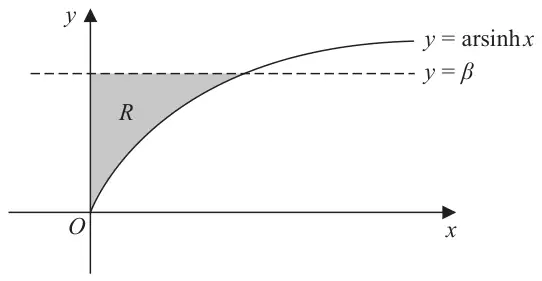
Figure 1 shows a sketch of part of the curve with equation
\[y = \operatorname{arsinh} x \qquad x \geqslant 0\]and the straight line with equation \(y = \beta\)
The line and the curve intersect at the point with coordinates \((\alpha, \beta)\)
Given that \(\beta = \dfrac{1}{2}\ln 3\)
The finite region \(R\), shown shaded in Figure 1, is bounded by the curve with equation \(y = \operatorname{arsinh} x\), the \(y\)-axis and the line with equation \(y = \beta\)
The region \(R\) is rotated through \(2\pi\) radians about the \(y\)-axis.
| Scheme | Marks | AO |
|---|---|---|
Using \(\operatorname{arsinh}\alpha = \dfrac{1}{2}\ln 3\) \(\alpha = \dfrac{\mathrm{e}^{\frac{1}{2}\ln 3} - \mathrm{e}^{-\frac{1}{2}\ln 3}}{2}\) or \(\ln\left(\alpha + \sqrt{\alpha^2 + 1}\right) = \dfrac{1}{2}\ln 3\) | B1 | 1.2 |
| \(\alpha = \dfrac{\sqrt{3} - \frac{1}{\sqrt{3}}}{2} \Rightarrow \alpha = \ldots\) or \(\alpha + \sqrt{\alpha^2 + 1} = \sqrt{3}\) \(\sqrt{\alpha^2 + 1} = \sqrt{3} - \alpha\) \(\alpha^2 + 1 = 3 - 2\sqrt{3}\alpha + \alpha^2 \Rightarrow \alpha = \ldots\) | M1 | 1.1b |
| \(\alpha = \dfrac{\sqrt{3}}{3}\) or \(\dfrac{1}{\sqrt{3}}\) | A1 | 2.2a |
| (3) |
Notes
(a)
B1: Recalls the definition for \(\sinh\left(\dfrac{1}{2}\ln 3\right)\) or forms an equation for \(\operatorname{arsinh} x\)
M1: Uses logarithms to find a value for \(\alpha\) or forms and solves a correct equation without log
A1: Deduces the correct exact value for \(\alpha\)
Note using the result
\(\ln\left(\dfrac{1}{\sqrt{3}} + \sqrt{\left(\dfrac{1}{\sqrt{3}}\right)^2 + 1}\right) = \ln\left(\dfrac{1}{\sqrt{3}} + \sqrt{\dfrac{4}{3}}\right) = \ln\sqrt{3} = \dfrac{1}{2}\ln 3\) therefore \(\operatorname{arsinh}\left(\dfrac{1}{\sqrt{3}}\right) = \dfrac{1}{2}\ln 3\)
B1 for substituting in \(\alpha\) into \(\operatorname{arsinh} x\), M1 for rearranging to show \(\dfrac{1}{2}\ln 3\), A1 for conclusion
| Scheme | Marks | AO |
|---|---|---|
| Volume \(= \pi\displaystyle\int_0^{\frac{1}{2}\ln 3}\sinh^2 y\,\mathrm{d}y\) | B1 | 2.5 |
| \(\{\pi\}\displaystyle\int\left(\dfrac{\mathrm{e}^y - \mathrm{e}^{-y}}{2}\right)^2\mathrm{d}y = \{\pi\}\int\left(\dfrac{\mathrm{e}^{2y} - 2 + \mathrm{e}^{-2y}}{4}\right)\mathrm{d}y\) or \(\{\pi\}\displaystyle\int\dfrac{1}{2}\cosh 2y - \dfrac{1}{2}\,\mathrm{d}y\) | M1 | 3.1a |
| \(\dfrac{1}{4}\left(\dfrac{1}{2}\mathrm{e}^{2y} - 2y - \dfrac{1}{2}\mathrm{e}^{-2y}\right)\) or \(\dfrac{1}{4}\sinh 2y - \dfrac{1}{2}y\) | dM1 A1 | 1.1b 1.1b |
| Use limits \(y = 0\) and \(y = \dfrac{1}{2}\ln 3\) and subtracts the correct way round | M1 | 1.1b |
| \(\dfrac{\pi}{4}\left(\dfrac{4}{3} - \ln 3\right)\) or exact equivalent | A1 | 1.1b |
| (6) | ||
| (9 marks) |
Notes
(b)
B1: Correct expression for the volume \(\pi\displaystyle\int_0^{\frac{1}{2}\ln 3}\sinh^2 y\,\mathrm{d}y\) requires integration signs, \(\mathrm{d}y\) and correct limits.
M1: Uses the exponential formula for \(\sinh y\) or the identity \(\cosh 2y = \pm 1 \pm 2\sinh^2 y\) to write in a form which can be integrated at least one term
dM1: Dependent of previous method mark, integrates.
A1: Correct integration.
M1: Correct use of the limits \(y = 0\) and \(y = \dfrac{1}{2}\ln 3\)
A1: Correct exact volume.