
C1 June 2017 Q10
10.
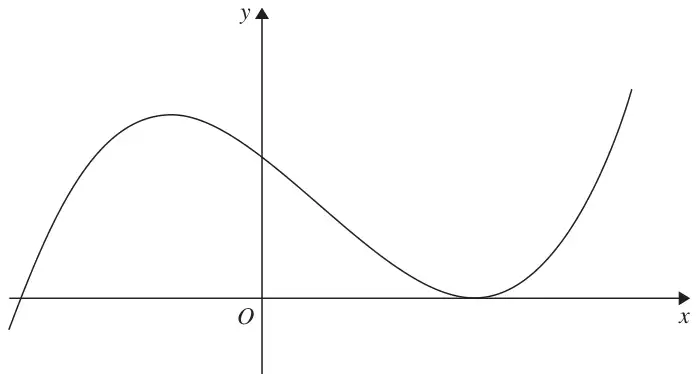
Figure 2 shows a sketch of part of the curve \(y = \mathrm{f}(x)\), \(x \in \mathbb{R}\), where\[\mathrm{f}(x) = (2x - 5)^2(x + 3)\]
Points \(A\) and \(B\) are distinct points that lie on the curve \(y = \mathrm{f}(x)\).
The gradient of the curve at \(A\) is equal to the gradient of the curve at \(B\).
Given that point \(A\) has \(x\) coordinate 3
| Scheme | Marks |
|---|---|
| (i) \(k = \left(-5\right)^2\times 3 = 75\) | M1A1 |
| (ii) \(c = \dfrac{5}{2}\) only | B1 |
| (3) |
Notes
(a)(i)M1: Attempts to find the ‘\(y\)’ intercept. Accept as evidence \(\left(-5\right)^2\times 3\) with or without the bracket. If they expand \(\mathrm{f}(x)\) to polynomial form here then they must then select their constant to score this mark. May be implied by sight of 75 on the diagram.
A1: \(k = 75\). Must clearly be identified as \(k\). Allow this mark even from an incorrect or incomplete expansion as long as the constant \(k = 75\) is obtained. Do not isw e.g. if 75 is seen followed by \(k = -75\) score M1A0.
(a)(ii)B1: \(c = \dfrac{5}{2}\) oe (and no other values). Do not award just from the diagram – must be stated as the value of \(c\).
| Scheme | Marks |
|---|---|
| \(\mathrm{f}(x) = (2x - 5)^2(x + 3) = \left(4x^2 - 20x + 25\right)(x + 3) = 4x^3 - 8x^2 - 35x + 75\) | M1 |
| \(\left(\mathrm{f}^{\prime}(x) =\right)12x^2 - 16x - 35\,*\) | M1A1* |
| (3) |
Notes
M1: Attempts \(\mathrm{f}(x)\) as a cubic polynomial by attempting to square the first bracket and multiply by the linear bracket or expands \((2x - 5)(x + 3)\) and then multiplies by \(2x - 5\)
Must be seen or used in (b) but may be done in part (a).
Allow poor squaring e.g. \((2x - 5)^2 = 4x^2 \pm 25\)
M1: Reduces powers by 1 in all terms including any constant \(\to 0\)
A1*: Correct proof. Withhold this mark if there have been any errors including missing brackets earlier e.g. \((2x - 5)^2(x + 3) = 4x^2 - 20x + 25(x + 3) = \ldots\)
Alt (b) Product rule.
| Scheme | Marks |
|---|---|
| \(\mathrm{f}(x) = (2x - 5)^2(x + 3) \Rightarrow \mathrm{f}^{\prime}(x) = (2x - 5)^2\times 1 + (x + 3)\times 4(2x - 5)\) M1: Attempts product rule to give an expression of the form \(p(2x - 5)^2 + q(x + 3)(2x - 5)\) M1: Multiplies out and collects terms A1: \(\mathrm{f}^{\prime}(x) = 12x^2 - 16x - 35\,*\) | M1 M1A1* |
| Scheme | Marks |
|---|---|
| \(\mathrm{f}^{\prime}(3) = 12\times 3^2 - 16\times 3 - 35\) | M1 |
| \(12x^2 - 16x - 35 = \text{‘}25\text{’}\) | dM1 |
| \(12x^2 - 16x - 60 = 0\) | A1 cso |
| \((x - 3)(12x + 20) = 0 \Rightarrow x = \ldots\) | ddM1 |
| \(x = -\dfrac{5}{3}\) | A1 cso |
| (5) | |
| (11 marks) |
Notes
M1: Substitutes \(x = 3\) into their \(\mathrm{f}^{\prime}(x)\) or the given \(\mathrm{f}^{\prime}(x)\). Must be a changed function i.e. not into \(\mathrm{f}(x)\).
dM1: Sets their \(\mathrm{f}^{\prime}(x)\) or the given \(\mathrm{f}^{\prime}(x) =\) their \(\mathrm{f}^{\prime}(3)\) with a consistent \(\mathrm{f}^{\prime}\). Dependent on the previous method mark.
A1 cso: \(12x^2 - 16x - 60 = 0\) or equivalent 3 term quadratic e.g. \(12x^2 - 16x = 60\). (A correct quadratic equation may be implied by later work). This is cso so must come from correct work – i.e. they must be using the given \(\mathrm{f}^{\prime}(x)\).
ddM1: Solves 3 term quadratic by suitable method – see General Principles. Dependent on both previous method marks.
A1 cso: \(x = -\dfrac{5}{3}\) oe clearly identified. If \(x = 3\) is also given and not rejected, this mark is withheld. (allow -1.6 recurring as long as it is clear i.e. a dot above the 6). This is cso and must come from correct work – i.e. they must be using the given \(\mathrm{f}^{\prime}(x)\).