
June 2024 Paper 1 Q12
12.
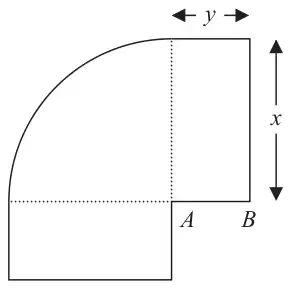
Figure 5 shows the plan view of the design for a swimming pool.
The pool is modelled as a quarter of a circle joined to two equal sized rectangles as shown.
Given that
- the quarter circle has radius \(x\) metres
- the rectangles each have length \(x\) metres and width \(y\) metres
- the total surface area of the swimming pool is \(100\ \text{m}^2\)
Access to the pool is by side \(AB\) shown in Figure 5.
Given that \(AB\) must be at least one metre,
| Scheme | Marks | AO |
|---|---|---|
| (Surface area \(=\)) \(2xy + \dfrac{\pi x^2}{4}\) | B1 | 1.1b |
| \(2xy + \dfrac{\pi x^2}{4} = 100 \Rightarrow y = \dfrac{400 - \pi x^2}{8x} = \dfrac{50}{x} - \dfrac{\pi x}{8}\) | M1 | 3.4 |
| \((P =)\ 2x + 4y + \dfrac{2\pi x}{4}\) | B1 | 1.1b |
| \((P =)\ 2x + 4\left(\dfrac{400 - \pi x^2}{8x}\right) + \dfrac{2\pi x}{4}\) | M1 | 3.4 |
| \(P = 2x + \dfrac{200}{x}\ *\) | A1* | 2.1 |
| (5) |
Notes
Note that different sections of the perimeter may be completed separately and brought together in a final line. Most marks will only be scored at this point – send to review if unsure.
B1: Correct expression for the surface area in terms of \(x\) and \(y\) only (may be in an equivalent form). May be implied by their equation set equal to 100 or their rearranged form.
M1: Sets their expression in \(x\) and \(y\) equal to 100 and rearranges to make \(y\) (or \(2y\) or \(4y\)) the subject. Do not be concerned by the mechanics of their rearrangement. May be implied by further work or can be scored for a different valid substitution into their expression for the perimeter.
B1: Correct expression for the perimeter in terms of \(x\) and \(y\) (may be in an equivalent form) and may be implied by an expression for the perimeter in terms of \(x\) if they have substituted in for their \(y\) straight away (which may be incorrect or have been rearranged incorrectly)
M1: Attempts to substitute their \(y\) into their perimeter to produce an expression or equation in just \(x\). Condone invisible brackets for this mark. Condone slips provided the intention is clear.
A1*: \(P = 2x + \dfrac{200}{x}\) cso (Condone the omission of \(P =\) on the final line if it is seen on an earlier line of working) Allow Perimeter =
Do not withhold this mark if missing/invisible brackets are recovered in their working.
| Scheme | Marks | AO |
|---|---|---|
| \(\left(\dfrac{\mathrm{d}P}{\mathrm{d}x} =\right) 2 - 200x^{-2}\) | M1 A1 | 1.1b 1.1b |
| \(2 - 200x^{-2} = 0 \Rightarrow x = \ldots\) | dM1 | 3.1b |
| \(x = 10\) | A1 | 1.1b |
| (4) |
Notes
M1: Attempts to differentiate the given expression for \(P\) achieving an answer of the form \(A \pm Bx^{-2}\)
Condone candidates who do not achieve the given answer but their derivative differentiates to the required form to score this mark (and possibly dM1)
A1: \(2 - 200x^{-2}\) o.e.
dM1: Sets their derivative of the form \(A - Bx^{-2}\), \(A \times B \gt 0\) equal to 0 and rearranges to find a value for \(x\). It is dependent on the previous method mark. Condone slips in their rearrangement. May proceed directly to the answer.
A1: 10 cao (provided a correct derivative is seen) \(\pm 10\) is A0 isw if they attempt to find \(P\)
| Scheme | Marks | AO |
|---|---|---|
| \(\left(\dfrac{\mathrm{d}^2P}{\mathrm{d}x^2} =\right) \text{``}400\text{''}x^{-3} \Rightarrow \text{``}400\text{''} \times 10^{-3} \gt 0\) | M1 | 1.1b |
| e.g. \(\dfrac{\mathrm{d}^2P}{\mathrm{d}x^2}\ (= 0.4) \gt 0\) hence minimum (perimeter) | A1 | 2.4 |
| (2) |
Notes
Note that attempts only evaluating the gradient either side of \(x = 10\) is M0A0
M1: Finds \(\dfrac{\mathrm{d}^2P}{\mathrm{d}x^2}\) of the form \(Ax^{-3}\) o.e. and either considers the sign or evaluates for their positive \(x\)
A1: Requires
- \(\left(\dfrac{\mathrm{d}^2P}{\mathrm{d}x^2} =\right) 400x^{-3}\) (condone this mark if \(\dfrac{\mathrm{d}^2y}{\mathrm{d}x^2}\) is written or any other incorrect notation)
- reference to \(400x^{-3}\) being \(\gt 0\) for \(x \gt 0\), or by using either a correct calculation (0.4 o.e.), a correct numerical expression or the algebraic expression and referencing that it is \(\gt 0\) for \(x = 10\)
- correct conclusion e.g. hence min, shown, tick, QED
Condone “minimum value of \(x\)”
| Scheme | Marks | AO |
|---|---|---|
| e.g. \(y = \dfrac{400 - \pi \times \text{``}10\text{''}^2}{8 \times \text{``}10\text{''}}\) | M1 | 3.4 |
| e.g. \(y = 1.07\) (m) so yes this would be suitable | A1 | 2.2a |
| (2) | ||
| (13 marks) |
Notes
M1: Either
- substitutes their value of \(x\) into any of their equations involving \(y\) or their expression for \(y\) from part (a) (unless restarted) to find a value for \(y\)
- uses their value of \(x\) to find their minimum value of \(P\) using the given expression for \(P\), and then uses their \(x\) and their \(P\) to find a value for \(y\)
- attempts to find the value of \(x\) when \(y = 1\) (allow to be solved directly from a calculator once a three-term quadratic has been formed)
- attempts to find the value of \(P\) using the given expression for \(P\), their value for \(x\) and \(y = 1\)
Condone slips provided the intention is clear of their intended method.
A1: awrt 1.1 m and concludes would be suitable (yes is sufficient or a tick)
Note that “yes suitable because e.g. \(1.07 \gt 0\) is A0” (it had to be greater than 1)
If they find the value for \(x\) when \(y = 1\) it requires a correct comparison of awrt 10.1 with 10 so yes suitable
If they find the value of \(P\) using \(x = 10\) and \(y = 1\) it requires a correct comparison of awrt 39.7 with 40 so yes suitable