
S1 June 2012 Q4
4.
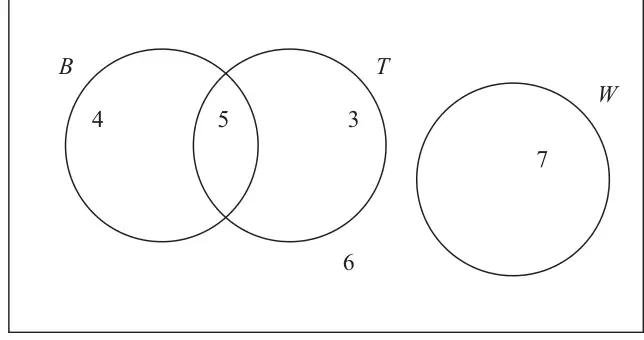
Figure 1 shows how 25 people travelled to work.
Their travel to work is represented by the events
\(B\) bicycle
\(T\) train
\(W\) walk
One person is chosen at random.
Find the probability that this person
| Scheme | Marks |
|---|---|
| \(B, W\) or \(T, W\) [ accept \(B \cup T, W\) or \(B \cap T, W\) ] [Condone \(\mathrm{P}(B), \mathrm{P}(W)\) etc] | B1 |
| Since there is no overlap between the events or cannot happen together (o.e.) (Accept comment in context e.g. “no one walks and takes the train”) | B1 |
| (2) |
Notes
1st B1 for a suitable pair. Do not accept universally exclusive pairs such as \(B\) and \(B^{\prime}\) etc
2nd B1 for any correct statement. Accept use of symbols e.g.: \(B \cap W = \varnothing\) or \(\mathrm{P}(T \cap W) = 0\) etc. But \(T \cap W = 0\) is B0 (since it is not a correct statement)
| Scheme | Marks |
|---|---|
| e.g. \(\mathrm{P}(B) = \dfrac{9}{25},\ \mathrm{P}(T) = \dfrac{8}{25},\ \mathrm{P}(B \cap T) = \dfrac{5}{25}\) | M1 |
| \(\mathrm{P}(B \cap T) \ne \mathrm{P}(B)\times\mathrm{P}(T)\) \([0.2 \ne 0.36\times 0.32 = 0.1152\) o.e.] | M1 |
| So \(B\) and \(T\) are not independent | A1cso |
| (3) |
Notes
1st M1 for an attempt at all required probabilities with labels for a suitable test (allow one error). Accept use of \(A\) and \(B\) as long as they can be identified as \(B\) and \(T\) by correct probabilities. Must be probabilities not integers such as 5, 9, 8 etc for both these M marks
2nd M1 for \(\mathrm{P}(B)\times\mathrm{P}(T)\) evaluated (correct for their probabilities)
or \(\mathrm{P}(B \cap T) \ne \mathrm{P}(B)\times\mathrm{P}(T)\) stated or implied in symbols or using their probabilities.
or \(\mathrm{P}(B \mid T) \ne \mathrm{P}(B)\) or \(\mathrm{P}(T \mid B) \ne \mathrm{P}(T)\) stated or implied in symbols or using their probabilities.
A1 for a conclusion of not independent. Requires all probabilities used to be correct and seen. This A mark is dependent on both Ms
NB \(\mathrm{P}(B \mid T) = \dfrac{5}{8}\) & \(\mathrm{P}(B) = \dfrac{9}{25}\) or \(\mathrm{P}(T \mid B) = \dfrac{5}{9}\) & \(\mathrm{P}(T) = \dfrac{8}{25}\) seen, followed by a correct conclusion scores 3/3
| Scheme | Marks |
|---|---|
| \([\mathrm{P}(W) =]\ \dfrac{7}{25}\) or 0.28 | B1 |
| (1) |
| Scheme | Marks |
|---|---|
| \([\mathrm{P}(B \cap T) =]\ \dfrac{5}{25}\) or \(\dfrac{1}{5}\) or 0.2 | B1 |
| (1) |
| Scheme | Marks |
|---|---|
| \([\mathrm{P}(T \mid B) =]\ \dfrac{\mathrm{P}(T \cap B)}{\mathrm{P}(B)} = \dfrac{\text{"(d)"}}{(5 + 4)/25}\) | M1 |
| \(= \dfrac{5}{9}\) or \(0.\dot{5}\) | A1 |
| (2) | |
| (9 marks) |
Notes
M1 for a correct ratio of probabilities e.g. \(\dfrac{5/25}{(5 + 4)/25}\) or \(\dfrac{5}{5 + 4}\) or
A correct ratio expression and at least one correct (or correct f.t.) probability substituted.
A1 for \(\dfrac{5}{9}\) with no incorrect working seen but \(\dfrac{5}{9}\) following from \(\mathrm{P}(B \mid T)\) is 0/2. \(\dfrac{5}{9}\) alone is 2/2