
June 2024 Paper 2 Q7
7.
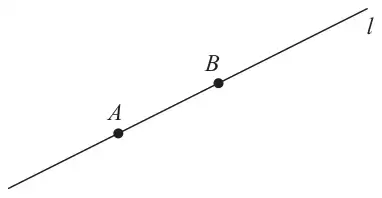
Figure 2 shows a sketch of the straight line \(l\).
Line \(l\) passes through the points \(A\) and \(B\).
Relative to a fixed origin \(O\)
- the point \(A\) has position vector \(2\mathbf{i} - 3\mathbf{j} + 5\mathbf{k}\)
- the point \(B\) has position vector \(5\mathbf{i} + 6\mathbf{j} + 8\mathbf{k}\)
Given that a point \(P\) lies on \(l\) such that
\[|\overrightarrow{AP}| = 2|\overrightarrow{BP}|\]| Scheme | Marks | AO |
|---|---|---|
| \(\left(\overrightarrow{AB} =\right) 3\mathbf{i} + 9\mathbf{j} + 3\mathbf{k}\) | B1 | 1.1b |
| (1) |
Notes
B1: Correct vector. Allow \(3\mathbf{i} + 9\mathbf{j} + 3\mathbf{k}\) or \(\begin{pmatrix}3\\9\\3\end{pmatrix}\) but not \(\begin{pmatrix}3\mathbf{i}\\9\mathbf{j}\\3\mathbf{k}\end{pmatrix}\) and not \((3, 9, 3)\)
Condone \(\begin{matrix}3\\9\\3\end{matrix}\) for \(\begin{pmatrix}3\\9\\3\end{pmatrix}\)
Do not apply isw here but award for e.g. \(3\mathbf{i} + 9\mathbf{j} + 3\mathbf{k} = \begin{pmatrix}3\mathbf{i}\\9\mathbf{j}\\3\mathbf{k}\end{pmatrix}\)
E.g. if they obtain \(\overrightarrow{AB} = 3\mathbf{i} + 9\mathbf{j} + 3\mathbf{k}\) and then say \(\overrightarrow{AB} = \mathbf{i} + 3\mathbf{j} + \mathbf{k}\) then award B0
If part (a) is not attempted and the correct \(\overrightarrow{AB}\) is seen in part (b) the B1 can be awarded there.
| Scheme | Marks | AO |
|---|---|---|
| Examples: \(\overrightarrow{OP} = \overrightarrow{OA} + 2\overrightarrow{AB} = 2\mathbf{i} - 3\mathbf{j} + 5\mathbf{k} + 2\left(3\mathbf{i} + 9\mathbf{j} + 3\mathbf{k}\right) = \ldots\) or \(\overrightarrow{OP} = \overrightarrow{OB} + \overrightarrow{AB} = 5\mathbf{i} + 6\mathbf{j} + 8\mathbf{k} + \left(3\mathbf{i} + 9\mathbf{j} + 3\mathbf{k}\right) = \ldots\) or \(\overrightarrow{OP} = \overrightarrow{OA} + \dfrac{2}{3}\overrightarrow{AB} = 2\mathbf{i} - 3\mathbf{j} + 5\mathbf{k} + \dfrac{2}{3}\left(3\mathbf{i} + 9\mathbf{j} + 3\mathbf{k}\right) = \ldots\) or \(\overrightarrow{OP} = \overrightarrow{OB} + \dfrac{1}{3}\overrightarrow{BA} = 5\mathbf{i} + 6\mathbf{j} + 8\mathbf{k} - \dfrac{1}{3}\left(3\mathbf{i} + 9\mathbf{j} + 3\mathbf{k}\right) = \ldots\) | M1 | 3.1a |
| \(8\mathbf{i} + 15\mathbf{j} + 11\mathbf{k}\) or \(4\mathbf{i} + 3\mathbf{j} + 7\mathbf{k}\) | A1 | 1.1b |
| Examples: \(\overrightarrow{OP} = \overrightarrow{OA} + 2\overrightarrow{AB} = 2\mathbf{i} - 3\mathbf{j} + 5\mathbf{k} + 2\left(3\mathbf{i} + 9\mathbf{j} + 3\mathbf{k}\right) = \ldots\) or \(\overrightarrow{OP} = \overrightarrow{OB} + \overrightarrow{AB} = 5\mathbf{i} + 6\mathbf{j} + 8\mathbf{k} + \left(3\mathbf{i} + 9\mathbf{j} + 3\mathbf{k}\right) = \ldots\) and \(\overrightarrow{OP} = \overrightarrow{OA} + \dfrac{2}{3}\overrightarrow{AB} = 2\mathbf{i} - 3\mathbf{j} + 5\mathbf{k} + \dfrac{2}{3}\left(3\mathbf{i} + 9\mathbf{j} + 3\mathbf{k}\right) = \ldots\) or \(\overrightarrow{OP} = \overrightarrow{OB} + \dfrac{1}{3}\overrightarrow{BA} = 5\mathbf{i} + 6\mathbf{j} + 8\mathbf{k} - \dfrac{1}{3}\left(3\mathbf{i} + 9\mathbf{j} + 3\mathbf{k}\right) = \ldots\) | dM1 | 3.1a |
| \(8\mathbf{i} + 15\mathbf{j} + 11\mathbf{k}\) and \(4\mathbf{i} + 3\mathbf{j} + 7\mathbf{k}\) | A1 | 2.2a |
| (4) | ||
| (5 marks) |
Notes
General Guidance for part (b):
As with most vector questions we will see a variety of approaches (correct and incorrect).
In general, the marks are awarded as follows:
- M1 for a correct complete strategy to find at least one position for \(P\) (May be implied by at least 2 correct components)
- A1 for one correct position for \(P\)
- dM1 for a correct complete strategy to find both positions for \(P\) (May be implied by at least 2 correct components for both positions)
- A1 both correct positions for \(P\) and no others
Various examples are shown below.
Other methods will be seen but the above marking principles should be applied.
You can condone slips in their algebra/processing as long as the intention is clear.
The examples given below give the detail to look for depending on the approach.
If you see a response and you are not sure if it deserves credit use Review.
Note that adding vectors when they should be subtracting will generally score M0 but use review if necessary.
Note that sight of at least one correct position for \(P\) implies M1A1
M1: Attempts at least one correct strategy for finding \(P\)
A1: One correct position vector or allow coordinates for this mark e.g. (8, 15, 11) or (4, 3, 7) or \(x = \ldots, y = \ldots, z = \ldots\)
If given as a vector, allow e.g. \(8\mathbf{i} + 15\mathbf{j} + 11\mathbf{k}, \begin{pmatrix}8\\15\\11\end{pmatrix}\) but not \(\begin{pmatrix}8\mathbf{i}\\15\mathbf{j}\\11\mathbf{k}\end{pmatrix}\)
dM1: Attempts two correct strategies for finding \(P\)
A1: Both correct position vectors
Must both be vectors so e.g. \(8\mathbf{i} + 15\mathbf{j} + 11\mathbf{k}, \begin{pmatrix}8\\15\\11\end{pmatrix}\) and \(4\mathbf{i} + 3\mathbf{j} + 7\mathbf{k}, \begin{pmatrix}4\\3\\7\end{pmatrix}\) but not e.g. \(\begin{pmatrix}8\mathbf{i}\\15\mathbf{j}\\11\mathbf{k}\end{pmatrix}\)
Condone e.g. \(\begin{matrix}8\\15\\11\end{matrix}\) for \(\begin{pmatrix}8\\15\\11\end{pmatrix}\)
Alternative 1 using vector equation of \(l\):
\[\mathbf{r} = \overrightarrow{OA} + \lambda\overrightarrow{AB} = \begin{pmatrix}2\\-3\\5\end{pmatrix} + \lambda\begin{pmatrix}3\\9\\3\end{pmatrix}\quad\left(\text{or e.g. } \begin{pmatrix}2\\-3\\5\end{pmatrix} + \lambda\begin{pmatrix}1\\3\\1\end{pmatrix}\right)\]\[|\overrightarrow{AP}| = 2|\overrightarrow{BP}| \Rightarrow \left|\begin{pmatrix}3\lambda\\9\lambda\\3\lambda\end{pmatrix}\right| = 2\left|\begin{pmatrix}3\lambda + 2 - 5\\9\lambda - 3 - 6\\3\lambda + 5 - 8\end{pmatrix}\right| \Rightarrow 9\lambda^2 + 81\lambda^2 + 9\lambda^2 = 4\left[(3\lambda - 3)^2 + (9\lambda - 9)^2 + (3\lambda - 3)^2\right]\]\[\Rightarrow \lambda = 2, \frac{2}{3} \Rightarrow \mathbf{r} = \begin{pmatrix}2\\-3\\5\end{pmatrix} + 2\begin{pmatrix}3\\9\\3\end{pmatrix}\quad\text{or}\quad \begin{pmatrix}2\\-3\\5\end{pmatrix} + \frac{2}{3}\begin{pmatrix}3\\9\\3\end{pmatrix}\]M1: Forms the vector equation of line \(l\) using their \(\overrightarrow{AB}\) from part (a) or by starting again, forms the vectors \(\overrightarrow{AP}\) and \(\overrightarrow{BP}\) then uses \(|\overrightarrow{AP}| = 2|\overrightarrow{BP}|\) and Pythagoras to produce a quadratic equation in "\(\lambda\)" which they then solve to find "\(\lambda\)" and use correctly to find at least one position for \(P\).
Note if they use \(\mathbf{i} + 3\mathbf{j} + \mathbf{k}\) for the direction, they should get \(\lambda = 6, 2\)
If all other work is correct, condone not squaring the “2” when applying Pythagoras
A1: See main scheme
dM1: As the first M and finds both positions for \(P\)
A1: See main scheme
Alternative 2 using \(P\) as \(\begin{pmatrix}x\\y\\z\end{pmatrix}\) and that \(\overrightarrow{AP}\) and \(\overrightarrow{BP}\) are parallel:
\[\overrightarrow{OP} = \begin{pmatrix}x\\y\\z\end{pmatrix} \Rightarrow \overrightarrow{AP} = \begin{pmatrix}x-2\\y+3\\z-5\end{pmatrix},\ \overrightarrow{BP} = \begin{pmatrix}x-5\\y-6\\z-8\end{pmatrix}\]\[|\overrightarrow{AP}| = 2|\overrightarrow{BP}| \Rightarrow \left|\begin{pmatrix}x-2\\y+3\\z-5\end{pmatrix}\right| = 2\left|\begin{pmatrix}x-5\\y-6\\z-8\end{pmatrix}\right| \Rightarrow \begin{matrix}(x-2)^2 = 4(x-5)^2\\(y+3)^2 = 4(y-6)^2\\(z-5)^2 = 4(z-8)^2\end{matrix}\]\[\begin{matrix}(x-2)^2 = 4(x-5)^2 \Rightarrow x = 4, 8\\(y+3)^2 = 4(y-6)^2 \Rightarrow y = 3, 15\\(z-5)^2 = 4(z-8)^2 \Rightarrow z = 7, 11\end{matrix} \Rightarrow \begin{pmatrix}4\\3\\7\end{pmatrix}, \begin{pmatrix}8\\15\\11\end{pmatrix}\]M1: Sets \(P\) as a general point, forms \(\overrightarrow{AP}\) and \(\overrightarrow{BP}\) (either way round) then uses \(|\overrightarrow{AP}| = 2|\overrightarrow{BP}|\) then squares components and equates to produce quadratic equations in \(x\) and \(y\) and \(z\) which they then solve to find at least one position for \(P\). It is not just for finding values which are not then used to form a point (or vector).
If all other work is correct, condone not squaring the “2” when squaring.
A1: See main scheme
dM1: As the first M and finds both positions for \(P\).
A1: See main scheme
Note that if the modulus is not used, this method can lead to one correct position for \(P\) e.g.
\[\overrightarrow{AP} = 2\overrightarrow{BP} \Rightarrow \begin{pmatrix}x-2\\y+3\\z-5\end{pmatrix} = 2\begin{pmatrix}x-5\\y-6\\z-8\end{pmatrix} \Rightarrow \begin{matrix}x = 8\\y = 15\\z = 11\end{matrix}\ \text{and scores M1 A1}\]But it is possible to find the other position without squaring e.g.
\[|\overrightarrow{AP}| = 2|\overrightarrow{BP}| \Rightarrow \begin{pmatrix}x-2\\y+3\\z-5\end{pmatrix} = 2\begin{pmatrix}5-x\\6-y\\8-z\end{pmatrix} \Rightarrow \begin{matrix}x = 4\\y = 3\\z = 7\end{matrix}\ \text{and scores dM1 then A1 as main scheme.}\]This requires at least 2 correct equations for \(x\), \(y\) or \(z\) for the dM1
e.g. Alternative 3 using \(P\) as \(\begin{pmatrix}x\\y\\z\end{pmatrix}\) and eliminating 2 of the variables:
\[\overrightarrow{OP} = \begin{pmatrix}x\\y\\z\end{pmatrix} \Rightarrow \overrightarrow{AP} = \begin{pmatrix}x-2\\y+3\\z-5\end{pmatrix},\ \overrightarrow{BP} = \begin{pmatrix}x-5\\y-6\\z-8\end{pmatrix}\]\[\overrightarrow{AP} = \begin{pmatrix}x-2\\y+3\\z-5\end{pmatrix} = \lambda\begin{pmatrix}1\\3\\1\end{pmatrix} \Rightarrow \overrightarrow{AP} = \begin{pmatrix}x-2\\3x-6\\x-2\end{pmatrix},\ \overrightarrow{BP} = \begin{pmatrix}x-5\\y-6\\z-8\end{pmatrix} = \mu\begin{pmatrix}1\\3\\1\end{pmatrix} \Rightarrow \overrightarrow{BP} = \begin{pmatrix}x-5\\3x-15\\x-5\end{pmatrix}\]\[|\overrightarrow{AP}| = 2|\overrightarrow{BP}| \Rightarrow (x-2)^2 + (3x-6)^2 + (x-2)^2 = 4\left[(x-5)^2 + (3x-15)^2 + (x-5)^2\right] \Rightarrow x = 4, 8\]\[\overrightarrow{OP} = \overrightarrow{OA} + \overrightarrow{AP}\left(\text{or } \overrightarrow{OB} + \overrightarrow{BP}\right) = \begin{pmatrix}x\\3x-9\\x+3\end{pmatrix} \Rightarrow \begin{pmatrix}4\\3\\7\end{pmatrix}\ \text{or}\ \begin{pmatrix}8\\15\\11\end{pmatrix}\]