
A2 June 2024 Q8
8.
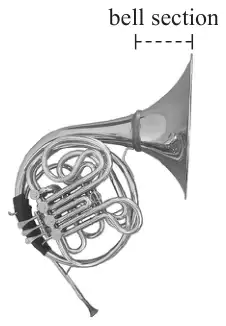
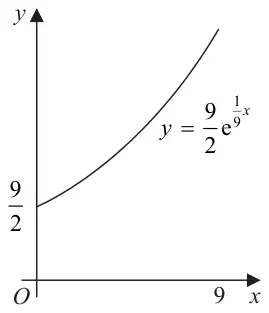
Figure 1 shows a French horn with a detachable bell section.
The shape of the bell section can be modelled by rotating an exponential curve through 360\(^\circ\) about the \(x\)-axis, where units are centimetres.
The model uses the curve shown in Figure 2, with equation\[y = \frac{9}{2}\mathrm{e}^{\frac{1}{9}x} \qquad 0 \leqslant x \leqslant 9\]
Hence, using algebraic integration,
| Scheme | Marks | AO |
|---|---|---|
| \(\text{S.A.} = 2\pi\int_0^9 y\sqrt{1 + \left(\dfrac{\mathrm{d}y}{\mathrm{d}x}\right)^2}\,\mathrm{d}x;\ = 2\pi\int_0^9 \left(\dfrac{9}{2}\mathrm{e}^{\frac{1}{9}x}\right)\sqrt{1 + \left(\dfrac{1}{2}\mathrm{e}^{\frac{1}{9}x}\right)^2}\,\mathrm{d}x = \ldots\) | B1; M1 | 1.1a 3.4 |
| \(= 9\pi\int_0^9 \mathrm{e}^{\frac{1}{9}x}\sqrt{1 + \dfrac{1}{4}\mathrm{e}^{\frac{2}{9}x}}\,\mathrm{d}x = \dfrac{9\pi}{2}\int_0^9 \mathrm{e}^{\frac{1}{9}x}\sqrt{4 + \mathrm{e}^{\frac{2}{9}x}}\,\mathrm{d}x\) | A1 | 2.1 |
| (3) |
Notes
B1: States or uses a correct formula for the surface area.
M1: Applies the surface area formula with \(\dfrac{\mathrm{d}y}{\mathrm{d}x} = K\mathrm{e}^{\frac{1}{9}x}\)
A1: Simplifies correctly as shown, so \(K = \dfrac{9\pi}{2}\)
| Scheme | Marks | AO |
|---|---|---|
| \(u = \mathrm{e}^{\frac{1}{9}x} \Rightarrow \mathrm{d}u = \dfrac{1}{9}\mathrm{e}^{\frac{1}{9}x}\,\mathrm{d}x\) | B1 | 2.2a |
| \(\Rightarrow \int \mathrm{e}^{\frac{1}{9}x}\sqrt{4 + \mathrm{e}^{\frac{2}{9}x}}\,\mathrm{d}x = \int \mathrm{e}^{\frac{1}{9}x}\sqrt{4 + \mathrm{e}^{\frac{2}{9}x}}\ 9\mathrm{e}^{-\frac{1}{9}x}\,\mathrm{d}u = 9\int \sqrt{4 + u^2}\,\mathrm{d}u\) | M1 | 1.1b |
| \(= 9\int \tfrac{4 + u^2}{\sqrt{4 + u^2}}\,\mathrm{d}u = 9\int \tfrac{2 + u^2}{\sqrt{4 + u^2}}\,\mathrm{d}u + 9\int \tfrac{2}{\sqrt{4 + u^2}}\,\mathrm{d}u\) Or \(= 9\int \tfrac{4 + u^2}{\sqrt{4 + u^2}}\,\mathrm{d}u = 9\int \tfrac{4u + u^3}{\sqrt{4u^2 + u^4}}\,\mathrm{d}u\) | M1 | 3.1a |
| \(= 9\int \tfrac{2u + u^3}{u\sqrt{4 + u^2}}\,\mathrm{d}u + 18\int \tfrac{1}{\sqrt{4 + u^2}}\,\mathrm{d}u\) Or \(= 9\int \tfrac{4u + u^3}{\sqrt{4u^2 + u^4}}\,\mathrm{d}u = 9\int \tfrac{2u + u^3}{\sqrt{4u^2 + u^4}}\,\mathrm{d}u + 9\int \tfrac{2u}{\sqrt{4u^2 + u^4}}\,\mathrm{d}u\) | M1 | 2.1 |
| \(\{x = 0 \Rightarrow\}\ u = 1;\ \{x = 9 \Rightarrow\}\ u = \mathrm{e}\) \(\Rightarrow \int_0^9 \mathrm{e}^{\tfrac{1}{9}x}\sqrt{4 + \mathrm{e}^{\tfrac{2}{9}x}}\,\mathrm{d}x = 9\int_1^{\mathrm{e}} \tfrac{2u + u^3}{\sqrt{4u^2 + u^4}}\,\mathrm{d}u + 18\int_1^{\mathrm{e}} \tfrac{1}{\sqrt{4 + u^2}}\,\mathrm{d}u\ *\) | A1* | 3.4 |
| (5) |
Notes
B1: For a correct connecting equation between d\(u\) and d\(x\), accept any form, so \(\mathrm{d}u = \dfrac{1}{9}\mathrm{e}^{\frac{1}{9}x}\,\mathrm{d}x\) or \(\dfrac{\mathrm{d}u}{\mathrm{d}x} = \dfrac{1}{9}\mathrm{e}^{\frac{1}{9}x}\) or any equivalent.
M1: Makes a full substitution into the equation to obtain an integral in terms of \(u\) only. Must have replaced the d\(x\) appropriately. Limit not needed.
M1: Writes the integral as \(9\int \dfrac{4 + u^2}{\sqrt{4 + u^2}}\,\mathrm{d}u\) and then either
Splits the integral to extract a \(\dfrac{1}{\sqrt{4 + u^2}}\) term. Allow if the term is not the correct one.
Or
Multiplies through numerator and denominator in appropriate term to get the numerator.
M1: Multiplies through numerator and denominator in appropriate term to get the numerator of first integral correct.
Or
Splits the integral to extract a \(\dfrac{u}{\sqrt{4u^2 + u^4}}\) term
A1: Deduces the correct limits and achieves the given answer from fully correct work – must have split the integral correctly.
| Scheme | Marks | AO |
|---|---|---|
| \(9\int \dfrac{2u + u^3}{\sqrt{4u^2 + u^4}}\,\mathrm{d}u = \dfrac{9}{4}\int \dfrac{8u + 4u^3}{\sqrt{4u^2 + u^4}}\,\mathrm{d}u = \alpha\sqrt{4u^2 + u^4}\) | M1 | 1.1b |
| \(18\int \dfrac{1}{\sqrt{4 + u^2}}\,\mathrm{d}u = \beta\,\text{arsinh}\left(\dfrac{u}{2}\right)\) or \(\beta\ln\left(u + \sqrt{u^2 + a^2}\right)\) | M1 | 1.1b |
| \(9\int_1^{\mathrm{e}} \dfrac{2u + u^3}{\sqrt{4u^2 + u^4}}\,\mathrm{d}u + 18\int_1^{\mathrm{e}} \dfrac{1}{\sqrt{4 + u^2}}\,\mathrm{d}u = \left[\dfrac{9}{2}\sqrt{4u^2 + u^4} + 18\,\text{arsinh}\left(\dfrac{u}{2}\right)\right]_1^{\mathrm{e}}\) | A1 | 2.1 |
| Surface area \(= \tfrac{9\pi}{2}\int_0^9 \mathrm{e}^{\tfrac{1}{9}x}\sqrt{4 + \mathrm{e}^{\tfrac{2}{9}x}}\,\mathrm{d}x\) \(= \tfrac{9\pi}{2}\left(\tfrac{9}{2}\sqrt{4\mathrm{e}^2 + \mathrm{e}^4} + 18\,\text{arsinh}\left(\tfrac{\mathrm{e}}{2}\right) - \tfrac{9}{2}\sqrt{4 + 1} - 18\,\text{arsinh}\left(\tfrac{1}{2}\right)\right) = \ldots\) \(= \tfrac{9\pi}{2}(42.6089\ldots)\) | ddM1 | 3.4 |
| awrt 602 cm\(^2\) | A1 | 3.2a |
| (5) | ||
| (13 marks) |
Notes
M1: Integrates to the correct form \(9\int \dfrac{2u + u^3}{\sqrt{4u^2 + u^4}}\,\mathrm{d}u = \alpha\sqrt{4u^2 + u^4}\)
M1: : Integrates to the correct form \(18\int \dfrac{1}{\sqrt{4 + u^2}}\,\mathrm{d}u = \beta\,\text{arsinh}\left(\dfrac{u}{2}\right)\) or \(\beta\ln\left(u + \sqrt{u^2 + a^2}\right)\)
A1: Fully correct integration. Need not be simplified, and may be in terms of a different variable if a substitution was used. No need for constant of integration. No need for their \(\dfrac{9\pi}{2}\) for this mark
ddM1: Completes the method to find the required surface area. Applies their limits from (b) to their integrated expression in \(u\) and subtracts the correct way round. If they have returned to an integral in \(x\) then limits 9 and 0 must be used. If they have changed variable again, then correct limits for their variable(s). They need their \(\dfrac{9\pi}{2}\) for this mark. If they don’t show the substitution of limits, follow through on their \(\dfrac{9\pi}{2} \times 42.6089\ldots\) or a correct answer.
A1: awrt 602, units required.
Answer only, use of calculator with no integration shown scores no marks.