
June 2022 Paper 2 Q8
8.
In this question you must show all stages of your working.
Solutions relying on calculator technology are not acceptable.
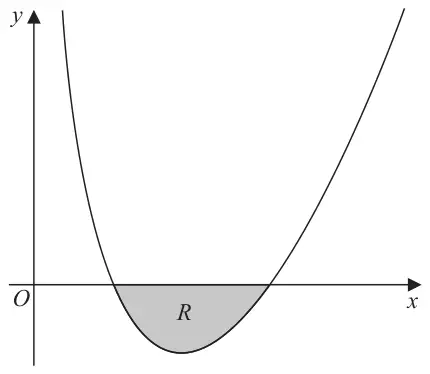
Figure 3 shows a sketch of part of a curve with equation
\[y = \dfrac{(x - 2)(x - 4)}{4\sqrt{x}} \qquad x \gt 0\]The region \(R\), shown shaded in Figure 3, is bounded by the curve and the \(x\)-axis.
Find the exact area of \(R\), writing your answer in the form \(a\sqrt{2} + b\), where \(a\) and \(b\) are constants to be found. (6)
| Scheme | Marks | AO |
|---|---|---|
| \(y = \dfrac{(x - 2)(x - 4)}{4\sqrt{x}} = \dfrac{x^2 - 6x + 8}{4\sqrt{x}} = \dfrac{1}{4}x^{\frac{3}{2}} - \dfrac{3}{2}x^{\frac{1}{2}} + 2x^{-\frac{1}{2}}\) | M1 A1 | 1.1b 1.1b |
| \(\displaystyle\int \dfrac{1}{4}x^{\frac{3}{2}} - \dfrac{3}{2}x^{\frac{1}{2}} + 2x^{-\frac{1}{2}}\,\mathrm{d}x = \dfrac{1}{10}x^{\frac{5}{2}} - x^{\frac{3}{2}} + 4x^{\frac{1}{2}}\ (+c)\) | dM1 A1 | 3.1a 1.1b |
| Deduces limits of integral are 2 and 4 and applies to their \(\dfrac{1}{10}x^{\frac{5}{2}} - x^{\frac{3}{2}} + 4x^{\frac{1}{2}}\) | M1 | 2.2a |
| \(\left(\dfrac{32}{10} - 8 + 8\right) - \left(\dfrac{2}{5}\sqrt{2} - 2\sqrt{2} + 4\sqrt{2}\right) = \dfrac{16}{5} - \dfrac{12}{5}\sqrt{2}\) Area \(R = \dfrac{12}{5}\sqrt{2} - \dfrac{16}{5}\ \left(\text{or } \dfrac{16}{5} - \dfrac{12}{5}\sqrt{2}\right)\) | A1 | 2.1 |
| (6) | ||
| (6 marks) |
Notes
M1: Correct attempt to write \(\dfrac{(x - 2)(x - 4)}{4\sqrt{x}}\) as a sum of terms with indices.
Look for at least two different terms with the correct index e.g. two of \(x^{\frac{3}{2}},\ x^{\frac{1}{2}},\ x^{-\frac{1}{2}}\) which have come from the correct places.
The correct indices may be implied later when e.g. \(\sqrt{x}\) becomes \(x^{\frac{1}{2}}\) or \(\dfrac{1}{\sqrt{x}}\) becomes \(x^{-\frac{1}{2}}\)
A1: \(\dfrac{1}{4}x^{\frac{3}{2}} - \dfrac{3}{2}x^{\frac{1}{2}} + 2x^{-\frac{1}{2}}\) which can be left unsimplified e.g. \(\dfrac{1}{4}x^{2 - \frac{1}{2}} - \dfrac{1}{2}x^{\frac{1}{2}} - x^{\frac{1}{2}} + 2x^{-\frac{1}{2}}\)
or as e.g. \(\dfrac{1}{4}\left(x^{\frac{3}{2}} - 6x^{\frac{1}{2}} + 8x^{-\frac{1}{2}}\right)\)
The correct indices may be implied later when e.g. \(\sqrt{x}\) becomes \(x^{\frac{1}{2}}\) or \(\dfrac{1}{\sqrt{x}}\) becomes \(x^{-\frac{1}{2}}\)
dM1: Integrates \(x^n \to x^{n+1}\) for at least 2 correct indices
i.e. at least 2 of \(x^{\frac{3}{2}} \to x^{\frac{5}{2}},\quad x^{\frac{1}{2}} \to x^{\frac{3}{2}},\quad x^{-\frac{1}{2}} \to x^{\frac{1}{2}}\)
It is dependent upon the first M so at least two terms must have had a correct index.
A1: \(\dfrac{1}{10}x^{\frac{5}{2}} - x^{\frac{3}{2}} + 4x^{\frac{1}{2}}\ (+c)\). Allow unsimplified e.g. \(\dfrac{1}{4} \times \dfrac{2}{5}x^{\frac{3}{2} + 1} - \dfrac{1}{2} \times \dfrac{2}{3}x^{\frac{1}{2} + 1} - \dfrac{2}{3}x^{\frac{1}{2} + 1} + 2 \times 2x^{\frac{1}{2}}\)
or as e.g. \(\dfrac{1}{4}\left(\dfrac{2}{5}x^{\frac{5}{2}} - 4x^{\frac{3}{2}} + 16x^{\frac{1}{2}}\right)(+c)\).
M1: Substitutes the limits 4 and 2 to their \(\dfrac{1}{10}x^{\frac{5}{2}} - x^{\frac{3}{2}} + 4x^{\frac{1}{2}}\) and subtracts either way round.
There is no requirement to evaluate but 4 and 2 must be substituted either way round with evidence of subtraction, condoning omission of brackets.
E.g. condone \(\dfrac{1}{10} \times 4^{\frac{5}{2}} - 4^{\frac{3}{2}} + 4 \times 4^{\frac{1}{2}} - \dfrac{1}{10} \times 2^{\frac{5}{2}} - 2^{\frac{3}{2}} + 4 \times 2^{\frac{1}{2}}\)
This is an independent mark but the limits must be applied to an expression that is not \(y\) so they may even have differentiated.
A1: Correct working shown leading to \(\dfrac{12}{5}\sqrt{2} - \dfrac{16}{5}\) but also allow \(\dfrac{16}{5} - \dfrac{12}{5}\sqrt{2}\) or exact equivalents
Award this mark once one of these forms is reached and isw
Integration by parts:
| Scheme | Marks | AO |
|---|---|---|
| \(\displaystyle\int \dfrac{(x - 2)(x - 4)}{4\sqrt{x}}\,\mathrm{d}x = \int \dfrac{1}{4}(x - 2)(x - 4)x^{-\frac{1}{2}}\,\mathrm{d}x = \dfrac{1}{2}(x - 2)(x - 4)x^{\frac{1}{2}} - \int \dfrac{1}{2}(2x - 6)x^{\frac{1}{2}}\,\mathrm{d}x\) | M1 A1 | 1.1b 1.1b |
| \(\dfrac{1}{2}(x - 2)(x - 4)x^{\frac{1}{2}} - \underline{\displaystyle\int \dfrac{1}{2}(2x - 6)x^{\frac{1}{2}}\,\mathrm{d}x} = \dfrac{1}{2}(x - 2)(x - 4)x^{\frac{1}{2}} - \underline{\displaystyle\int x^{\frac{3}{2}} - 3x^{\frac{1}{2}}\,\mathrm{d}x}\) \(= \dfrac{1}{2}(x - 2)(x - 4)x^{\frac{1}{2}} \underline{- \dfrac{2}{5}x^{\frac{5}{2}} + 2x^{\frac{3}{2}}}\) Or e.g. \(= \dfrac{1}{2}(x - 2)(x - 4)x^{\frac{1}{2}} - \dfrac{1}{3}x^{\frac{3}{2}}(2x - 6) + \dfrac{4}{15}x^{\frac{5}{2}}\) | dM1 A1 | 3.1a 1.1b |
| Deduces limits of integral are 2 and 4 and applies to their \(\dfrac{1}{2}(x - 2)(x - 4)x^{\frac{1}{2}} - \dfrac{1}{3}x^{\frac{3}{2}}(2x - 6) + \dfrac{4}{15}x^{\frac{5}{2}}\) | M1 | 2.2a |
| \(0 - \dfrac{16}{3} + \dfrac{128}{15} - \left(0 + \dfrac{4}{3}\sqrt{2} + \dfrac{16}{15}\sqrt{2}\right)\) Area \(R = \dfrac{12}{5}\sqrt{2} - \dfrac{16}{5}\ \left(\text{or } \dfrac{16}{5} - \dfrac{12}{5}\sqrt{2}\right)\) | A1 | 2.1 |
| (6) |
M1: Applies integration by parts and reaches the form \(\displaystyle\alpha(x - 2)(x - 4)x^{\frac{1}{2}} \pm \int (px + q)x^{\frac{1}{2}}\,\mathrm{d}x\quad \alpha, p \neq 0\)
oe e.g. \(\displaystyle\alpha(x^2 - 6x + 8)x^{\frac{1}{2}} \pm \int (px + q)x^{\frac{1}{2}}\,\mathrm{d}x\quad \alpha, p \neq 0\)
A1: Correct first application of parts in any form
dM1: Attempts their \(\displaystyle\int (px + q)x^{\frac{1}{2}}\,\mathrm{d}x\) by expanding and integrating or may attempt parts again.
E.g. \(\displaystyle\int (2x - 6)x^{\frac{1}{2}}\,\mathrm{d}x = \int \left(2x^{\frac{3}{2}} - 6x^{\frac{1}{2}}\right)\,\mathrm{d}x = \ldots\) or e.g. \(\displaystyle\int (2x - 6)x^{\frac{1}{2}}\,\mathrm{d}x = \dfrac{2}{3}x^{\frac{3}{2}}(2x - 6) - \dfrac{4}{3}\int x^{\frac{3}{2}}\,\mathrm{d}x\)
If they expand then at least one term requires \(x^n \to x^{n+1}\) or if parts is attempted again, the structure must be correct.
A1: Fully correct integration in any form
M1: Substitutes the limits 4 and 2 to their \(= \dfrac{1}{2}(x - 2)(x - 4)x^{\frac{1}{2}} - \dfrac{2}{5}x^{\frac{5}{2}} + 2x^{\frac{3}{2}}\) and subtracts either way round. There is no requirement to evaluate but 4 and 2 must be substituted either way round with evidence of subtraction, condoning omission of brackets.
E.g. condone \(0 - \dfrac{16}{3} + \dfrac{128}{15} - 0 + \dfrac{4}{3}\sqrt{2} + \dfrac{16}{15}\sqrt{2}\)
This is an independent mark but the limits must be applied to a “changed” function.
A1: Correct working shown leading to \(\dfrac{12}{5}\sqrt{2} - \dfrac{16}{5}\) but also allow \(\dfrac{16}{5} - \dfrac{12}{5}\sqrt{2}\) or exact equivalents
Attempts at integration by parts “the other way round” should be sent to review.
Integration by substitution example:
| Scheme | Marks | AO |
|---|---|---|
| \(u = \sqrt{x}\ (x = u^2) \Rightarrow \displaystyle\int \dfrac{(x - 2)(x - 4)}{4\sqrt{x}}\,\mathrm{d}x = \int \dfrac{(u^2 - 2)(u^2 - 4)}{4u}\dfrac{\mathrm{d}x}{\mathrm{d}u}\,\mathrm{d}u\) \(\displaystyle = \int \dfrac{(u^2 - 2)(u^2 - 4)}{4u}2u\,\mathrm{d}u\) | M1 A1 | 1.1b 1.1b |
| \(\displaystyle = \dfrac{1}{2}\int (u^4 - 6u^2 + 8)\,\mathrm{d}u = \dfrac{1}{2}\left(\dfrac{u^5}{5} - \dfrac{6u^3}{3} + 8u\right)\ (+c)\) | dM1 A1 | 3.1a 1.1b |
| Deduces limits of integral are \(\sqrt{2}\) and 2 and applies to their \(\dfrac{1}{2}\left(\dfrac{u^5}{5} - \dfrac{6u^3}{3} + 8u\right)\) | M1 | 2.2a |
| \(\dfrac{1}{2}\left(\dfrac{32}{5} - 16 + 16 - \left(\dfrac{4\sqrt{2}}{5} - 4\sqrt{2} + 8\sqrt{2}\right)\right)\) Area \(R = \dfrac{12}{5}\sqrt{2} - \dfrac{16}{5}\ \left(\text{or } \dfrac{16}{5} - \dfrac{12}{5}\sqrt{2}\right)\) | A1 | 2.1 |
| (6) |
M1: Applies the substitution e.g. \(u = \sqrt{x}\) and attempts \(\displaystyle k\int \dfrac{(u^2 - 2)(u^2 - 4)}{u}\dfrac{\mathrm{d}x}{\mathrm{d}u}\,\mathrm{d}u\)
A1: Fully correct integral in terms of \(u\) in any form e.g. \(\displaystyle\dfrac{1}{2}\int (u^2 - 2)(u^2 - 4)\,\mathrm{d}u\)
dM1: Expands the bracket and integrates \(u^n \to u^{n+1}\) for at least 2 correct indices
i.e. at least 2 of \(u^4 \to u^5,\ u^2 \to u^3,\ k \to ku\)
A1: \(\dfrac{1}{2}\left(\dfrac{u^5}{5} - \dfrac{6u^3}{3} + 8u\right)(+c)\). Allow unsimplified.
M1: Substitutes the limits 2 and \(\sqrt{2}\) to their \(\dfrac{1}{2}\left(\dfrac{u^5}{5} - \dfrac{6u^3}{3} + 8u\right)\) and subtracts either way round.
There is no requirement to evaluate but 2 and \(\sqrt{2}\) must be substituted either way round with evidence of subtraction, condoning omission of brackets.
E.g. condone \(\dfrac{1}{2}\left(\dfrac{32}{5} - 16 + 16 - \dfrac{4\sqrt{2}}{5} - 4\sqrt{2} + 8\sqrt{2}\right)\)
Alternatively reverses the substitution and applies the limits 4 and 2 with the same conditions.
A1: Correct working shown leading to \(\dfrac{12}{5}\sqrt{2} - \dfrac{16}{5}\) but also allow \(\dfrac{16}{5} - \dfrac{12}{5}\sqrt{2}\) or exact equivalents
Award this mark once one of these forms is reached and isw.
There may be other substitutions seen and the same marking principles apply.