
June 2022 Paper 1 Q11
11.
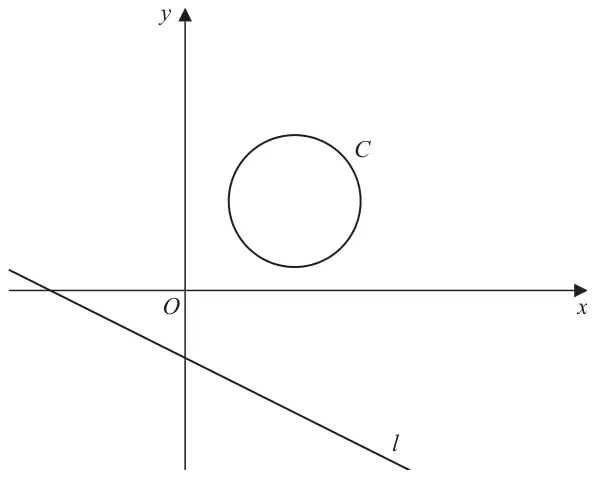
Figure 3 shows the circle \(C\) with equation
\[x^2 + y^2 - 10x - 8y + 32 = 0\]and the line \(l\) with equation
\[2y + x + 6 = 0\]| Scheme | Marks | AO |
|---|---|---|
| \((x \pm 5)^2 + (y \pm 4)^2\) | M1 | 1.1b |
| (i) Centre is \((5, 4)\) | A1 | 1.1b |
| (ii) Radius is 3 | A1 | 1.1b |
| (3) |
Notes
M1: Attempts to complete the square for both \(x\) and \(y\) terms \((x \pm 5)^2 \ldots (y \pm 4)^2\) which may be implied by a centre of \((\pm 5, \pm 4)\)
A1: Centre \((5, 4)\)
A1: Radius 3
| Scheme | Marks | AO |
|---|---|---|
| \(2y + x + 6 = 0 \Rightarrow y = -\dfrac{1}{2}x + \ldots \Rightarrow -\dfrac{1}{2} \to 2\) | B1 | 2.2a |
| \(m_N = 2 \Rightarrow y - 4 = 2(x - 5)\) \(y - 4 = 2(x - 5),\ 2y + x + 6 = 0 \Rightarrow x = \ldots,\ y = \ldots\) | M1 | 3.1a |
| Intersection is at \(\left(\dfrac{6}{5}, -\dfrac{18}{5}\right)\) oe | A1 | 1.1b |
| Distance from centre to intersection is \(\sqrt{\left(5 - \dfrac{6}{5}\right)^2 + \left(4 + \dfrac{18}{5}\right)^2}\) So distance required is \(\sqrt{\left(\text{``}5\text{''} - \text{``}\dfrac{6}{5}\text{''}\right)^2 + \left(\text{``}4\text{''} + \text{``}\dfrac{18}{5}\text{''}\right)^2} - \text{``}3\text{''}\) | dM1 | 3.1a |
| \(= \dfrac{19\sqrt{5}}{5} - 3\) (or awrt 5.50) | A1 | 1.1b |
| (5) | ||
| (8 marks) |
Notes
B1: Deduces the gradient of the perpendicular to \(l\) is 2. May be seen in the equation for the perpendicular line to \(l\)
M1: A fully correct strategy for finding the intersection. This requires use of their gradient of the perpendicular which cannot be the gradient of \(l\)
Look for \(y - \text{``}4\text{''} = \text{``}2\text{''}(x - \text{``}5\text{''})\) where \((5, 4)\) is their centre being solved simultaneously with the equation of \(l\)
Do not be concerned with the mechanics of their rearrangement when solving simultaneously.
Many are finding the \(y\)-intercept of \(l\) \((0, -3)\) which is M0
A1: \(\left(\dfrac{6}{5}, -\dfrac{18}{5}\right)\) or equivalent eg \((1.2, -3.6)\)
They do not have to be written as coordinates and may be seen within their working rather than explicitly stated. They may also be written on the diagram.
dM1: Fully correct strategy for finding the required distance e.g. correct use of Pythagoras to find the distance between their centre and their intersection and then completes the problem by subtracting their radius. Condone a sign slip subtracting their \(-\dfrac{18}{5}\).
It is dependent on the previous method mark.
Alternatively, they solve simultaneously their \(y = 2x - 6\) with the equation of the circle and then find the distance between this intersection point and the point of intersection between \(l\) and the normal. They must choose the smaller positive root of the solution to their quadratic.
Eg
\((x - 5)^2 + (2x - 6 - 4)^2 = 9 \Rightarrow 5x^2 - 50x + 125 = 9\)
\(x = \dfrac{25 - 3\sqrt{5}}{5},\ y = \dfrac{20 - 6\sqrt{5}}{5}\)
Distance between two points:
\(\sqrt{\left(\text{``}\dfrac{25 - 3\sqrt{5}}{5}\text{''} - \text{``}\dfrac{6}{5}\text{''}\right)^2 + \left(\text{``}\dfrac{20 - 6\sqrt{5}}{5}\text{''} + \text{``}\dfrac{18}{5}\text{''}\right)^2}\)
A1: Correct value e.g. \(\sqrt{\dfrac{361}{5}} - 3\) or \(\dfrac{19\sqrt{5} - 15}{5}\). Also allow awrt 5.50
Isw after a correct answer is seen.
Alt (b) Be aware they may use vector methods:
B1M1: Attempts to find the perpendicular distance between their \((5, 4)\) and \(x + 2y + 6 = 0\) by substituting the values into the formula to find the distance between a point \((x, y)\) and a line \(ax + by + c = 0\)
\(\Rightarrow \dfrac{|ax + by + c|}{\sqrt{a^2 + b^2}} = \dfrac{\left|\text{``}5\text{''}\times\text{``}1\text{''} + \text{``}4\text{''}\times\text{``}2\text{''} + \text{``}6\text{''}\right|}{\sqrt{\text{``}1\text{''}^2 + \text{``}2\text{''}^2}}\)
A1: \(\dfrac{|5 \times 1 + 4 \times 2 + 6|}{\sqrt{1^2 + 2^2}} \left(= \dfrac{19}{\sqrt{5}}\right)\)
dM1: Distance \(= \text{``}\dfrac{19\sqrt{5}}{5}\text{''} - 3\)
A1: \(\dfrac{19\sqrt{5} - 15}{5}\)